Sources
Place
Walks
Themes
Lawrence and James Beesley
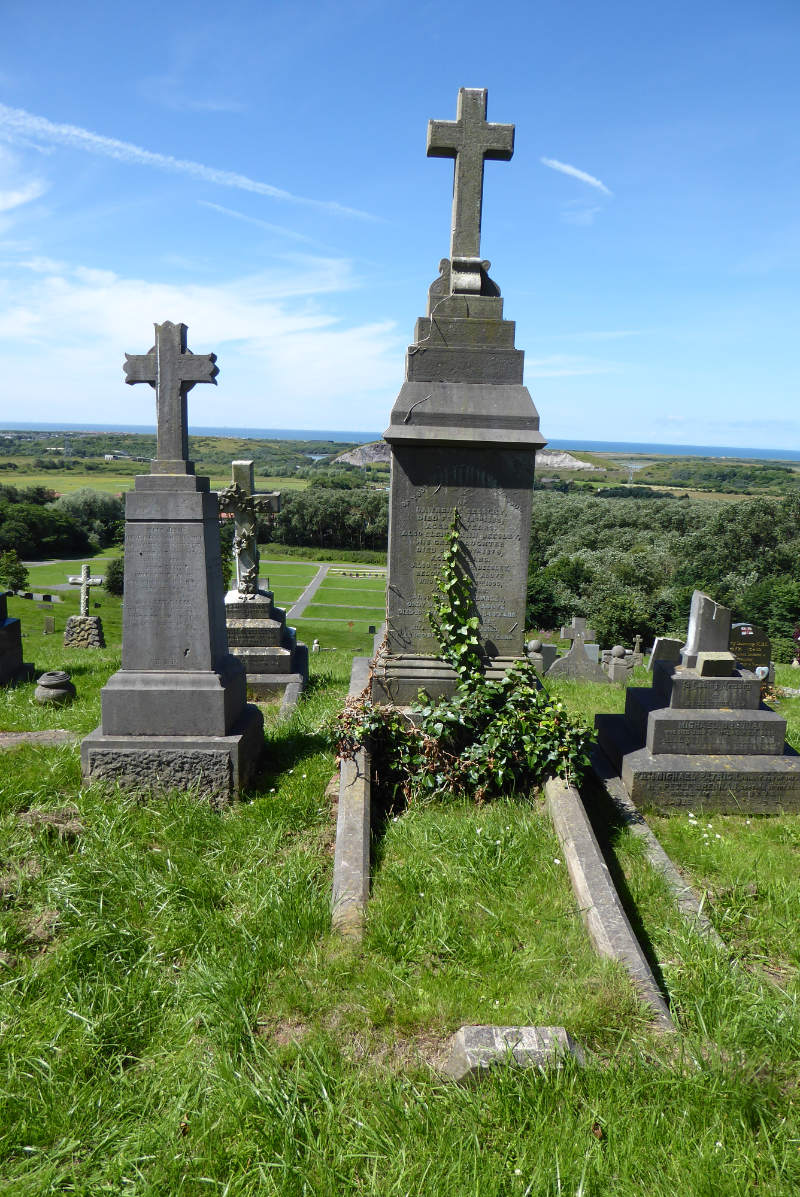
This photo, in front of the Roman Catholic North Chapel, was taken in July 2017. More recently (2020) the memorial has been completely covered in ivy. Even more recently (2025), it has mostly been removed.
To the left, and back one row, is another Beesley grave: see separate entry for William and Eleanor Beesley.
OF YOUR CHARITY PRAY FOR THE SOUL
OF
LAWRENCE BEESLEY
DIED FEBY 18TH 1883
AGED 60 YEARS
ALSO ELENOR (sic) ANN BEESLEY
HIS GRANDAUGHTER
DIED SEPTR 9TH 1879
ALSO ELIZABETH BEESLEY
BELOVED WIFE OF THE ABOVE
WHO DIED SEPTR 8TH 1895
AGED 73 YEARS
ALSO MARY A. WALMSLEY
ONLY DAUGHTER OF ABOVE
DIED 19TH DECR 1905 AGED 54 YEARS
ALSO JOHN WALMSLEY
HUSBAND OF LAST NAMED
DIED 14TH DECR 1915 AGED 64 YEARS
R.I.P.
OF YOUR CHARITY PRAY FOR THE SOUL
OF
JAMES BEESLEY
DIED MAY 28TH 1892
AGED 42 YEARS
ALSO ALFRED SON OF THE ABOVE
DIED DECEMBER 2ND 1885
AGED 9 MONTHS
1881 Census
In the 1881 Census, living at 11 & 13 Forshaw Street were: John Walmsley (28), Head, Second Hand Clothes Dealer, born Alston, Lancashire; Mary Ann Walmsley (29), Wife, born Preston, Lancs; Annie Walmsley (2), Daughter, born Barrow; Lawrence Walmsley (1), born Barrow; Agnes Woodburn (17), Servant, born Cark, Lancashire; Lawrence Beesley (59), Lodger, Retired Boiler Maker, born Lea, Lancashire; Elizabeth Beesley (58), Lodger, born Church, Lancashire.
1871 Census
The 1871 Census shows them living at 18 Keith Street, Barrow. In the household were Lawrence Beesley (49), Boiler Maker, born Lea, nr. Preston, Lancs; Betty Beesley (48), born Accrington, Lancs; William Beesley (24), Son, Boiler Maker, born Preston; James Beesley (22), Son, Boiler Maker, born Preston; Mary A. Beesley (19), Daughter, born Preston; Bernard Entwistle (26), Married, Nephew, Boiler Maker, born Blackburn; Alice Entwistle (28), Married, Neice (sic), [probably Bernard’s wife], born Preston.
1861 Census
Ten years earlier (1861 Census) the family had been in Over Darwen: at 2 Bugburn(?). Lawrence Beesley (39), Head, Boiler Maker, born Leigh (note how the spelling has changed over the census decades); Betty Beesley (38), born Church, Lancs; William Beesley (13), Boiler Maker, born Preston; James Beesley (11), Cotton Weaver, born Preston; Anne Beesley (9), Scholar, born Preston.
1851 Census
In the 1851 Census they are at 164 North Road, Preston. Lawrence’s name has been transcribed as Susanna by Ancestry.
The National Probate Calendar (Index of Wills and Administrations) 1883 has BEESLEY Lawrence 7 July. The Will of Lawrence Beesley late of Barrow-in-Furness in the County of Lancaster Boiler Maker who died 18 February 1883 at Barrow-in-Furness was proved at the Principal Registry by William Beesley of 2 Dalkeith-street Barrow-in-Furness and James Beesley of 3 Dalkeith-street Boiler Makers the Sons and John Walmsley of 11 Forshaw-street Barrow-in-Furness Draper and John Walmsley of Newland-street Barrow-in-Furness Plumber and Painter the Executors.
Personal Estate £78 6s 6d.
The Beesley company was on Iron Works Road. They must have been innovative, and appear in trade journals:
From gracesguide.co.uk/Beesley_and_Sons
Dated January 1888.
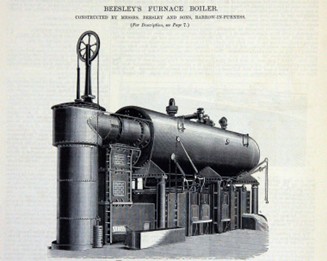

London Gazette 29 Nov 1889
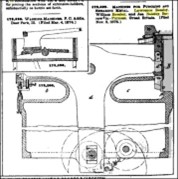
They applied for a US Patent for a Punching and Shearing Machine:

At the foot is a memorial to Robert McClean, died 31st December 1985, aged 71 years.
The sons of Lawrence and Elizabeth: William & James
1881 Census
In the 1881 Census William Beesley (34), Master Boiler Maker, was living at 1 Coulton Street, Barrow. His wife Alice (30), born Preston had four children, all born in Barrow: Elizabeth (5), Hannah (4), Mary A. (2) and Eleanor (1).
1891 Census
By the 1891 Census they had moved to 3 Dalkeith Street, Barrow (Interestingly, no 1 is listed as “Old Workhouse”), next to the Trevelyan Hotel, and had had 3 more daughters: Maud (8); Josephine L. (6) and Alice (1 month).
The National Probate Calendar (Index of Wills and Administrations) 1898 has:
BEESLEY William of 3 Dalkeith-street, Barrow-in-Furness Lancashire boiler-maker died 25 January 1898 Probate Lancaster 24 March to Alice Beesley widow Effects £6488 16s 9d.
1881 Census
In the 1881 Census James Beesley (28), Master Boiler Maker, is living at 3 Dalkeith Street (Interestingly, no 1 is listed as “Old Workhouse”). His wife is Hannah (24), born Ulverston, and they have 2 children, Bessie (2) and William (1).
1891 Census
In the 1891 Census he has moved to 3 Burlington Street, Ulverston. He is listed as a Machinery and Metal Merchant, and the family has changed: Ada (9); Mary (7); Agnes (5) and Florrie (3).
1939 Register
Cornelius remarried, since in the 1939 Register he (DoB 13 October 1884), a Plan? Clerk, is still at 19 Hibbert Road with wife Eveline (DoB 9 May 1882), Domestic Duties and Robert V. Beesley (DoB 19 April 1917), a Fitter (General). Robert married Mary McClean (is this right?) in Durham in Q2 1940, and his death was registered in Gateshead in Q1 1975.
1901 Census
After James Beesley’s death in 1892, his widow Hannah remarried and can be found on the 1901 Census living at 56 Dale Street, Lancaster, with her husband Thomas Leeming Noblett (43), Barman, born Preston, and her daughters Ada Beesley (19), Mary Beesley (18), both Pupil Teachers; Agnes Beesley (15), Florence Beesley (13), and new daughter Marjory Leeming (4), born Lancaster.
Information from Newspapers
Thanks to the British Newspaper Archive we can also identify the following information:
In the Barrow Herald and Furness Advertiser (BHFA) 19 August 1879 James Beesley, of 22 Keith Street, Barrow applied for a Licence to sell Intoxicating Liquor, viz. Spirits, Liquor, Wines and Beer, to be sold at premises owned by Lawrence Beesley, gentleman, of 11 Forshaw Street, and situated at the corner of Dalkeith Street and High Street.
A similar application was published in the BHFA 13 August 1887, by John Walmsley “situate at No. 1, Dalkeith-street, .. of which premises William Beesley, James Beesley, myself, and John Walmsley (sic) all of Barrow-in-Furness aforesaid are the owners, and which premises were lately as to part thereof occupied by me as a Temperance Hotel under the sign of the “Trevelyan”, and as to the other part thereof by William Beesley as a Dwelling-House.
JOHN WALMSLEY
James Beesley stood for election to the local council on number of occasions, without success as far as I can tell. The Barrow Herald and Furness Advertiser 24 December 1887 carried the following rather grumpy notice:
LADIES AND GENTLEMEN,
I beg to thank most heartily the 442 electors who recorded their vote in my favour last Saturday, also to my co-workers during the election. I attribute my defeat to great number of Irish Catholic voters who went against me in their votes and all the influence they could bring to bear, as well as assisting openly in furthering my opponent’s election. This action, if looked into in a proper manner, is more to their disgrace than credit, in the defeat of one of their own denomination, simply because he is not in accord with their political opinions, which I maintain should be distinct from municipal matters. Considering all we had to contend against, I consider my defeat equal to victory.
I am Ladies and Gentlemen, Yours faithfully, JAMES BEESLEY.
However, James Beesley met a tragic end, reported in the BHFA 4 June 1892:
SHOCKING SUICIDE AT BARROW
A shocking case of suicide occurred at the Ormsgill Hotel between Friday night and Saturday morning. Mr. James Beesley, well-known in this town, engaged a room for the night at the hotel, and was found dead in bed about eleven o’clock on Saturday morning, having poisoned himself with cynate of potassium. Deceased lived at Ulverston, but was up till within three years a partner with his brother in a firm of boiler makers. He has been depressed and ill for some time, and this cause is supposed to have led him to commit suicide.
INQUEST
An inquisition touching the death of deceased was held at the Trevelyan Hotel, on Monday morning, before Mr. Coroner Poole and a jury of which Mr. James Green was foreman. Mr. H. Roberts (on behalf of Mr. W. Williams) watched the proceedings for Mr. Cornelius Fishwick, proprietor of the Ormsgill Hotel.
Mr. Wm. Beesley was the first witness. He said he resided at 3, Dalkeith-street, and was brother of the deceased. Deceased resided at Ulverston, was a metal broker, and was 42 years of age. Witness last saw him on the previous Sunday when he was in Barrow. He then seemed very quiet, scarcely speaking to anyone, He took a small soda with witness then went away. They were formerly in partnership, but dissolved three years ago.
The Coroner: Deceased has written a letter to his mother in which he says “this is a sad end to come to. I have fought against it as long as I could. For the past four or five years I have made nothing but mistakes and blunders, and all through my own fault. Would to God I had taken your advice or my wife’s either (sic) or many outside friends who told me I was making a mistake. I did wrong to force a dissolution, and leave a good business. I have simply thrown my life away, for I had plenty of machinery and everything else, and a comfortable business to work in.”
The Coroner: I have also a letter from his mother , in which he (sic) says “it is entirely his own fault, and that no one is to blame. We have done everything we possibly could for him, and if he had taken my advice it would not have been.” Of course, I am telling you the points of these letters so far. Where were these letters found, officer? – In deceased’s room at the hotel.
The Coroner (to witness): Did he seem depressed when he was with you? – No, but he kept things from me which he should not have done.
Did he sustain any losses, do you know? – No, he was making money.
He has been doing a pretty good business, has he not? – Yes, he has been buying pretty extensively lately, but he has not been selling so well.
Mr. Leonard Parker Chapman, chemist, Dalton-road, said he had known deceased for 12 or 13 years. He last went to witness’s shop on Friday, May 27th. He was in the shop five or ten minutes, and presented a piece of paper for cynate of potassium and half a pound of salomonica (sic). The cynate of potassium was a deadly poison.
The Coroner: Did you ask him what he wanted it for? – Yes.
What did he say? – He said he wanted it for cementing purposes.
Would it be bought for that purpose? – I think these men do use it in some parts of their business. I don’t know what it is, but it has been sold before for that purpose.
The Coroner: In your opinion, would it be used for that purpose? – We have sold it to similar men. I asked him what he wanted it for, and he said for cementing purposes. It was duly labelled. Of course, I had no impression that he wanted it for any wrong purpose, or he would not have got it.
The Coroner: What is in your book? – Just the registry of the sale and the name of the purchaser and the witness.
Who was the party who introduced him? – A Liverpool gentleman named Mr. Dunderdale, the person buying must be known to the seller, or introduced by someone who is. We go to the extreme point by getting a person to witness it as well.
He didn’t really introduce him, did he? – No; he was there during the time the sale was being effected, and I explained to him the purpose for which his signature was required.
Then really that was not in compliance with the Act, the Act sets forth that the person should certify to the chemist supplying it that it was required for some legitimate purpose. – That is in the event of the buyer not being known to the chemist; but Mr. Beesley was particularly well known to me.
Did you observe anything particular about him in any way? – No, I did not. He was in his usual state, a state in which I have been accustomed to see him.
A Juror: I understood you to say you have sold this article before for cementing purposes? – Yes.
Have you any entries in your book? – No; not necessarily, I don’t know that there are any. He told me it was for purposes of his art. He certainly said it was for cementing purposes, and I did not question him further, not knowing what part of his business he wanted it for.
A Juror: Mr. Dunderdale is a representative of a large firm, is he not? - Yes.
Coroner: Happened just to be in the shop at the time, that is it, I suppose? Does the widow wish to be called for any purpose? I don’t wish her to be called unless she likes.
(Mrs. Beesley was not called at this stage.)
Cornelius Satterthwaite Fishwick, proprietor of the Ormsgill Hotel, said deceased went to his house on Friday last about six o’clock.
Coroner: Did you know him? – Yes, I had an idea it was him, but after wards thought I was taking a stranger, because he seemed rather curious.
Then you thought you had made a mistake? Why? – Because I asked him, “How do you do, Mr. Beesley?” and he did not answer.
Was that the first thing said, or had he spoken to you before? – No, that was the first thing said after he entered the room.
Did he speak to you afterwards? – Yes.
What did he say? – He said he was going to Ronhead (sic) mines, and did not know what time he might get back, and he wanted a bed, as it was late. I said he could have one, and he left his bag and overcoat in my charge.
Had he had anything to eat or drink? – Not in my presence. He came back about 10.30, and had a glass of beer, and sat in the coffee room until 11 o’clock, and then asked me to show him his bedroom. He took his bag up, and then his overcoat; and I showed him into his room. He said he was going to Ronhead Mines in the morning, and that he wanted to catch a train to Barrow from there at 11 o’clock. Witness asked him what time he would want his breakfast, and he replied “It will be time enough for that when I get up.” He asked for a bottle and a glass, and after giving him these things witness withdrew, and bade him goodnight.
The Coroner: Did you know who he was? – No; I did not. I was mistaken, for he asked me the distance from my hotel to Ronhead mines. He also asked me the distance from Ronhead mines to Askam, and how long it would take.
The Coroner: He didn’t get up the following morning? – No, he did not.
Did he tell you what time to call him? - No, he did not; but I went and knocked at the door between 11 and 12 o’clock.
The Coroner: And got no reply? – No.
What did you do then? – I went downstairs and asked someone to come up and see if anything was the matter.
Who went with you? – A man named Conway, who lives in the district.
Was the door locked? – Yes; but we forced it open, and found deceased dead in his bed.
Where was the glass? – By the bedside, on a chair.
Was there anything in the glass? – Yes.
The glass was handed to Mr. Chapman, who smelt its contents, and remarked that the cynate of potassium had evaporated.
The Coroner: There is a smell of cynate of potassium.
Mr. Chapman: It cannot remain in an open vessel like that without evaporating.
The Coroner: They use it for photographing purposes , don’t they? – Yes, very often.
How much would it take to cause death, Mr. Chapman? – Ten or fifteen grains.
Was it in solution? – No, in a cake, wrapped up in paper.
Did you observe anything particular in his manner? – Not in the slightest; he was quite friendly with me, but I had no other talk with him.
Where were those letters? – I gave information to the police, and the officer found them.
The Foreman: But you say he seemed curious when he came in.
The Coroner: That was with the object of not letting him know who he was.
The Coroner: The widow does not want to be called?
P.C. Frost: She doesn’t, sir.
P.C. Woodward deposed that on Saturday, about 11,45, he arrived at the hotel. He was told that a man was lying dead in bed. The deceased was cold, and the glass (produced) was by his bed-side.
Where did you find the letters? – On a chest of drawers.
In the room? – Yes.
Had he a pencil on him the colour of those letters? – Yes.
Was there any more note paper in the bag? – No, sir, not in the bag.
Nor any envelopes? – No, sir.
Have you found out where he was between six and ten? – Yes. I ascertained he was at Ronhead about eight o’clock.
What was he doing there? – I believe he was inspecting boilers there.
Did you find any other parcel? – Yes; I found a bag containing a flannel shirt, and a gold watch.
The Coroner: I asked you before whether he was in a depressed state, and you said no. – Well, he was not so much depressed at that time. We just met, and he spoke and went his way. His wife will be able to tell you the state he was in.
The Foreman: I met him about a fortnight ago, and he struck me as being a bit low.
The Coroner: Perhaps you have come to that conclusion since this event? – Oh, no, it is only a fortnight ago.
Did you come to that conclusion at the time you met him? – Yes.
A Juror: I met him three weeks ago and he spoke hopefully to me. I did not see anything wrong with him.
The Coroner: I think we had better call Mrs. Beesley.
A Juror: Won’t the doctor do instead?
The Coroner: The doctor won’t know anything about him. He was only doctoring him for heart disease.
Mrs. Beesley was then examined, and in answer to the Coroner said her husband had been very depressed and very poorly for about five weeks. He had suffered from piles, which had weakened him very much, and in consequence of which he had lost a great deal of blood. He was in a low desponding way and did not seem to have any energy. He would some days remark that he was a little better, other days he would say he was worse.The Coroner: Did the dissolution of the partnership appear to trouble him? – Not until latterly, at least he never showed it to me until he was poorly.
Where did he leave with the intention of going to? – Maryport, as he had some work going on there. He should have gone on the Friday morning, but did not feel well and went to Dr. Anderson’s. He decided in the afternoon to send some money on to pay the wages, but later he altered his mind and said he would go. He had an early tea and left by the five minutes past four train to catch the 5.17.
The Coroner, in the course of his summing up, pointed out that till within three years ago deceased carried on business with his brother. At that time a dissolution took place, but, as his wife had said, it had not appeared to trouble him until about six weeks ago when he became ill and depressed and the matter then seemed to trouble him. According to the letters it appeared that he had run out of a good business for no reason and that he had undertaken another business with which he had considerable difficulty. Things of that sort affected men in different ways and doubtless owing to it the mind of deceased had become to some extent embarrassed and unhinged. The wife had told them that deceased left with the intention of going to Maryport. That might have been so but at all events it appeared that when he got to Barrow he changed his intentions and went to the hotel and ordered a bed saying he was going to Ronhead. Instead of going to Ronhead he had gone to Mr. Chapman’s and purchased the cynate of potassium and murate of ammonia. Of course he would know that to be deadly poison and doubtless when he took it to the hotel he had formed the intention of taking his life, and had also written the letters before that time. Looking at the letters with the exception of the one talking about his business, the others would not appear to show that his mind was unhinged, because he went on to give directions about the disposal of his things in the interest of his wife. Juries as a rule erred in respect that they often said that the persons who committed these rash acts were not in a sound mind at the time, because they often reasoned that a man could not at the time be in a sound condition of mind. (sic) But the same rule applied to them as to men who committed murders, namely, the distinction of knowing right from wrong. There was no doubt that deceased committed suicide in this case, and that he got the poison with the intention of taking his own life. The only question was as to the state of mind the man was in when he committed the act. The letter written to his mother showed that his mind was unhinged, and deceased’s wife had told them that he was ill, and depressed, and that he had no grounds for doing that act was perfectly clear. Unfortunately he (Mr. Poole) had had three enquiries through poison in this town during that past fortnight; of course the druggists were allowed to sell these things, so long as they kept within the provisions of the Act. Mr. Chapman in this case had acted in accordance with the law, and was quite justified in selling it to a person he knew. He was not condemning the chemists, but he certainly felt bound to take exception to the law the subject. In his (the Coroner’s) opinion, the sale of drugs of that character was exceedingly dangerous, and should not be allowed except prescribed on medical authority. As the law stood at present, there was nothing to prevent them getting sufficient poison to poison the whole of the inhabitants of a place, and therefore he held a strong opinion that the sale of poison should be put under a much greater supervision than was at present the case. They had heard to facts of the case, and it was now for them to return their verdict.
The jury, after a brief deliberation, found “That deceased committed suicide whilst in a state of temporary insanity.”