Died
1st December 1940
Sources
Library and Archives Canada/Department of National Defence fonds/PA-114155
Canadian War Museum
Place
Themes
Canadian sailors buried in Barrow-in-Furness
HMCS Saguenay
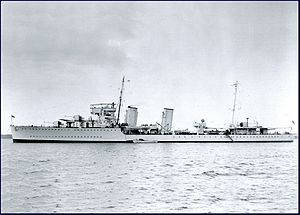
Canadian Navy Heritage website. Image Negative Number E-80027
Source: Library and Archives Canada/Department of National Defence fonds/PA-114155
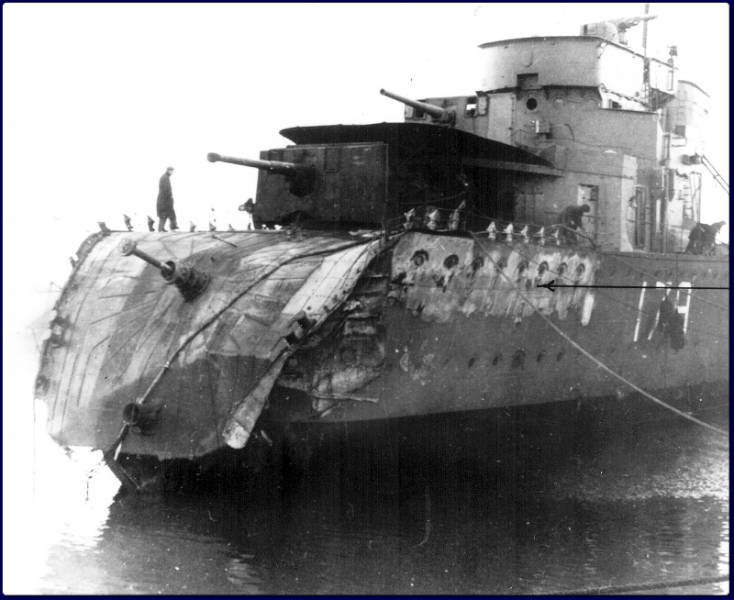
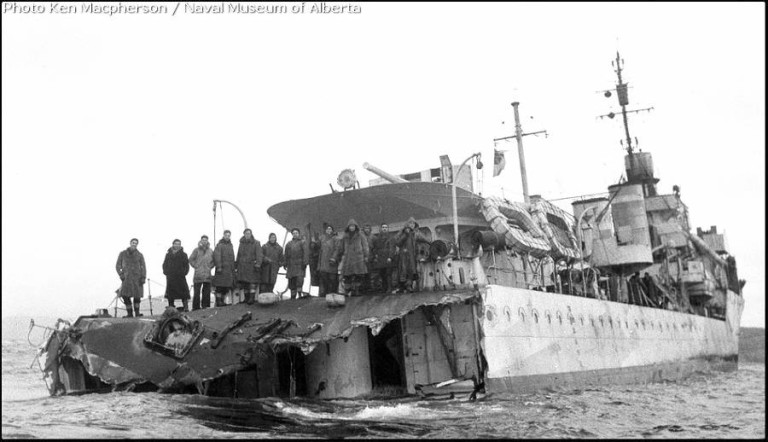
Torpedo damage to H.M.C.S. “Saguenay”, 7 Dec 1940
This photograph of the damage to HMCS Saguenay’s bow was kindly sent by Jane Naisbitt, Head, Military History Research Centre, Canadian War Museum, Ottawa, who also provided the information from Douglas et al.
Where are the graves?
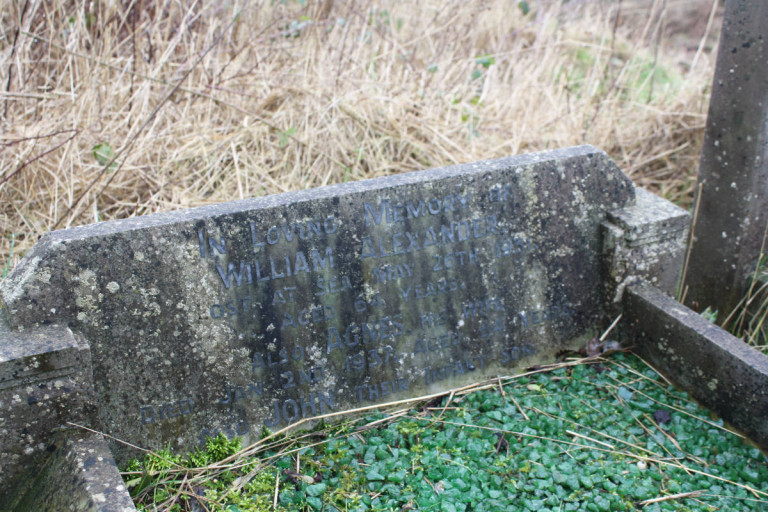
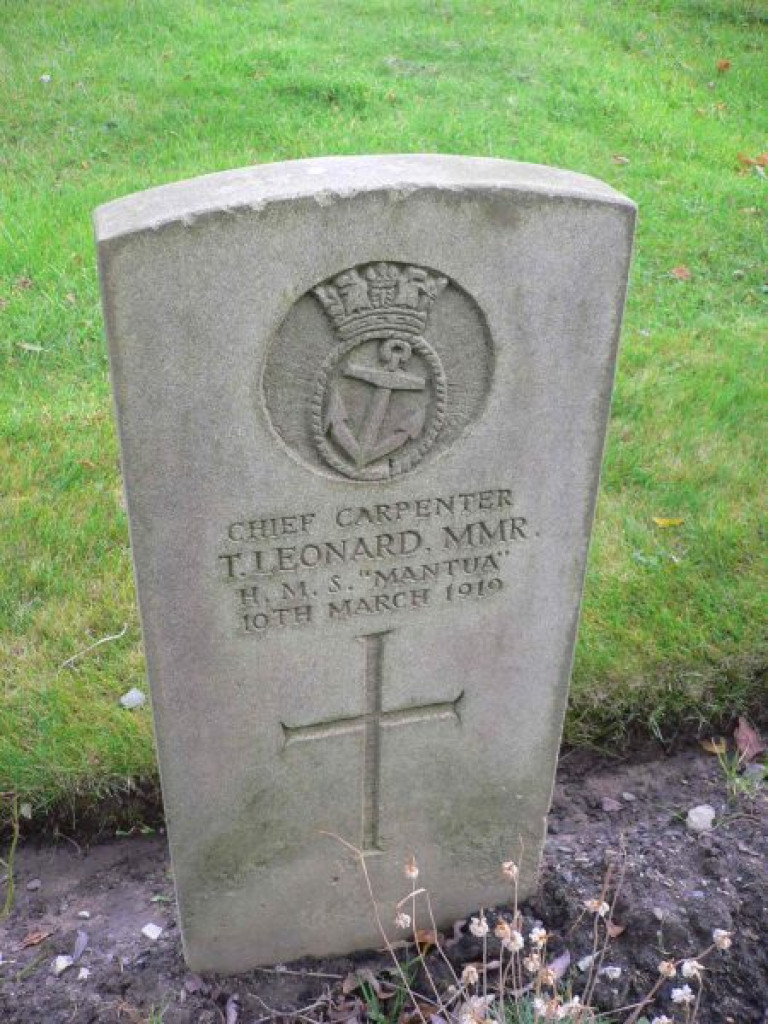
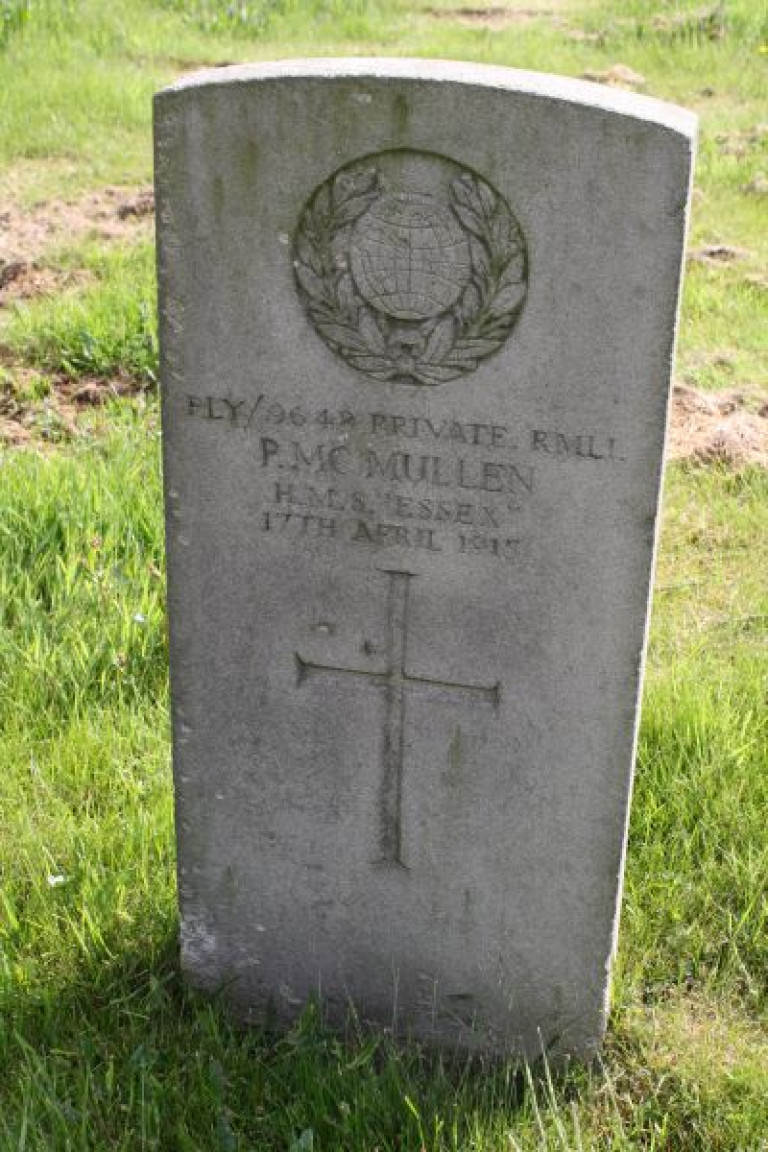
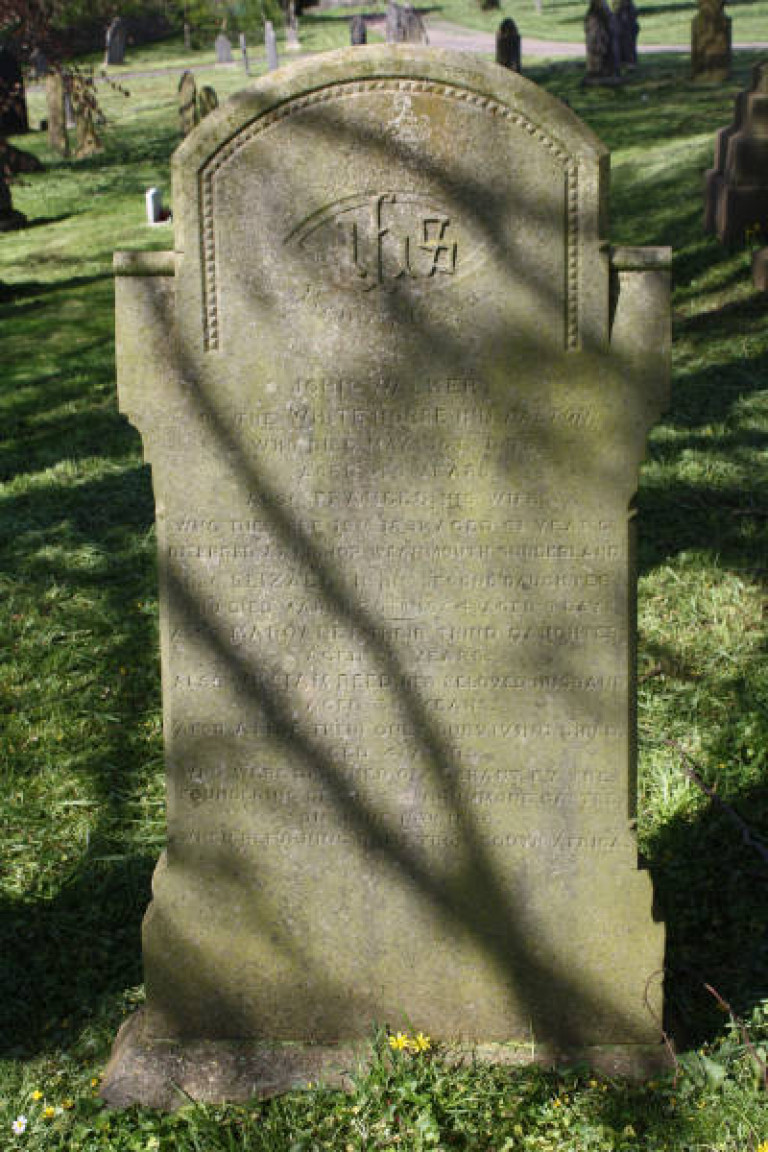
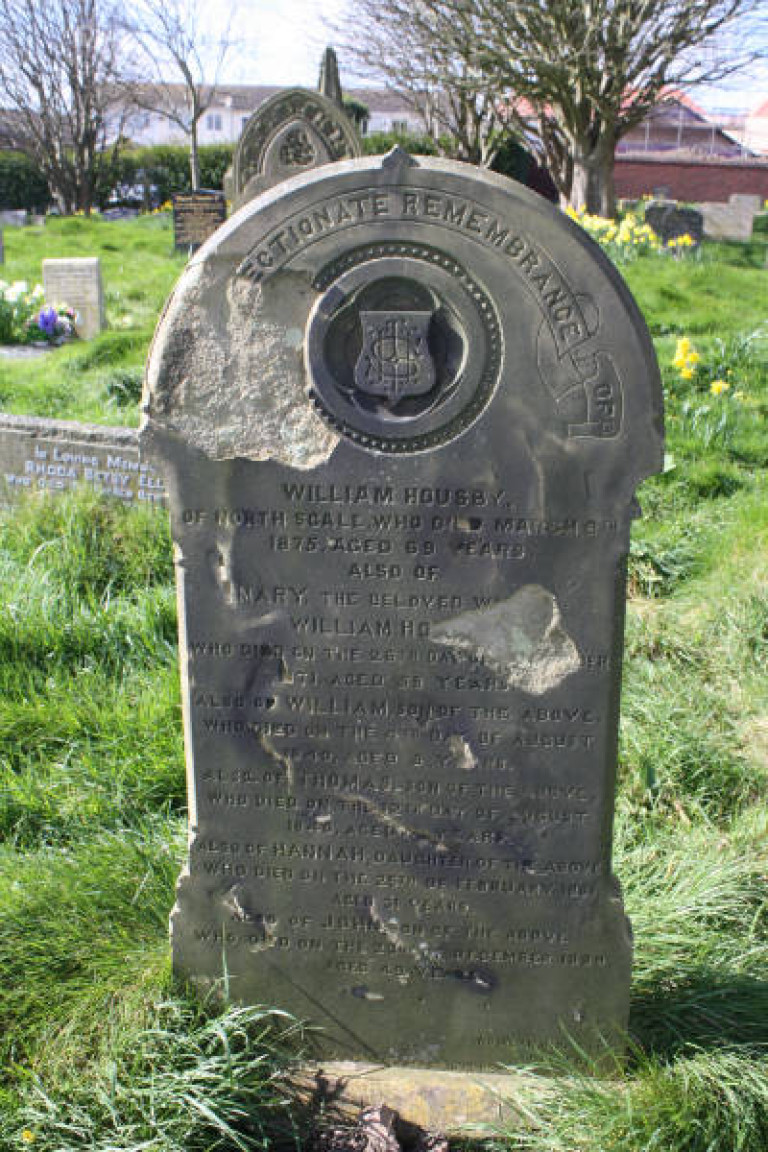
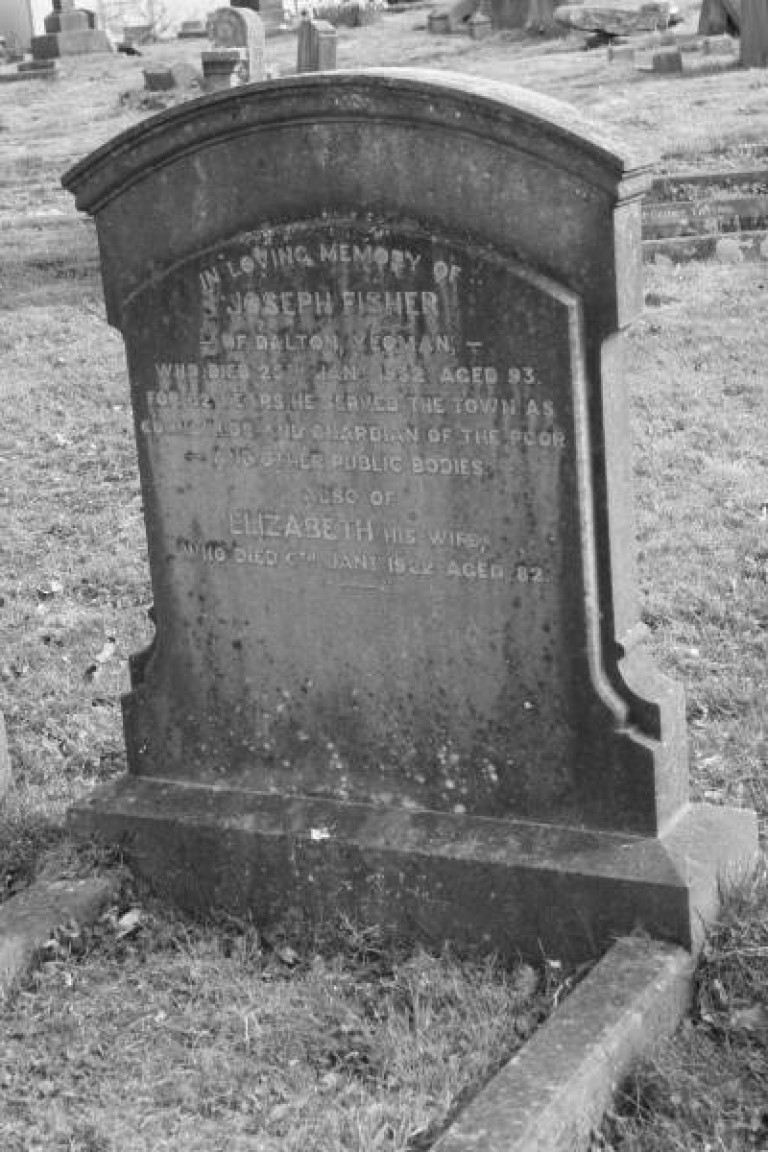
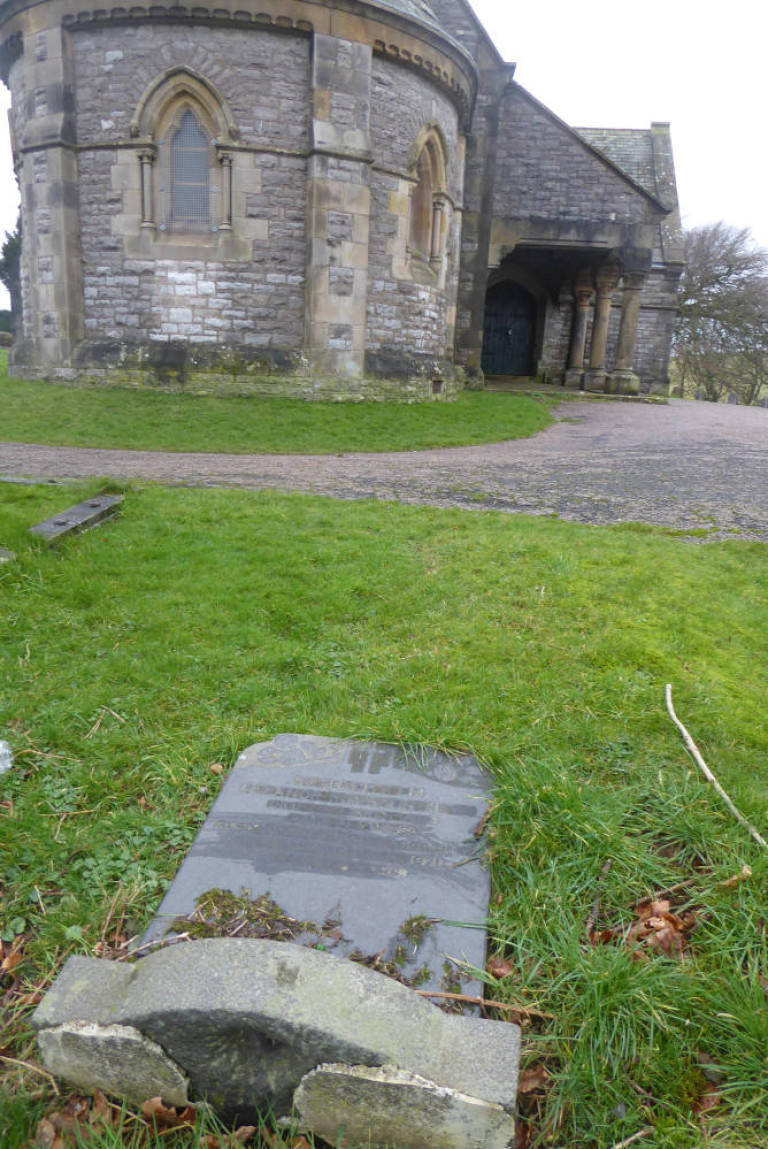
At various places: some were Catholic, some Anglican and some Non-Conformist, and are buried in the relevant parts of the cemetery.
Seamen lost when Italian submarine torpedoed the HMCS Saguenay 1st Dec 1940
| Surname | Forenames | Age | Memorial? | Rank | Service No. | How lost |
| Baker | William Stych | 19 | Halifax, Nova Scotia | Ordinary Seaman | RCNVR V5561 | M.P.K.(Torpedoed) |
| Bennett | Henry MacDonald | 20 | Halifax | Able Seaman | RCN 3519 | M.P.K.(Torpedoed) |
| Brown | Paul Albert | 20 | Halifax | Able Seaman | RCN 3119 | M.P.K.(Torpedoed) |
| Cook | Albert Carlton | 20 | Halifax | Ordinary Seaman | RCNVR V7669 | M.P.K.(Torpedoed) |
| Cowling | Oliver | 22 | Barrow-in-Furness | Ordinary Seaman | RCNVR V5657 | Killed. (Torpedoed) |
| Doiron | Elmer J | 20 | Barrow-in-Furness | Ordinary Seaman | RCNVR V1213 | Killed. (Torpedoed) |
| Dougan | Harold E | n/k | Barrow-in-Furness | Ordinary Seaman | RCNVR V1271 | Killed. (Torpedoed) |
| Goring | Willian A | 30 | Barrow-in-Furness | Able Seaman | RCNVR V5796 | Killed. (Torpedoed) |
| Gougeon | Joseph Roger | n/k | Halifax | Able Seaman | RCN 3479 | M.P.K. (Torpedoed) |
| Hare | Harvey William | 21 | Halifax | n/k | RCNVR V227 | M.P.K. (Torpedoed) |
| Le Gare | Hector | 21 | Barrow-in-Furness | Able Seaman | RCNR A2084 | Killed. (Torpedoed) |
| Lynch | Budd Frederick | 30 | Halifax | Vict. Ass. (Victualling Assistant?) | RCNVR 40613 | M.P.K. (Torpedoed) |
| Maziere | George | n/k | Barrow-in-Furness | Able Seaman | RCNVR V5309 | Killed. (Torpedoed) |
| Morrison | David Adamson | 19 | Halifax | Ordinary Seaman | RCNVR V7587 | M.P.K. (Torpedoed) |
| Purvis | Henry | 19 | Barrow-in-Furness | Ordinary Seaman | RCN 3585 | Killed. (Torpedoed) |
| Sheppard | Henry Joseph | 20 | Halifax | Able Seaman | RCN 2996 | M.P.K. (Torpedoed) |
| Spencer | Frederick | 20 | Barrow-in-Furness | Ordinary Seaman | RCNVR V16051 | Killed. (Torpedoed) |
| Strickland | Stanley George | 19 | Halifax | Able Seaman | RCN A1657 | M.P.K. (Torpedoed) |
| Sweeney | Charles Henry | 33 | Halifax | Leading Seaman | RCN 2164 | M.P.K. (Torpedoed) |
| Tweedie | John Samuel David | 25 | Halifax | Ordinary Seaman | RCNVR V7417 | M.P.K. (Torpedoed) |
| Tyndall | William David | 19 | Halifax | Ordinary Seaman | RCN 3607 | M.P.K. (Torpedoed) |
Note that of the 21 killed, only 8 bodies were buried, all in Barrow.
HMCS Saguenay (D79/I79) was a River-class destroyer that served in the Royal Canadian Navy from 1931- 1945. She was similar to the Royal Navy's A-class.
She was built by John I. Thornycroft & Company at Woolston, Hampshire and commissioned into the RCN on 21 May 1931 at Portsmouth. Saguenay and her sister Skeena (D59) were the first ships specifically built for the RCN. Her first two commanding officers went on to become two of the most important Admirals of the Battle of the Atlantic. She arrived in Halifax, on 3 July 1931.
For the first month of Second World War, HMCS Saguenay was assigned to convoy duties in the Halifax area. In late September 1939, she was assigned to the American and West Indies Squadron based at Kingston, Jamaica. On 23 October 1939, the German-flagged tanker Emmy Friederich scuttled herself on encountering Saguenay in the Yucatan Channel, and thus became the Canadian destroyer's first war conquest. In December 1939, Saguenay returned to Halifax to join the local convoy escort force, with which she remained until 16 October 1940, when she was transferred to Greenock, Scotland to serve as a convoy escort on the North Atlantic run. On 1 December 1940, Saguenay was torpedoed 300 miles (480 km) west of Ireland by the Italian submarine Argo while escorting Convoy HG-47, and managed to return to Barrow-in- Furness largely under her own power, but with 21 dead and without most of her bow. (See picture top right)
After repairs at Greenock, she returned to sea on 22 May 1941. Saguenay was assigned to Escort Group C- 3 escorting convoys ON-93, HX-191, ONS-104, SC-90, ON-115, HX-202, ON-121, SC-98, ON-131, HX-210 and ON-141 prior to a collision while escorting SC-109.[2] On 15 November 1942, Saguenay was rammed by the Panamanian freighter Azra off Cape Race, Newfoundland. The impact of the collision set off Saguenay's depth charges, which blew off her stern.
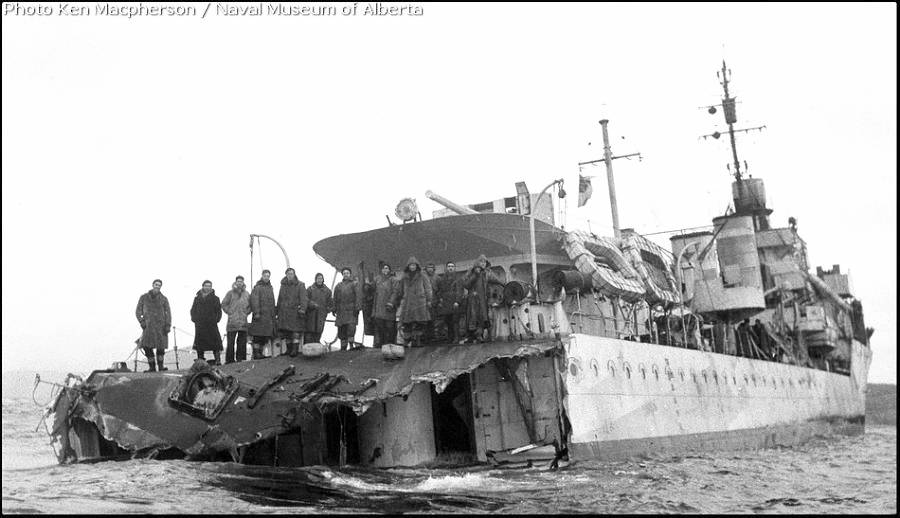
She made port at Saint John, New Brunswick, where her stern was plated over. On 23 May 1943, Saguenay was transferred to Halifax, to serve with the Western Ocean Escort Force working from Halifax and St. John's, Newfoundland. In October 1943 Saguenay was towed to Digby, Nova Scotia, as a tender assigned to HMCS Cornwallis, the Royal Canadian Navy's training depot for new entries (recruits). She was used for teaching seamanship and gunnery until 30 July 1945, paid off in late 1945, and broken up in 1946.
“The Board of Inquiry, its members impressed by their visit to the shattered, fire-scarred hull, concluded ‘that the steaming of this ship safely back to harbour, in the condition in which we saw her, represents a very considerable feat of seamanship and endurance, and it is one that reflects great credit on her Captain, Officers and Ship’s company.’ ..... For saving Saguenay, Commander Miles was made an Officer of the Order of the British Empire.” (p124)