Second Lieutenant Robert Meres Stainton
Died on the first day of the Somme offensive
Robert Stainton served with York and Lancaster Regiment 10th Bn., and is commemorated on the Thiepval Memorial, pier and face 14A & 14B.

31 January 2013

Barrow News 15 July 1916
Where is the grave?
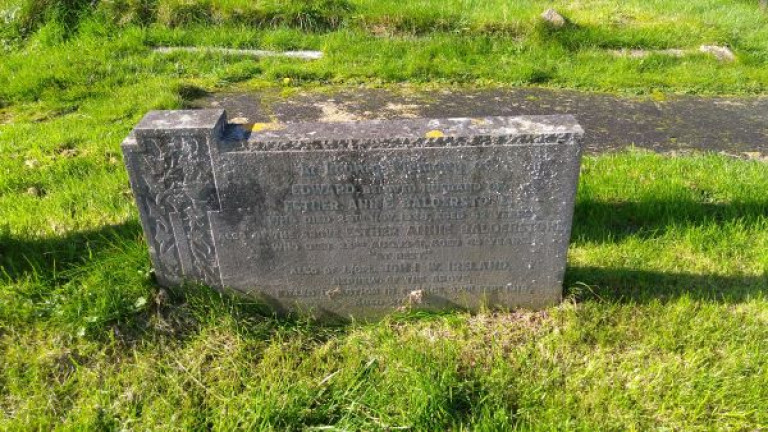
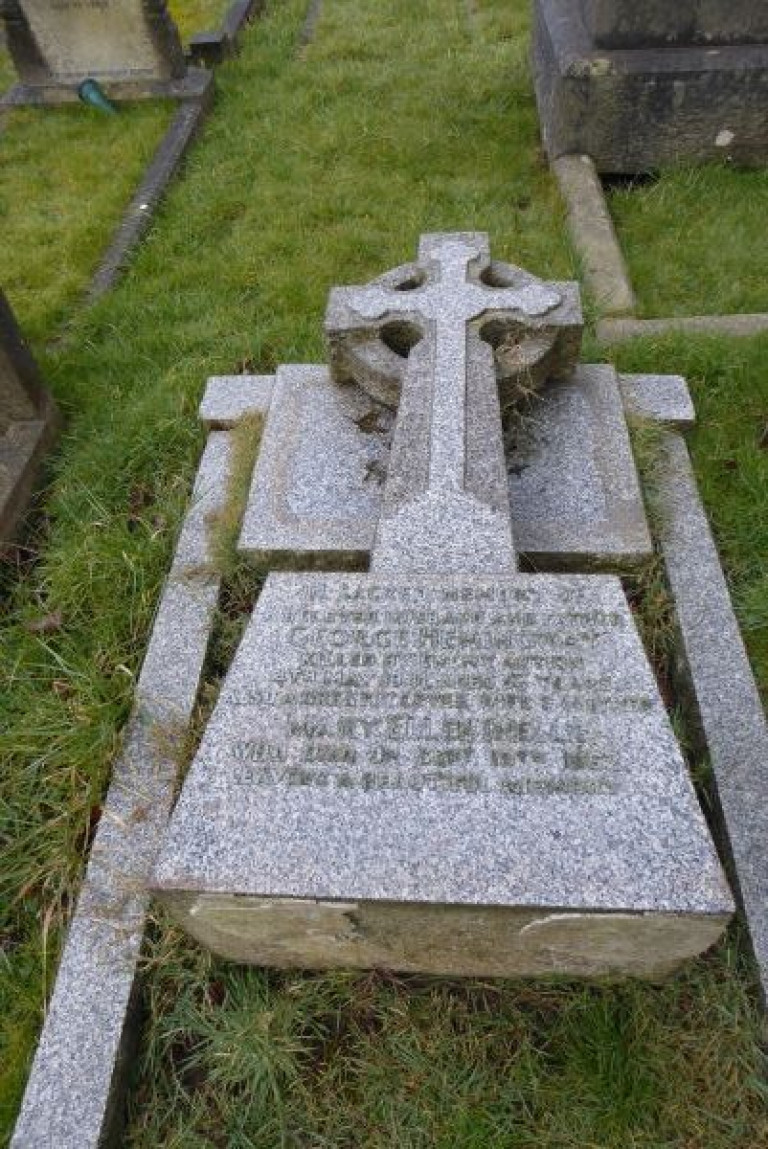
At the far end of the Cemetery, go past the Catholic Chapel and turn left down the furthest path. At the furthest point, they are in a row on the right, near other CWGC headstones.
On Saturday April 8th 1916, the Barrow News published a good luck story, headed BARROW OFFICER’S NARROW ESCAPE: SAVED BY HIS POCKET BOOK. They wrote:
The Barrow News, April 8th 1916No doubt in this war many officers and men will be able to recount on their return home instances of miraculous escapes from death which they experienced during their fighting days. One of these exeriences has come to Sec.-Lieutenant Stainton, son of Mr. Walter Stainton, of 37, Mount Pleasant, and it is one which will excite lively interest among our readers. Lieut. Stainton, who is with the 10th York and Lancaster Regiment, met with his adventure on New Years’s Eve. On going into the trenches he discovered that his wrist watch was out of order, and borrowed an ordinary silver watch from one of his men for use while on duty. This he placed in his vest pocket. In the inside left pocket of his tunic there was a pocket-book, and this contained a couple of French notes. All went well during the day, but in the evening on returning with his captain, when walking down the long trench towards the reserve billet to sleep for the night, he suddenly felt a blow in his left breast, which seemed to fall with the force of a sledge-hammer. Beyond being hit, however, he felt no pain, and the reason was plain when he took from his pocket the pocket- book and the watch. Embedded in the former was a bullet. It had pierced practically through the book, its course being finally stayed by coming in contact with the case of the watch with a force which may be judged by the indentation on that article as seen in the photos reproduced here. (Quality not good enough to show here) .. It was a memorable New Year’s Eve for Lieut. Stainton and his many friends will congratulate him on his miraculous escape, for had the bullet struck but a small distance to the right of where it actually did, there would be a much less cheerful occurrence to record.
However, on Saturday July 15th 1916, the News reported FALLEN IN THE FIGHT: LOCAL HEROES WHO HAVE DIED FOR EMPIRE that Lieut. Stainton had been killed in action (along with others):
The Barrow News, July 15th 1916... In his letter announcing the sad fact, Lieut.-Colonel Ridgway says: “His death is a great loss to me, as he was an officer who showed great promise of doing good work in the times that are coming. His company was one of the first over the parapet on the memorable occasion, and I feel sure that he was one of the first to get over. He was buried on the field of battle along with other men of his company."
Mr Stainton (and daughter Florrie) was still putting Robert’s death in the In Memoriam column of the Barrow News in 1944.
From Keith Johnson’s research into former Municipal/Grammar School Boys:
After attending school, Bob went up to University College, Nottingham where he joined the Officer Training Corps. On the outbreak of war, Bob applied for a commission, but grew impatient in waiting and enlisted as a private soldier in the King’s Own Royal Lancaster Regiment. He was quickly selected for a commission, transferring to the 10th Battalion Yorks and Lancasters. He went to France with them in early 1915. Bob was killed aged 22, on the first day of the Battle of the Somme, gallantly leading his men right into the trenches at Fricourt. His body was never recovered and his name is inscribed on the Thiepval Memorial, the Honours Board at Nottingham University and, of course, Barrow Grammar School Memorial Board.