Robert Cecil Stables
Robert Stables shows that the Barrovian willingness to travel for employment has long been a feature of the town.

5 March 2013
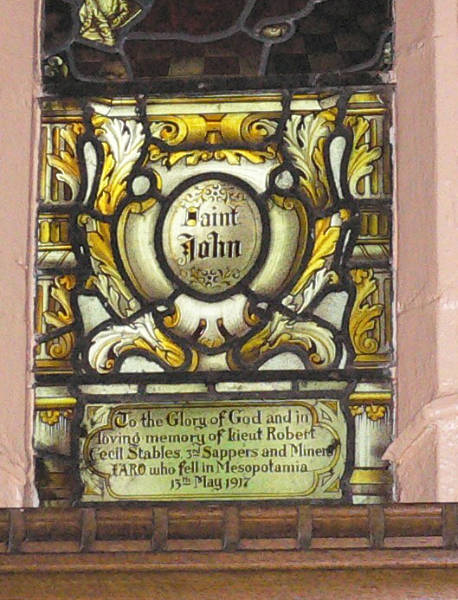
24 January 2013: Window in St Paul’s Church
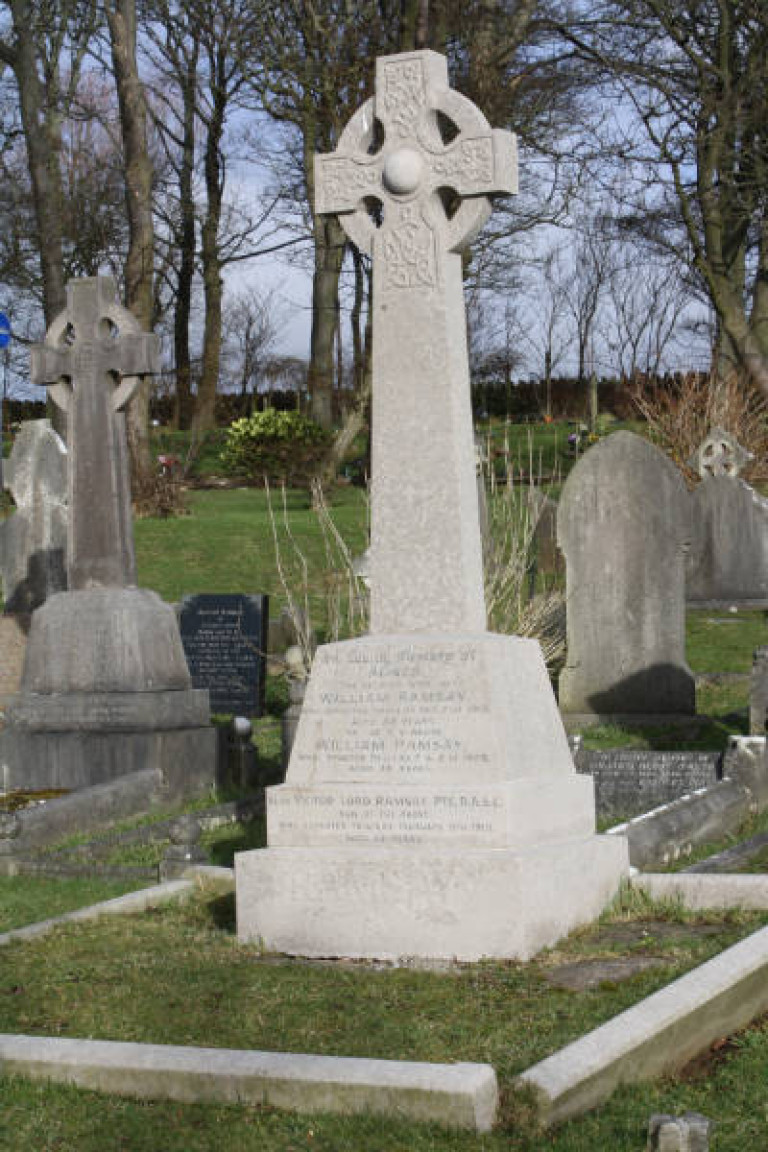
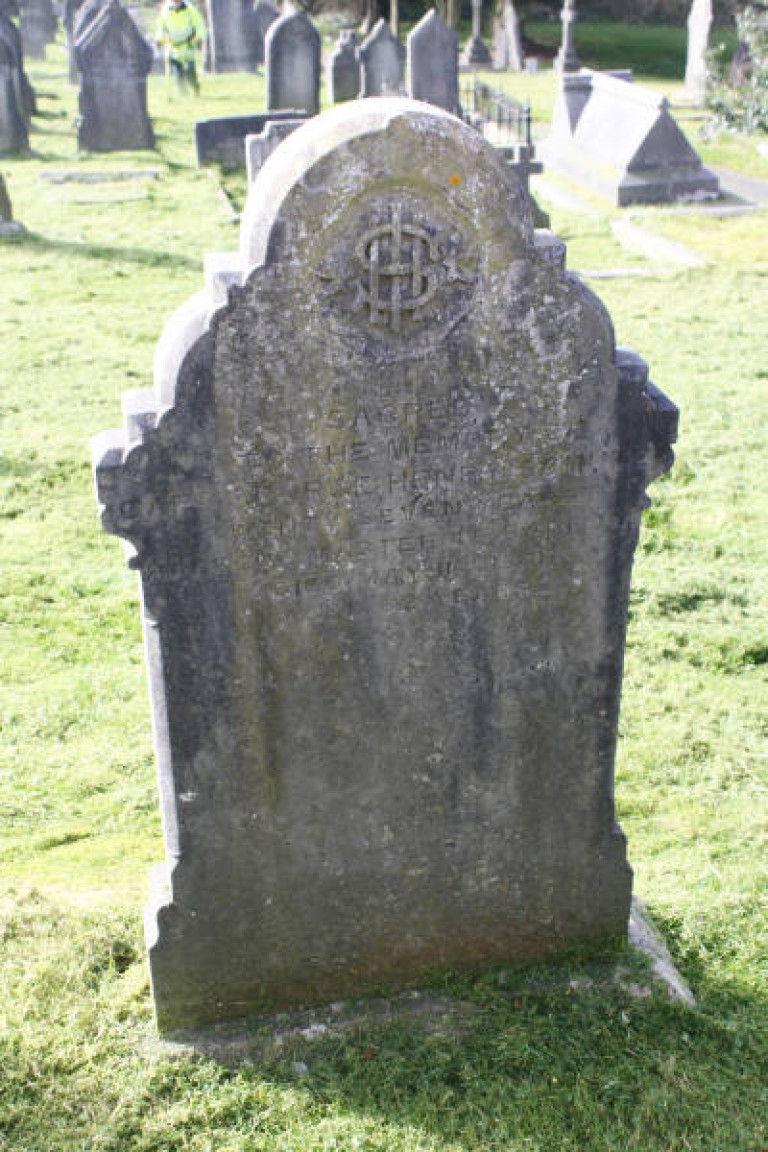
Where is the grave?
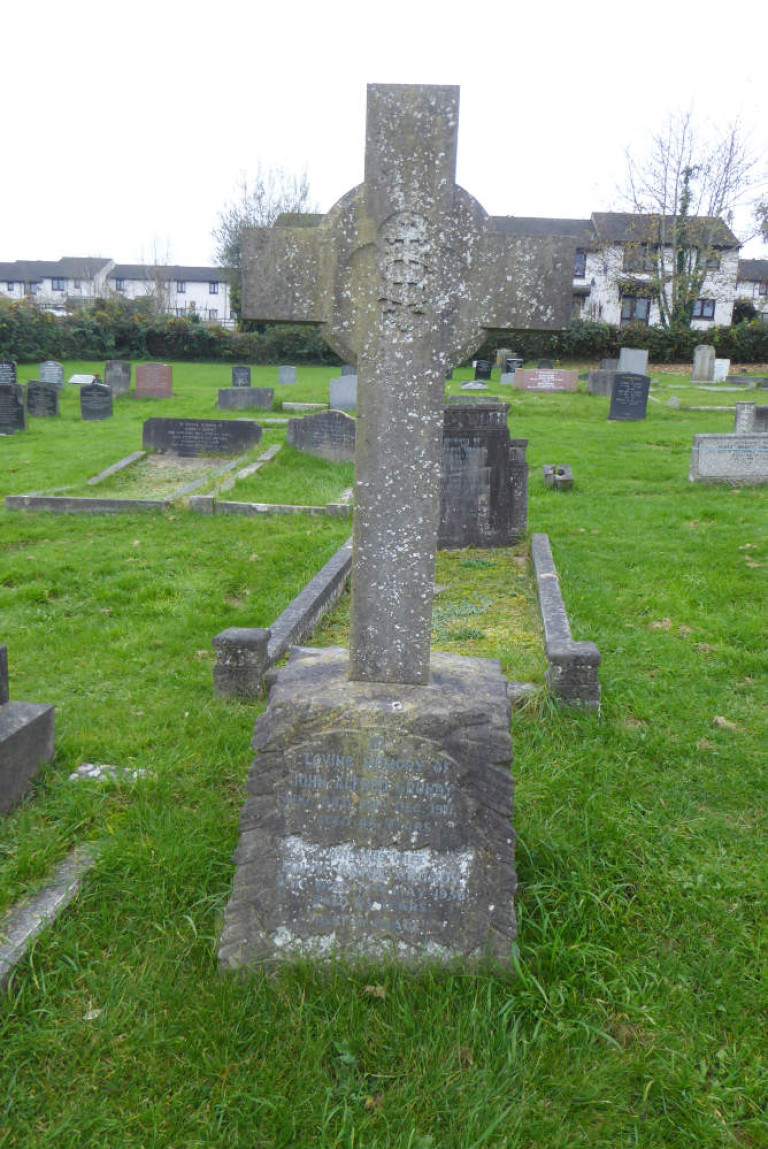
Walk up the main path from the cemetery entrance, past 4 or 5 paths on the left, and it is set back one row on the left (before the north exit is reached).
Robert has a window dedicated to him in St Paul’s Church, Newbarns.
R C Stables is also commemorated on the Basra Memorial, Iraq, which has recently been moved.
His brothers survived the war.
The Stables family residence, Newbarns House, Newbarns is now 19 Newbarns Village, on the corner of Fairfield Lane, opposite the Farmers Arms.
The North West Daily News Saturday June 16th 1917 reported, over a month after his death:
BARROW OFFICER KILLED
SON OF CORPORATION OFFICIAL
Official news has been received in Barrow that Second-Lieut. Robert Cecil Stables, Newbarns House, Barrow is ‘missing, believed killed’. Second-Lieut. Stables was educated at the Secondary School, Barrow and afterwards proceeded to Cambourne, where he completed his education, and trained as a mining engineer. He was offered a post-graduate appointment by the Institute of Mining and Metallurgy, which he accepted, and proceeded to the Transvaal, subsequently receiving from the Institute a certificate of satisfactory completion of the course. Prior to the outbreak of war he accepted another position in India, with a Belgian firm; but before he reached his destination hostilities had commenced; and the mines were closed. Mr. Stables, however, at once approached the commandant at Kirkee, and obtained a commission, and he remained in India in training for twelve months. Subsequently, he proceeded to Mesopotamia with the Sappers and Miners, and more recently was attached to the Rajputs. His twin brother Harry Gordon Stables, is serving with the R.A.M.C. and his eldest brother, W.A. Stables, is serving with the Heavy Artillery in France. Mr. M. Stables, father of the missing officer, is building inspector at Barrow, and to him and Mrs. Stables much sympathy will be extended on account of the anxiety and suffering which must be occasioned by the ominous news. It is feared that their son has been killed.
Since the above was written, Mr. Stables has received the following telegram which, unfortunately, confirms the belief that his son had died in action. – “Deeply regret to state your son, Second-lieut. R. C. Stables, Indian Army Reserve, attached to the 3rd Sappers and Miners, previously reported missing and believed killed, on May 13th, is now officially reported from the Persian Gulf, killed in action on May 13th. Secretary Chamberlain desires to express sincere sympathy in the loss of this gallant officer. – Military Secretary, India Office.”
North West Daily News, Saturday June 16th 1917
From Keith Johnson’s research into former Municipal/Grammar School Boys:
Robert left school in 1908 to train as a mining engineer, and when the war started he was working in Witwatersrand in South Africa. His engineering experience was put to work leading sappers and miners of the Indian Army during the campaign against the Turks in Mesopotamia. The school magazine wrote: “Robert met his death on a reconnoitring expedition when his small company was overwhelmed by a large marauding band.”