Died
Barrow 21st July 1978
Born
Potterspury: 29th May 1902 (Near Towcester, Northants)
Sources
The Evening Mail
National Football Museum
enfa.co.uk
Place
Themes
Walter John (Jack) Baggett
Professional footballer
Played for Wolverhampton Wanderers (never made 1st team) 1922/3;
Bolton Wanderers 1923/4 – 1926/7 (no appearances 1924/5);
Reading 1927/8 – 1931/2.
106 career appearances; 31 goals.
Position: Inside Forward.
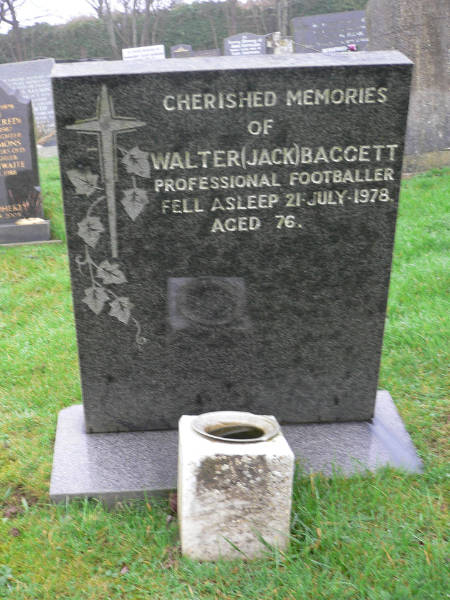
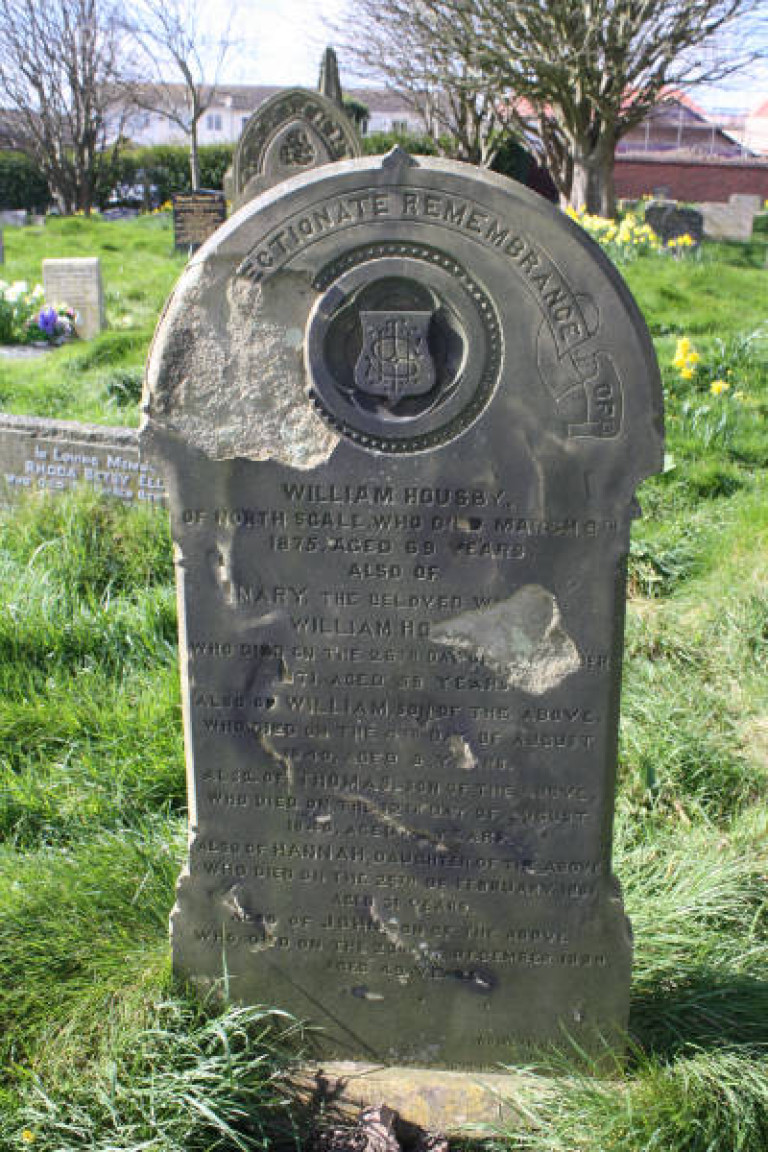
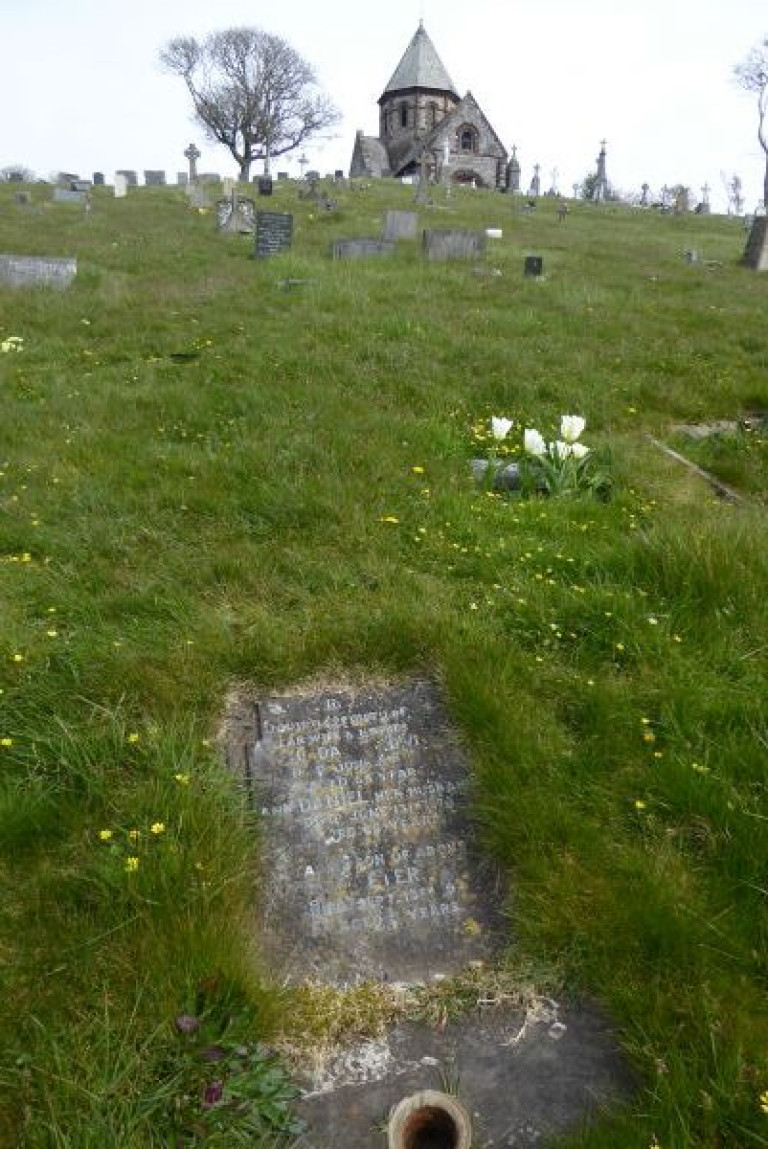
Where is the grave?
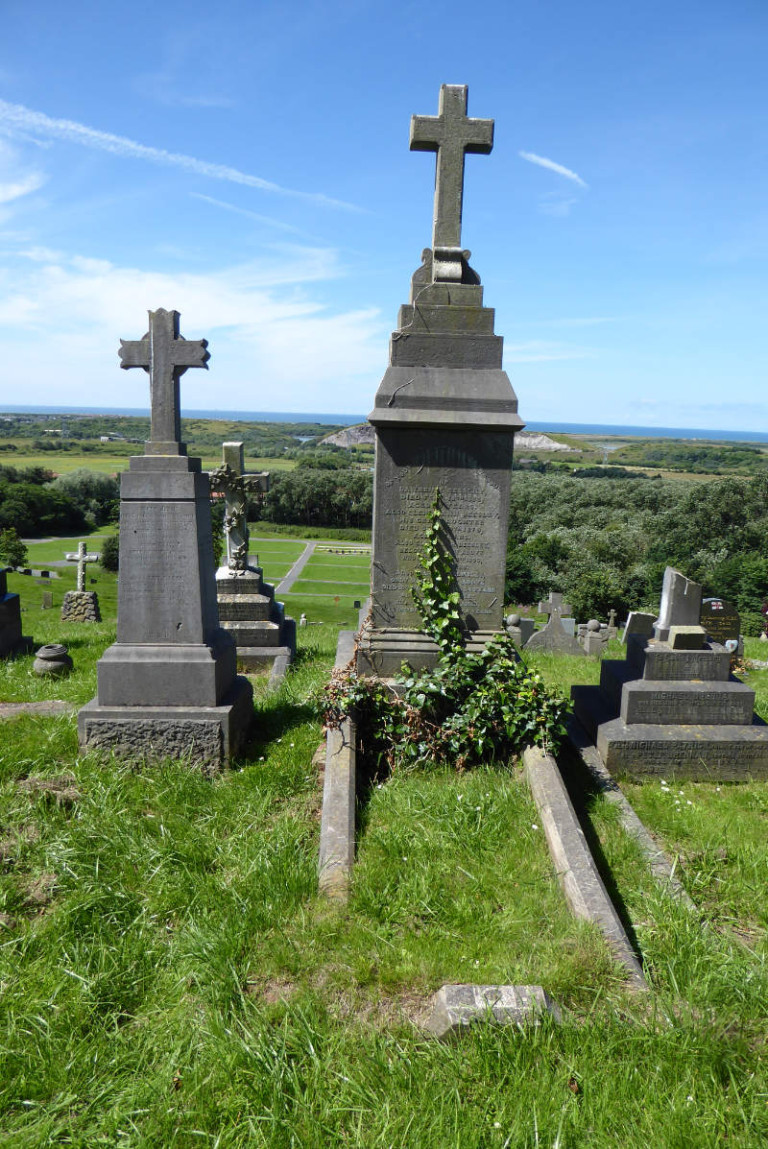
Walk up the main path past the Crematorium. At the Catholic chapel, turn right and right again. It is a few steps along on the left, but not directly next to the path.
The (Barrow) Evening Mail’s sports pages on Monday 24 July 1978 read:
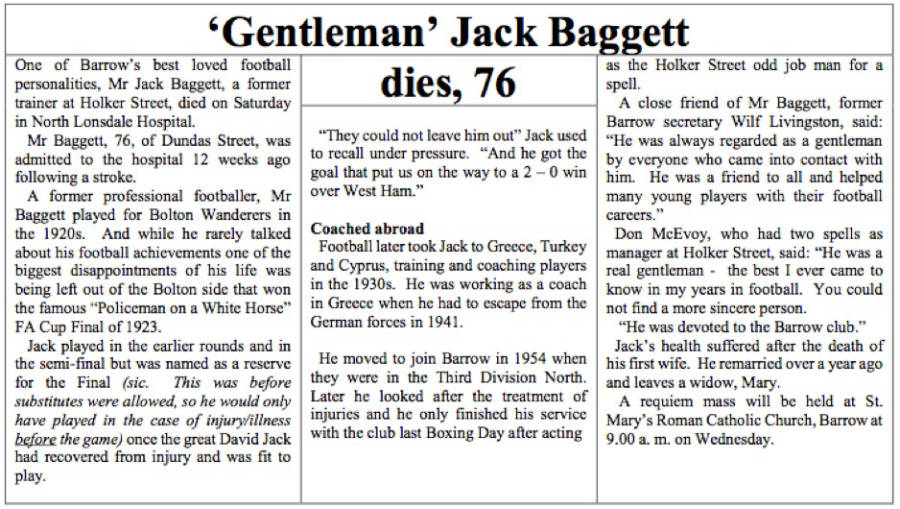
The story in the local paper appears to be entirely mythical: he wasn't even at Bolton at the time of the 'White Horse Final', and only made 2 appearances in the following season. He didn’t play in the 1925/6 Final, which Bolton won.
Peter Holme from the National Football Museum kindly replied to my enquiry:
Peter Holme, National Football MuseumThe only Baggett we have in the record books (Football League players by Michael Joyce) is Walter John ("Bill") Baggett who I assume is the same man as he played for Bolton and Reading and died in 1978. I attach his full playing record, from 1923 to 1932, including all League games played and goals scored, taken with kind permission from the online English National Football Archive, enfa.co.uk.
He played at inside right or inside left and was born in Potterspury (Northants) on 29th May 1902. He first played for Victoria Ironworks (I cannot say where that is) then Wolverhampton Wanderers, but he played no first team games for them. He transferred to Bolton Wanderers and played for 4 seasons in Division 1 and then on to Reading for 5 seasons, playing in divisions 2 & 3 (south). In between he may have played an odd game for non-league Colwyn Bay. After Reading he played for non-league Tunbridge Wells Rangers.