Margaret Barnes
Oubas Hill motor accident 24 May 1920
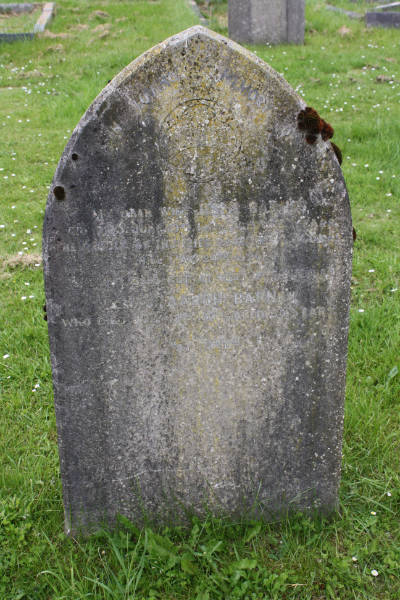
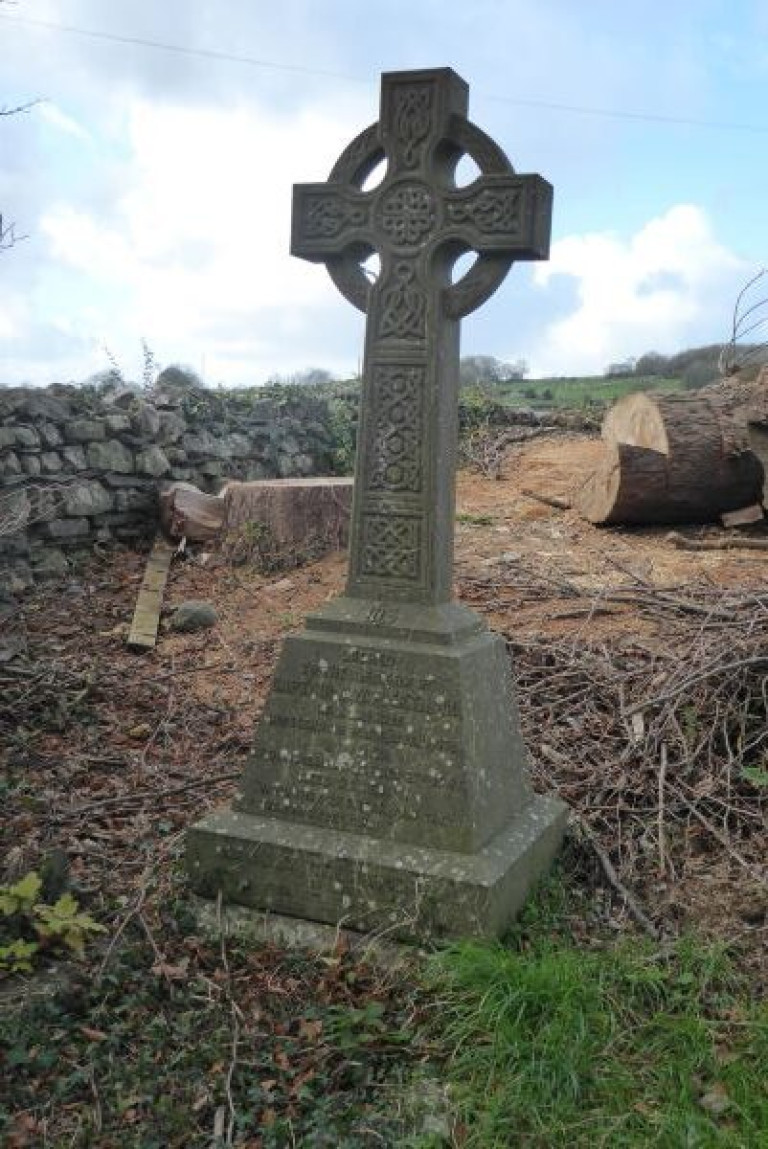
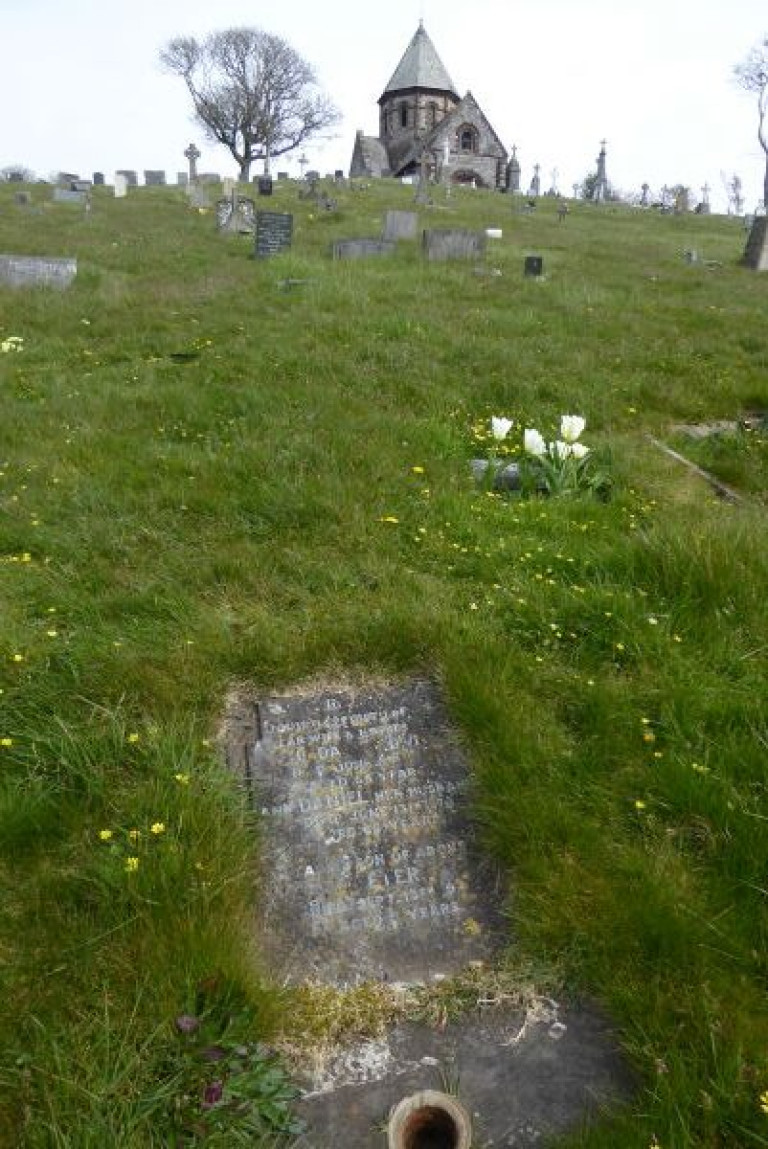
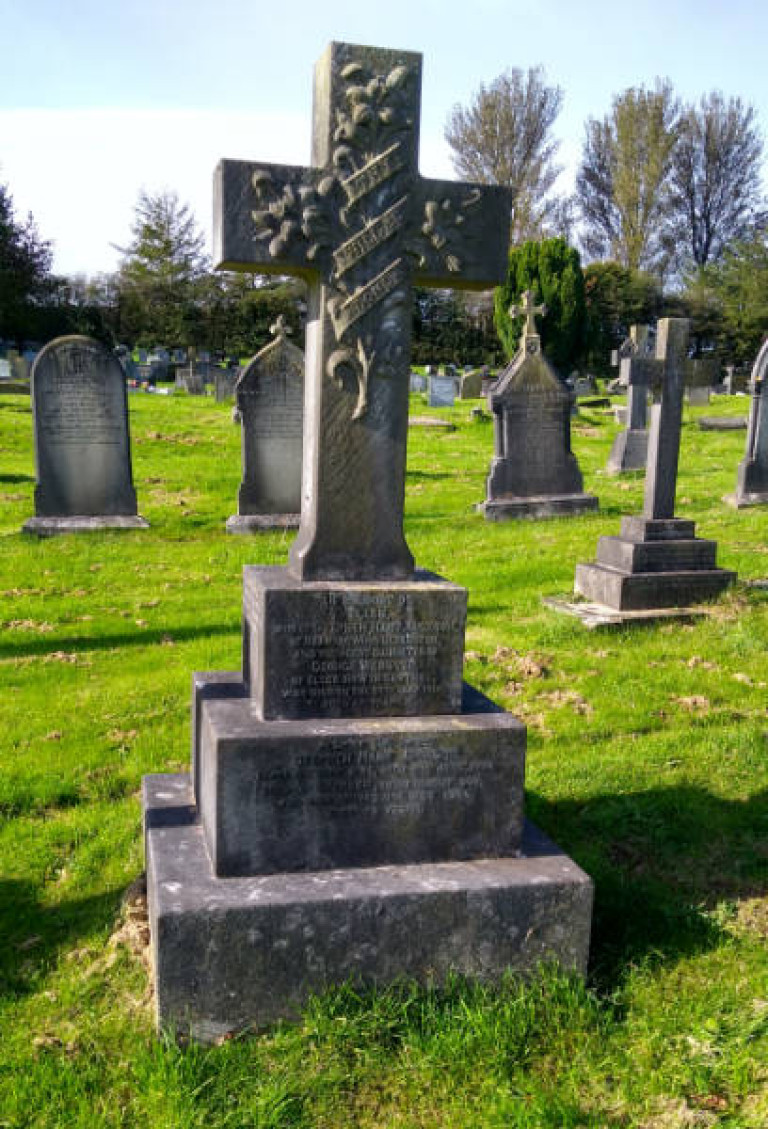
IN LOVING MEMORY OF
MARGARET BARNES
WHO WAS KILLED AT OUBAS HILL, MAY 24TH 1920
AGED 61 YEARS
ALSO IN LOVING MEMORY OF
FREDERICK JAMES BARNES
DIED DECEMBER 18TH, 1903, AGED 18 YEARS
INTERRED AT WEST DERBY
AND ELEANOR JANE BARNES
DIED DECEMBER 25TH, 1891, AGED 3 YEARS
INTERRED AT WALTON.
ALSO OF FREDERICK JAMES BARNES
FATHER OF THE ABOVE
WHO DIED NOV. 5TH, 1926, AGED 67 YEARS, AND
EDWARD AARON BARNES,
GRANDSON OF THE ABOVE,
WHO DIED DEC. 21ST, 1922, AGED 3 WEEKS
“THY WILL BE DONE”
A brief note in the Barrow News 29 May 1920 recorded:
Barrow News, 29 May 1920THE WHIT-MONDAY ACCIDENT - On making enquiries yesterday at Ulverston Cottage Hospital concerning the condition of the three patients who were injured in the motor accident on Whit-Monday, our representative was informed that Mrs. Jessie Barnes is progressing favourably, though she has not yet been pronounced out of danger. Her husband has so far recovered from the injury to the head that he is permitted to go into the grounds, whilst the little girl, Freda, has been removed to the Ben Crag Farm.
Elsewhere in the same edition appeared:
Barrow News, 29 May 1920FATALITY AT ULVERSTON
MOTOR CAR COLLIDES WITH PEDESTRIANS
ONE WOMAN KILLED; ANOTHER SERIOUSLY INJURED
On Monday evening the Whitsun holiday was marred by a lamentable occurrence at Oubas Hill, Ulverston, a motor car returning from Cartmel races coming into collision with a party of pedestrians, proceeding in the same direction, consisting of a mother, son, daughter-in-law and adopted daughter, with the result that the first-named was killed almost outright, and the three others more of less seriously injured.
The party, it seems, were returning from picnicking on the shore at Plumpton, and on coming out of Lishman’s Lane, crossed the road on the right-hand side, and were walking near the footpath in the direction of the town when the accident occurred.
The names of the injured were:- Mrs. Margaret Barnes, wife of Frederick Barnes, of 29, Ellers, Ulverston; her son Aaron Barnes and his wife, Jessie Barnes; and their adopted daughter, Freda Stirrup, a young girl, all residing at the same address.
The scene of the accident was on the main road between Oubas Hill and the Canal Tavern, and close to the three cottages on the right hand side.
The sufferers, all of whom were profusely bleeding, were carried into the cottages occupied by Mrs. Holmes and Mr. Kellett. Drs. Bowman and Ashburner were soon in attendance and had them quickly conveyed to the Cottage Hospital in the ambulance van.
Mrs. Barnes, the elder, who had got dragged underneath the car, was found to be dead on admission, the base of the skull having been fractured. Aaron Barnes is suffering from severe injuries to the head, and his wife, who was nearing her confinement, sustained a fracture to the leg and other severe injuries. The little girl was cut about the head.
The deceased woman, who was 61 years of age, for some years carried on a small sweet and grocery business in the Ellers.
According to inquiries made by the police, the driver of the motor car, Mr. J. Gudgeon, of Market-street, Ulverston, who was accompanied by his wife, was at the time of the accident passing a heavy motor vehicle laden with passengers which was travelling on the middle of the road. Directly the car got from behind this vehicle the driver for the first time saw the four people walking in front, but not soon enough to avert collision.
The motor car was only slightly damaged, and the driver escaped with a severe shaking.
THE INQUEST
Before Mr. Coroner Poole, and a jury, of whom Mr. T. Baines was foreman, and inquest was held on Wednesday at the Ulverston Court House concerning the death of Margaret Barnes, one of the victims of the motor mishap.
Mr. R.B. Jackson, solicitor, represented Mr. J. Gudgeon, the driver of the car.
Fred James Barnes, the husband of the deceased woman, testified that she was 61 years of age.
George James Kellett, wheelwright, of Oubas Hill cottages, gave evidence that about 7.20p.m. he was in front of his house when he noticed a horse char-a-banc proceeding in the direction of Ulverston, followed by a heavy motor-lorry laden with passengers. The lorry, which was about the middle of the road, was trying to pass the charabanc, but he did not know whether it actually passed or not. He also saw four people on foot coming in the same direction. They were walking close to the footpath on the right-hand side of the road and close to the cottages. He next saw the motor car in question coming from behind the motor-lorry, the pedestrians at that time being alongside the lorry and about six or eight yards in front of the car. The car seemed to strike the kerb, and then the driver appeared to have lost his head, because the car wobbled about and then struck the people in front.
A MODERATE SPEED
The car was travelling at a nice moderate speed, but this was increased when passing the lorry, whose speed he estimated at about 12 or 14 miles an hour.
Replying to the Coroner, the witness said the car travelled from 45 to 50 yards after striking the people. The deceased’s son was dragged about that distance, and the others were thrown against the kerb. He did not hear any horns sounding. He went to the assistance of the injured. The deceased woman was carried into his house, and the others into Mrs. Holmes’s. The deceased died as soon as she got to the hospital.
According to Mr. Jackson, the witness said the horse-drawn conveyance was on the left-hand side, the motor-lorry following in the middle of the road.
William Furlong, a motor-driver, Barrow, was in charge of the motor-lorry. He said his speed at the outside was ten miles an hour, and his near wheel was about 4ft. from the left-hand side of the road. He did not see the horse-drawn conveyance or the motor car. He did not hear any horn sounding, nor did he see any people in the road, but he went on to explain that the motor was partly covered in, which made it difficult to see or hear any noise. It was his little girl, aged 14, who told him about the accident, and he then turned back and saw the motor-car about 100 yards off.
Mr. Noble Wilson, of the firm of Wilson and Sons, motor engineers, who saw the conveyance pass Oubas House just before the accident, estimated the speed of the motor lurry (sic) and the car at about 10 miles an hour. When he first saw the car it was about 15 to 20 yards off the lurry, and he did not see anything of the accident.
P.C. Newton gave evidence that the width of the road was 30 ft., and there was a clear view from Oubas house for about a quarter of a mile.
EXAMINING THE CAR
David Edward Creighton, motor mechanic, Ulverston, spoke to examining the car shortly after the accident at the request of Mr. Gudgeon, who told him that he did not think the control was acting properly. Witness found that the foot accelerator had been broken at the neck, the effect of which would be to keep the engine running. The car was in second gear.
By the Coroner: It is quite possible the sudden application of the foot to the accelerator would break its neck.
Mr. Jackson: Might he not in the spur of the moment put his foot on the accelerator instead of the brake? – That is easily done.
And if that happened, the car would go on? – Yes.
Charles William Saul, hairdresser, Ulverston, gave evidence that he passed the motor lurry in a motor cycle and side car between Messrs. Wilson’s garage and Oubas House, and at that time the lurry was running on the crown of the road, which was then quite clear. He accelerated his speed to 12 or 14 miles an hour to pass the lurry. He had been all day with Mr. Gudgeon, who had a very slow car. When the accident happened he was about ten yards from the Ulverston side of the Canal Tavern. He heard a crash. He could have gone on either side of the motor lurry with safety. He did not see any horse vehicle on the road.
By Mr. Jackson: Mr. Gudgeon was about 100 yards behind when I passed the lurry.
P.C. Newton, recalled, spoke to seeing a horse-drawn char-a-banc at the top of Sunderland-terrace, coming from the direction of Greenodd. This was shortly before he was called to the scene of the accident. He did not know the owner.
Jonathan Gudgeon, motor cycle dealer, Lightburne-avenue, Ulverston, who volunteered to give evidence, after being duly cautioned, stated that about 7.20 p.m. he was driving a motor car in Ulverston-road. He was behind a heavy motor lurry laden with passengers, which was practically in the middle of the road. He gave the driver audible warning that he wished to pass, but he did not divert his course. Witness then swerved to the right-hand side of the road with the intention of passing the lurry. In the course of a lengthy examination he said he was much shocked on coming from behind the lurry to see the people about four yards in front, especially when he realised the engine was still running. He did everything possible to avert a collision. It was an 8 horse Humber car and it was in second gear at the time. As soon as he found the engine running he applied the side brake.
Replying to the Coroner, witness said he had been a licensed motor driver since 1903, and had been driving regularly since 1910. Since then he had been doing no driving until last year. This car had been off the road from October until about three weeks ago, and since then he had been driving it two or three times a week. He sounded his horn twice before coming from behind the lurry. The width of his car was five feet and the lurry was about eight feet from the side of the road. He did not remember anything about striking the kerb. If he had done so the mark would be on the tyre.
The Coroner suggested that the witness had been taking considerable risk in coming from behind the lurry when he could not see whether the road was clear.
In the course of his summing up, the Coroner remarked that there was no doubt at all that the driver of the motor lurry had contributed to a very great extent to the accident, because, as they had heard, he had taken up so much of the road that he forced Mr. Gudgeon to drive absolutely right up to the footpath. He accepted the entirely independent evidence of the first witness Kellett that there was a horse-drawn conveyance in front, and that the motor lurry was trying to pass it. The fact that there was a horse conveyance was practically confirmed by P.C. Newton’s evidence. He was not going to suggest in any way that that there was any criminal negligence on the part of Mr. Gudgeon. That he was not driving recklessly or at an excessive speed was proved by the evidence of an expert motorist. Having regard to the width of the road and the distance there was a clear view, there was no reason why a man should not drive up to 20 miles an hour without danger to the public, providing he was given (sic) himself a chance. In electing to go round the end of the motor lurry he certainly took a very considerable risk, because anything passing in the opposite direction would have no chance of getting out of the way.
THE VERDICT
After a brief absence, the jury returned a verdict of “Accidentally killed”, but with an expression of opinion that the motor driver was a little indiscreet in coming from behind the motor lurry in the way in which he did; but probably the driver of the lurry had not given him sufficient room to pass.
Transcribers comment: Narrow roads, a combination of horse-drawn and motor vehicles, and varied speeds, seem to have made roads quite dangerous. Would this verdict have been reached in the 21st century? I doubt it: the car driver at least would have borne some share of the blame for causing death by careless or dangerous driving.