Died
25 February 1907
Aged 16
Born
27 January 1891
Sources
Australian Women’s Weekly 14 March 1973
perthfolklore.com Spelling as original
paperspast.natlib.govt.nz
trove.nla.gov.au/newspaper
wrecksite.eu
genealogy.rootsweb.ancestry.com
Place
Walks
Ulverston 1 point 17
Harry Blamire
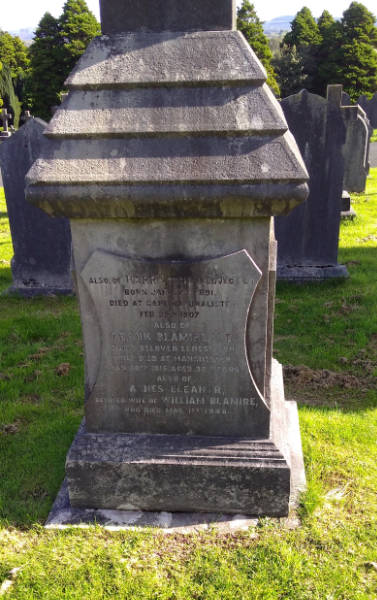
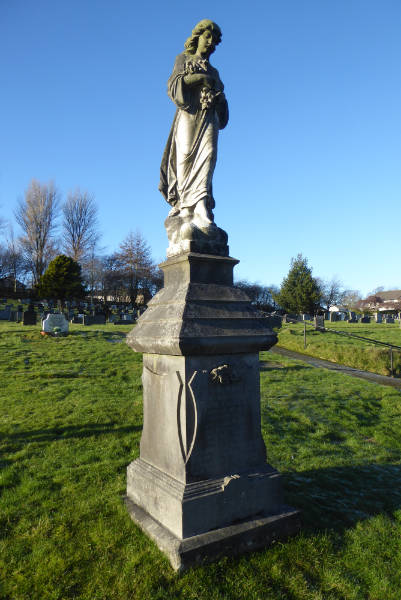
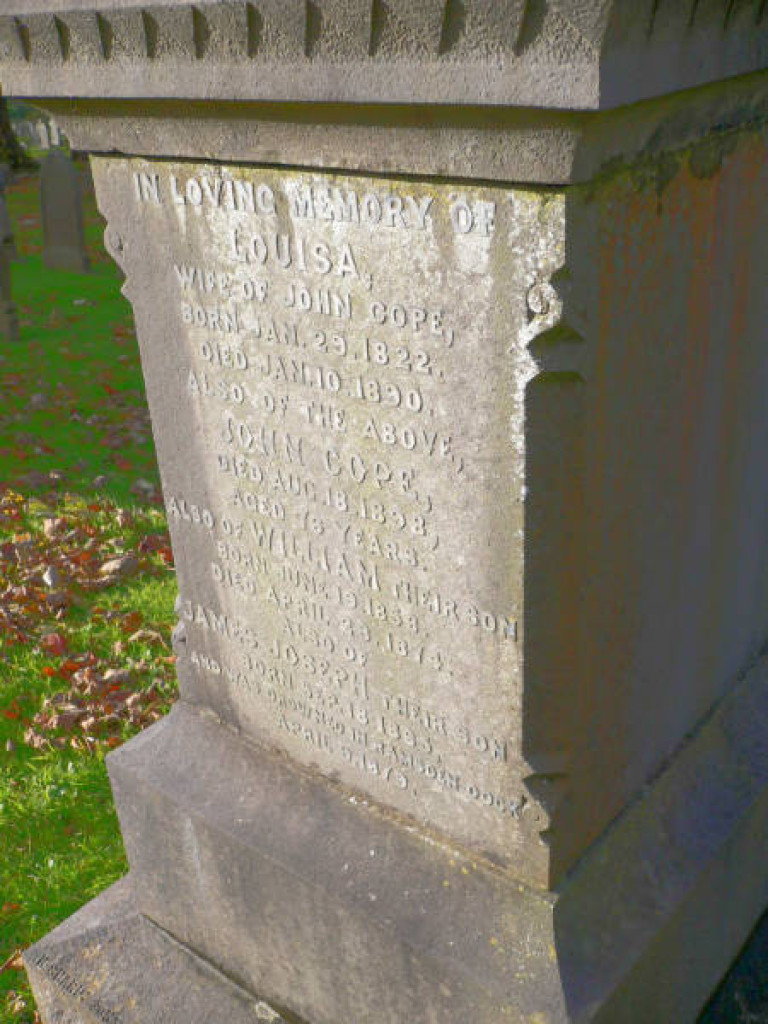
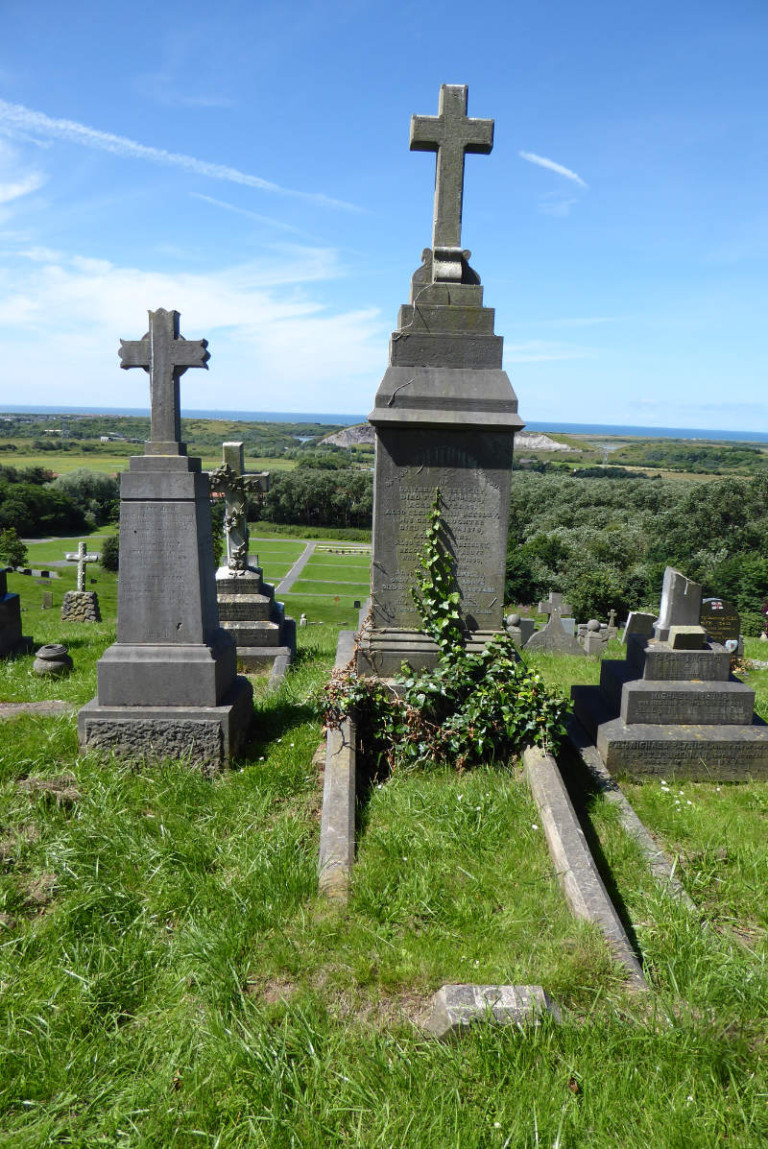
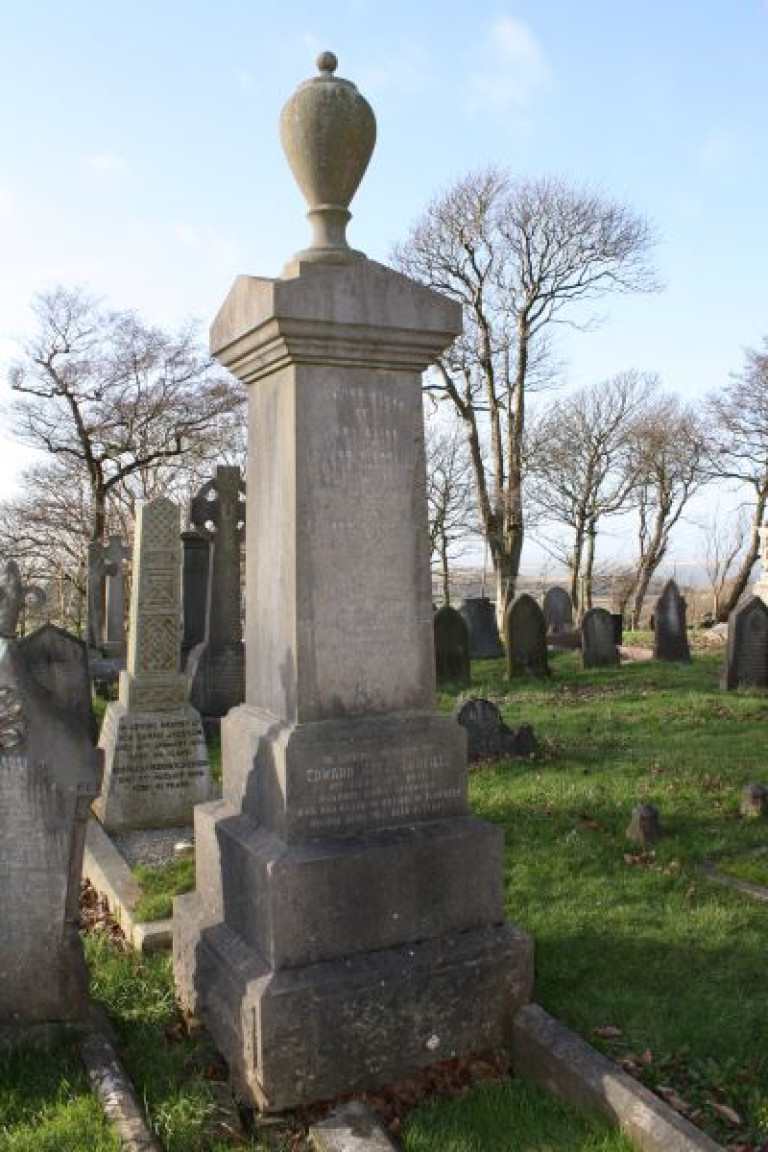
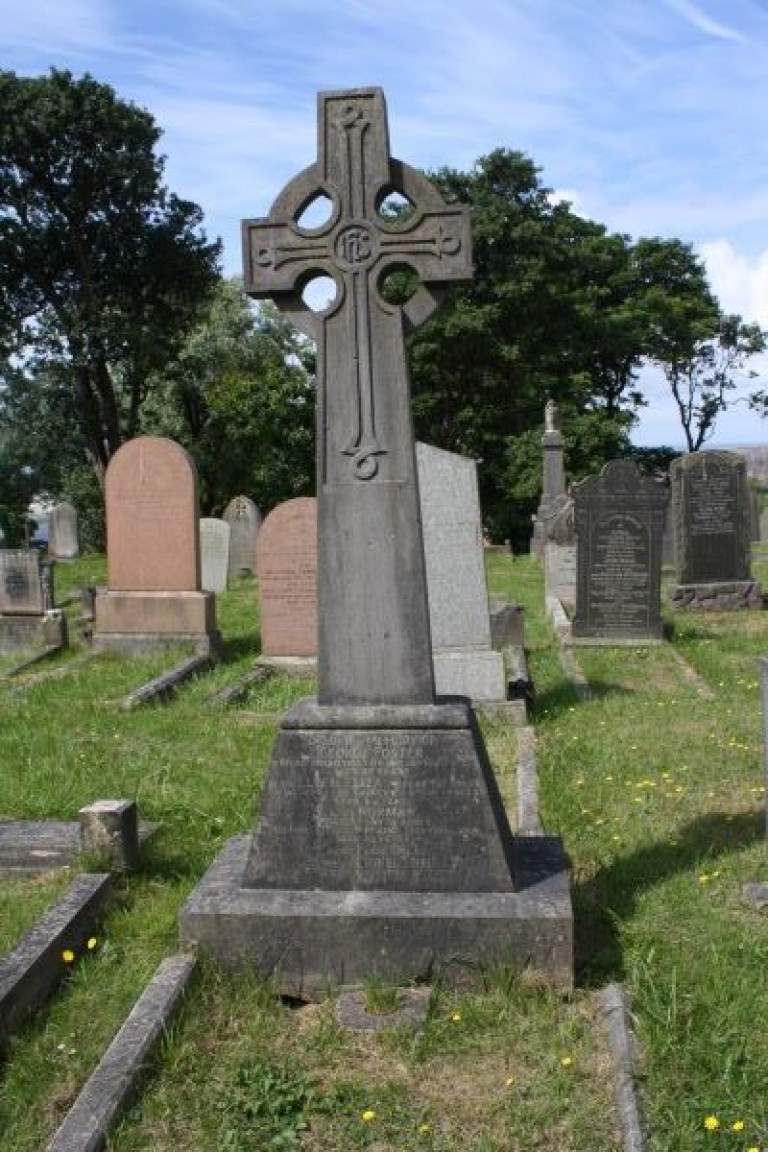
This is what gets, or keeps, you interested! An unremarkable, though solid and expensive memorial to the Blamire family. There is an enthralling tale to be told.
ALSO OF HARRY, THEIR BELOVED SON,
BORN JAN. 27TH 1891.
DIED AT CAPE NATURALISTE
FEB. 25TH 1907.
ALSO OF
FRANK BLAMIRE M.B.
THEIR BELOVED ELDEST SON
WHO DIED AT MANCHESTER
JAN 30TH 1915, AGED 38 YEARS
ALSO OF
AGNES ELEANOR,
BELOVED WIFE OF WILLIAM BLAMIRE
WHO DIED MAR. 1ST 1948
My initial interest was sparked by reference to ‘Cape Naturaliste’, which I’d never heard of. Google told me that it was on the south west coast of Australia, 170 miles south of Perth.
The lighthouse, or more specifically, the Coastguard Cottage, was haunted by the ghost of a sixteen year-old boy, known as Happy Harry. The very Harry commemorated on this stone.
The story of SS Carnarvon Castle from the Australian Women’s Weekly 14 March 1973
"THE CARNARVON CASTLE, of 1644 tons, caught fire in the Indian Ocean, near Amsterdam Island, on January 31, 1907, en route from Liverpool to Melbourne. The crew, in two lifeboats, lingered near the burning ship for two days, hoping to be picked up by a passing vessel.
On the third day, Captain Jones ordered the boats to be turned north-east, heading for Australia. Gales and mountainous seas overtook them, and on the seventh day, the boats lost sight of one another. The captain's boat drifted north, the sun becoming hotter, food and water supplies dwindling.
Sharks began to follow, flashing up when anyone leaned over to reach for water to rinse their mouths. Despite warnings, some of the men drank the salt water. Days passed, and the men sat silent, seeming to lose hope. Two boys died, and were buried at sea. The water ran out on February 22. The men were suffering from thirst, exposure, hunger, and exhaustion.
Then, land was sighted; at night, the flashes of Cape Naturaliste, W.A., lighthouse. The apprentice boy lay dying, so they couldn't risk landing in darkness. Next morning, the boat struck reefs 100yds. from shore, and the occupants were pitched overboard.
Roberts, and one other sailor who had abstained from drinking seawater, were the only ones strong enough to carry the sick apprentice ashore. The rest struggled after them."
(As told by the lighthouse-keeper’s daughter) SUNDAY. February 24. 1907 was a glorious, sunny morning. It was 9.30 and my mother had gone to bed after night duty at the lighthouse. I heard a noise, and went outside to investigate. There was a wild eyed, untidy man clawing at our rainwater tank. The tap was locked.
I rushed inside, and brought Mother to have a look at him. She couldn't understand a word he was trying to say, and we learned later he was a Russian Finn. Mother called my father and as he understood some Russian, we learned there were more sick men washed up on the rocks.
Father sent my brother to the nearest farm, three miles away, for help, and with another lightkeeper, set off to find the other survivors. The Russian couldn't say where he came from, as he was confused and frightened. He thought there were wild Aborigines about.
After the men were found, the problem was to get them up the cliffs. Father was lightest, so he was lowered over the edge, and what a sight met his eyes. One boy was unconscious, another appeared half crazed, and the others were too weak to stand.
They mobbed Father, clutching at him, wanting to know ‘Were they safe?’ Father reassured them, and proceeded to organise the journey up the cliffs.
First the unconscious boy was strapped to Father's back, and the hard, dangerous climb began. Two men on top of the rocks pulled them up, with the weight of the boy swinging them backwards and forwards. When they finally reached the top they strapped the boy to a bush stretcher. lt was my job to keep the flies off him, and to shade his face with my big straw hat. I felt frightened, as I'd never seen anyone like this before.
Father went down the cliff again and again, until all 14 survivors were brought up. Later, the farmer went back and salvaged the boat which he repaired to use for fishing. The captain had his cash box, but the other men had only a few personal things in their pockets.
The party made its way to our house, a mile away. Progress was slow, as the men's legs were swollen and covered with sea boils. Mother was shocked at their condition. She had blankets, hot drinks, and food ready, and had telephoned Busselton, 25 miles away, for a doctor and extra food.
The doctor gave instructions for the treatment of the men, and as she was the only woman. I had to help. The farmer's sister came over later to be of assistance.
The hungry, sick men were hard to control, and father tried to make them realise that food had to be taken slowly. They were unable to keep food down, and it was very worrying to cope with them all retching. After hot baths, they were bedded down with cushions and rugs on the lounge and kitchen floor, as we only had two bedrooms. The unconscious boy had been placed in bed, and we waited anxiously tor the doctor. When he came he was followed by cartloads of bread, groceries, vegetables, and meal and plenty of warm clothing, sent out from Busselton.
Then the hard work really began for mother and father. The doctor only stayed overnight, and the boy. Harry Blamire, died the next day. It was painful to see the older men trying to talk to him, reassuring him they were all safe. Captain Jones didn't leave his bedside all night. More follows. [Source]
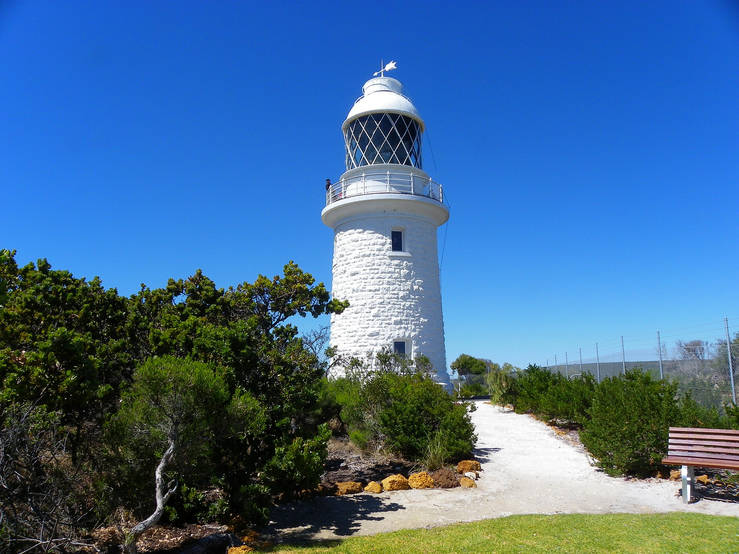
The Ghosts of Cape Naturaliste Lighthouse Kurt Senior [Source]
The lighthouse itself, surprisingly enough, does not appear to be the focus of the supposed hauntings. Instead, both of the surrounding two cottages, which once housed the lighthouse keepers’ families, seem to be the hot-spot for ghostly occurrences.
I was lucky enough to speak with Leon, a former lighthouse keeper who has worked at the lighthouse on and off for 15 years, and whom lived in one of the cottages for 5 years.
Leon was kind enough to share some spooky ghost stories with me, including a time when one of the cottages was being used as a museum and small shop. A couple of visitors asked him if anything strange ever occurred in the building, as they sensed a presence or something unusual about. His answer was "yes - we believe it's Harry the ghost". But who is Harry..? We'll get to that. ...........
The ghost of cottage #1 is believed to be that of Harry Balmire, a young Scotsman who met his maker at the age of only 17. Harry was one of the few survivors of the Canarvon Castle, a ship en route from Liverpool to Melbourne that caught ablaze on the 21st February, 1907. Several made it out of the burning carnage in the Captains lifeboat, eventually reaching the shore of Cape Naturaliste several days afterwards.
The men had depleted their water supply and had drank sea water for five days prior to reaching the shore. The men were in extremely poor condition upon arrival, and unfortunately Harry did not survive and slipped away in the lighthouse keeper’s cottage on the same day after being examined by Dr. Farmer, a local physician.
Harry was laid to rest at the Anglican section of Busselton Cemetery, however his body was exhumed shortly afterwards and sent back to his home country, Scotland. (Sic)
Harry’s funeral: an account of his funeral can be found in The South-Western News (Busselton, WA : 1903 - 1949) Fri 1 Mar 1907 [Source]
Another account can be found at here.
SS Carnarvon Castle
Fully rigged ship, 3 masts; 1644 tons; Owned by Thomas R., Liverpool (Carnarvon Castle Ship Co. Ltd.); Registered at Liverpool.
On 31 January 1907, Carnarvon Castle (Evan Jones) was on voyage from Liverpool to Melbourne with a general cargo and a crew of 27, when she was lost due to a fire 1100 miles off Cape Leeuwin in the Indian Ocean. The surviving crew lived for 24 days in open boats. One boat reached Cape Naturaliste, another one reached Fremantle. 3 died. [Source]
Blamire family Wills
1900 BLAMIRE William of Lane House, Ulverston, Lancs, farmer, died 19 December 1899. Administration at Lancaster on 17 January to Agnes Eleanor Blamire, widow, £6,612.
1915 BLAMIRE Frank Pearson of 1 Springfield Lane, Salford, M.D, died 30 January 1915. Manchester on 10 May to Agnes Blamire, spinster, professional nurse, £124.5 [Source - formerly at http://freepages.genealogy.rootsweb.ancestry.com/~glanville/blamires/bprobates.html]