Died
13th August 1916
Born
20th December 1846
Sources
Sankey Family Photographic Collection
Ancestry
Belfast Newsletter
Barrow News
Daily Telegraph
Lancashire Evening Post
Place
Walks
7506 Henry Garencières Pearson
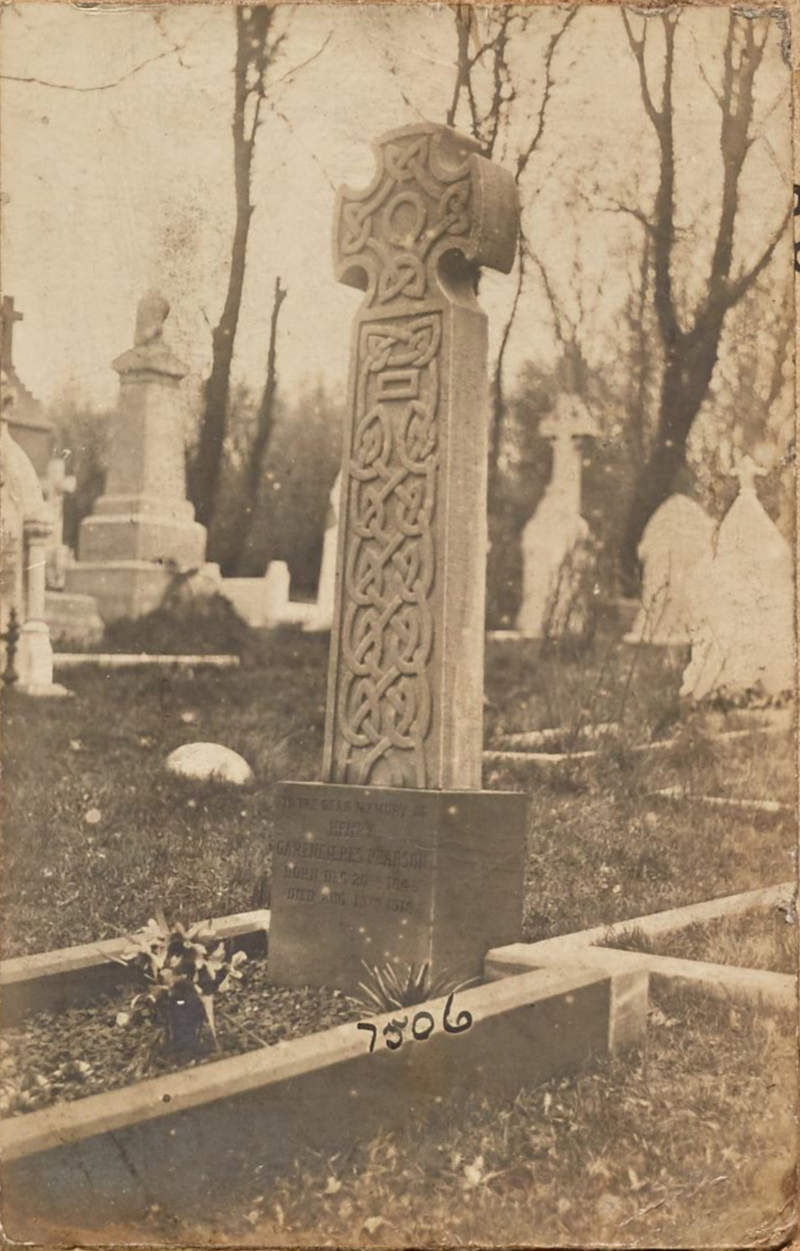

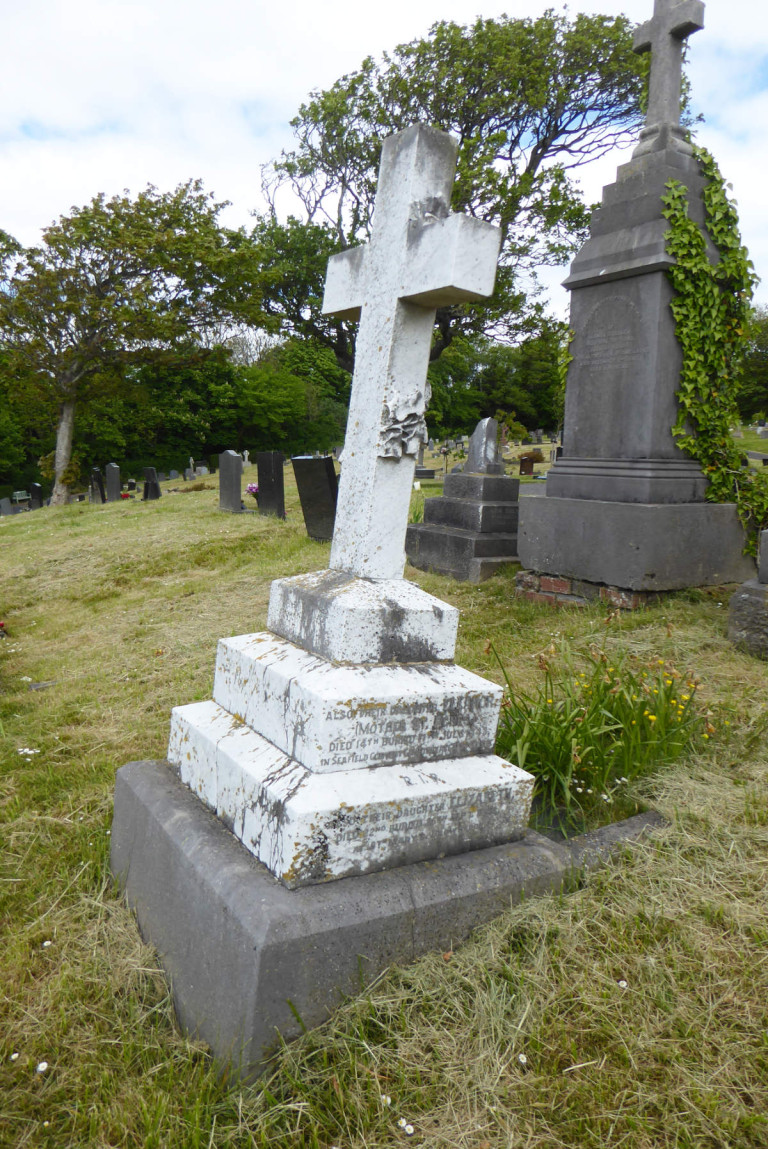
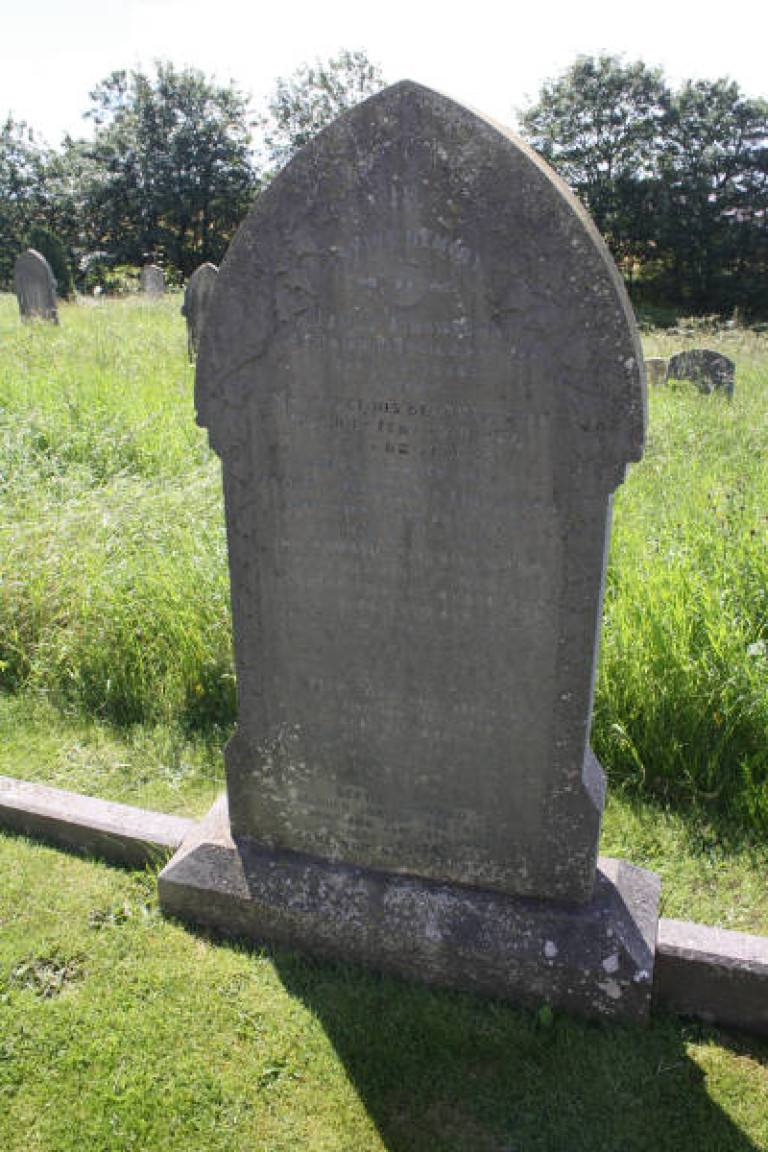
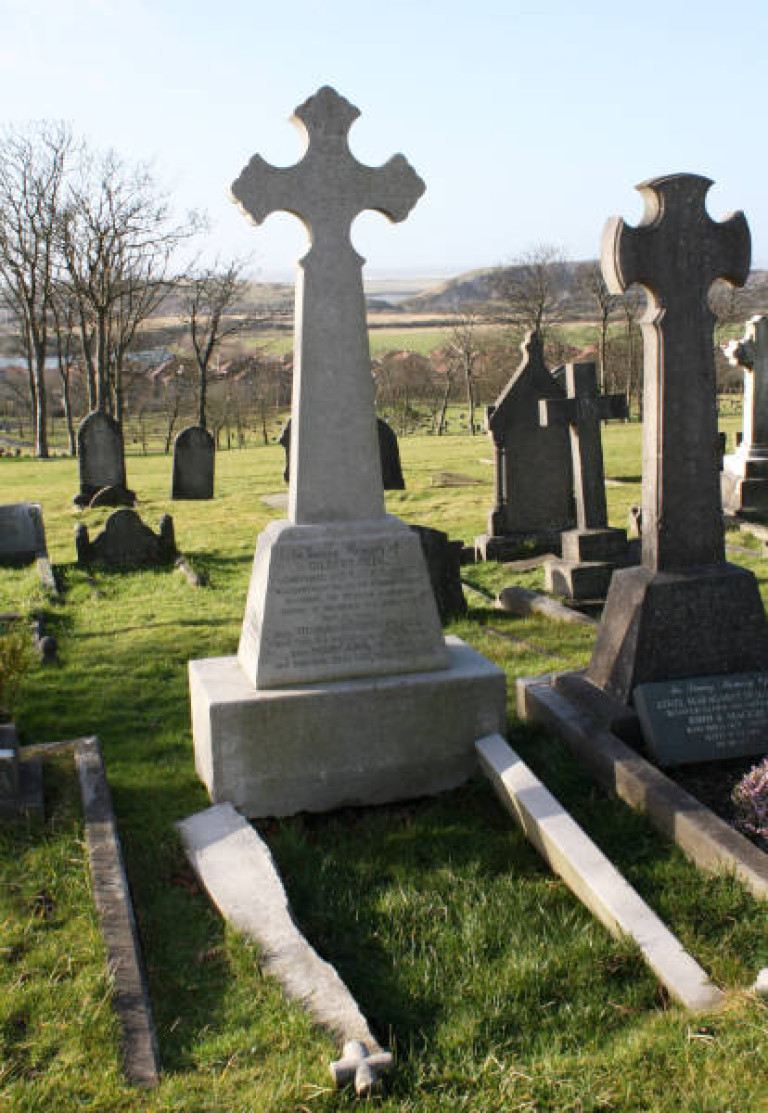
IN THE DEAR MEMORY OF
HENRY
GARENCIERES PEARSON
BORN DEC. 20TH 1846
DIED AUG. 13TH 1916.
AND HIS WIFE
MARGARET AGNES
MAY 18TH 1941
To which has been added on the left hand side
AND THEIR ELDEST DAUGHTER
WINIFRED MARGARET
GARENCIERES
PEARSON
DIED 16TH FEB. 1966
AGED 87 YEARS
And on the right hand side
AND THEIR SECOND DAUGHTER
MABEL
GARENCIERES
PEARSON
DIED 20 MAY 1968
AGED 89 YEARS
Origin of the name Garencières
A family tree (Dominique Rubin) on Geneanet has the following:
Theophilus Davye Garencières (1742-1803) m. Prudence Elizabeth Wade (1743-1801) who had Sarah Garencières (1789-1856). She married John Pearson (1759-1831) and they had John Garencières Pearson (1812-1875), Henry Garencières Pearson’s father. John Garencières Pearson married Mary Heath (1806-1885).
Wikipedia has information on Garencières too, suggesting that the name is French in origin.
John Garencières Pearson was vicar of Darlington for thirteen years, and is buried in Darlington West Cemetery with his wife Mary. He had been born into an independent chapel, the Arian Independent community in Leeds on 6 February 1812.
From Ancestry we learn Henry Garencières Pearson was born 20 December 1846, and baptised 5 February 1847 in Newcastle upon Tyne.
1861 Census
In the 1861 Census Henry G. Pearson (14) born Westoe, Durham, is a Scholar at Durham Grammar School, living in the Boarding House, Head of South Street, where Rev. Stoker is Head of the Household, and Second Master of the school.
Henry Garencières Pearson (father John Garencières Pearson) married Margaret Agnes Butler in Dalton-in-Furness 29 May 1878. Margaret was the daughter of William Butler, Attorney and Solicitor, who in the 1861 Census was living at Bank House, Dalton-in-Furness. Margaret’s siblings present in that year were Thomas Butler (18); Mary Butler (13) Plato James Butler (10); Annie Butler (5) and William Butler (1). Mother was Mary Butler, born Ulverston Lancs. Margaret was 8 yrs old.
Henry Garencières Pearson was already a property owner by this time. The Barrow Herald and Advertiser 18 October 1879 printed a notice by Nathan Robinson that he intended to apply for a licence to sell alcohol from his shop at 34 James Street, owned by H. G. Pearson.
1881 Census
By the 1881 Census the Pearson family have established themselves in Barrow, at 143 Abbey Road, on the corner of Cheltenham Street. Henry G. Pearson (35) Solicitor and Notary, born South Shields, Durham, is Head of the Household, and shares with wife Margaret A. Pearson (28) born Dalton-in-Furness, and children Winifred M. G. Pearson (1) born Barrow, and Mabel G. Pearson (7 mo) born Barrow. There are two servants, Elizabeth Preston (22) Unmarried, General Servant (Domestic), born Ingleton, Yorks; and Rachel Franklin (18?) Unmarried, Nurse, born Washton (sic – probably Whashton), Yorks.
The Belfast Newsletter 10 February 1887 has the following notification:
PEARSON – February 4, at 1 Chatsworth Terrace, Barrow-in-Furness, the wife of H. Garencieres Pearson, Solicitor, of a daughter.
Note that neither the wife nor the daughter have names! 1 Chatsworth Terrace is the same as 143 Abbey Road.
1891 Census
The family is still at the same address in the 1891 Census, but there are more Pearsons to report. Henry G. Pearson (44) Solicitor, born Westoe, Durham shares the household with Margaret A. Pearson (38) born Dalton-in-Furness, Lancs; Dudley G. Pearson (9) Scholar, born Barrow-in-Furness, Lancs; William G. Pearson (7) Scholar, born Barrow; Winifred M. G. Pearson (11) Scholar, born Barrow; Mabel G. Pearson (10) Scholar, born Barrow; Norah G. Pearson (4) born Barrow; Eliza Baker (24) Single, Cook (Domestic Servant) born Gorsty Hill, Staffordshire; Fanny A. Thompson (18) Single, Nurse (Domestic Servant, born Dalton-in-Furness, Lancs; Rachel H. Butterworth (23) Single, Housemaid, born Bamford, Lancs; and another daughter, Olive G. Pearson (5) born Barrow. I have no idea why Olive Pearson is placed last on the list. Note that the sons are listed before the daughters.
1901 Census
The 1901 Census sees the Pearsons at Spennithorne, Fairfield Lane (later a private school, and currently [2024] the Masonic Hall). Henry Pearson (54) Solicitor and Notary Public, born Westoe, South Shields, Durham lives with wife Margaret Pearson (48) born Dalton-in-Furness, Lancs; Winifred Pearson (21) no occupation recorded, born Barrow; Mabel Pearson (20) no occupation recorded, born Barrow; Dudley Pearson (19) Medical Student, born Barrow; Norah Pearson (14) no occupation recorded; and son Bernard Pearson (9) no occupation recorded. There are two servants: Mary Murray (28) Single, Cook (Domestic), born Kirkby Stephen, Westmorland; and Elizabeth Clampill? (21) Housemaid (Domestic), born Holborn Hill, Cumberland.
1911 Census
They are still living at Spennithorne in the 1911 Census, where are living Henry Garencières Pearson (64) Solicitor and Notary (there follows other abbreviations that look like Offc. Rediu. B. Key) Board of Trade, born Westoe, South Shields, Durham; Margaret Agnes Pearson (58) who has been married for 32 years, had seven children, all living, born Dalton-in-Furness; William Garencières Pearson, Solicitor, born Barrow; Olive Garencières Pearson (25) Single, no occupation recorded, born Barrow; Norah Garencières Pearson (24) Single, no occupation recorded, born Barrow; and two servants: Josephine Dorrian (31) Single, Cook (Domestic), born Cleator Moor, Cumberland; and Martha Isabel Kitchin (22) Single, Housemaid (Domestic) born Ulverston, Lancs.
The Barrow News 19 August 1916 carried information about H. G. Pearson’s life and death. Unfortunately, it is on the edge of the page, and difficult to read at times:

SUDDEN DEATH OF MR. H. G. PEARSON
SPECIAL RECEIVER’S PATHETIC END
With sincere and profound regret we report the death, which occurred under sudden and distressing circumstances, of Mr. Henry Garencienres Pearson, solicitor and Special Receiver in bankruptcy. Mr. Pearson was in his normal good health up to Thursday? last, and on that afternoon he took a short walk. About 11.30 the same day he had a sudden seizure, and, after growing worse, he passed away on the morning at 10.30, at his residence, Spennithorne, Fairfield-lane. The deceased man was the son of the Rev. John Pearson, vicar of St. Cuthbert’s, Darlington, and came to Barrow from Shrewsbury in the 1870s. For a time he was in partnership with Mr. Williams, and later with Mr. R. G. B. Bradshaw, but subsequently practised on his own account, and enjoyed considerable clientele. On the policing? Of bankruptcy xxx he was appointed Receiver in Barrow, Ulverston, and in that position he held up to the point of his lamented death. The deceased was of retiring disposition, and did not venture into the limelight in public affairs. He was, however, a valuable member of Barrow Education Committee and the Library and Museum Committee. In the latter he evinced a particularly warm interest and himself was a most generous benefactor to the town’s collection. He was most interested in birds and matters of nature? And possessed a valuable collection of such things. He was a member of the Cumberland and Westmorland Archaeological Society, and a member of the Barrow Naturalists Field Club. He was also associated with the original School of Art at Barrow?. He was in every way a gentleman much appreciated and respected, and his sudden death must come as a great and ? shock to all who knew him. Mr. Pearson was 63 years of age, and his manly ? figure will be missed in Barrow. He leaves a widow, and three sons and four? Daughters, for whom the greatest sympathy must be extended in their sad bereavement. One son, Dr. D. G. Pearson, has a practice in Leicester, another Capt. W. G. Pearson, was a solicitor in partnership with him when war broke out, and has been a prisoner of war on Germany for many months. A third son, Mr. P. (sic) G. Pearson, is in the Rhodesian? Police, and has been on active service with that force.
There follows an account of the funeral with list of mourners, led by the family and followed by the dignitaries of Barrow, and an appreciation by Judge Gawan Taylor at the County Court.
The following month the Barrow News 9 September 1916 reported on the monthly meeting of Barrow Town Council, where fulsome tributes were paid to Mr. Pearson:
“The Mayor (Mr. A. Barrow) also referred to the sudden removal by death of their old friend Mr. H. G. Pearson, who had been interested in the work of education in Barrow for many years. He took an active and leading part in the formation of the original school of art. From the commencement of that branch of education up to his untimely death they all knew the intense interest he had taken in the work of the school. He was a public school man himself, and as such he had an intimate knowledge of educational work, and was always willing and ready to do what he could to further the interests of the Technical School, of which he was one of the governors. In addition he was a co-opted member of the Library Committee from its formation, and had exercised a very great influence indeed in the work of that committee. They all regretted his removal, and he proposed that a resolution be passed in recognition of his services to the borough and as an expression of sympathy to those who were left behind to lament his loss.
Coun. MAWSON, in seconding the resolution, remarked that the late Mr. Pearson was a good friend, a co-director of a limited company, and a colleague on the Education and Library and Museum Committees, and he knew how his help and advice would be missed, especially on the latter committee, of which he had been a co-opted member since the year following its inception, which dated from 1881., when this borough adopted the Free Library’s Act. For most of that time he had been Chairman of the Books Sub-Committee. It was a trite saying that the loss of a man was irreparable, and his position could not possibly be filled, but here was a case in which it had actually happened. Mr. Pearson having been in Barrow for about forty years, had a fund of local knowledge which added to his archaeological, scientific and literary knowledge, had been of inestimable benefit to the committee. He was an omnivorous reader, and had the knack of being able to decide with little more than a glance if a publication was desirable to be secured for the library or not. He added further to obligations the town owed him by his untiring help in pressing for a donation from Mr. Carnegie, which resulted in grants of £13,000 being made in 1912 by the Carnegie Trustees, and it was a matter of great regret that he was not spared to see the completion and opening of the handsome building now being erected in Ramsden Square. He joined the Mayor, as he was sure the whole Council would, in expressing their sympathy with his widow and family, and hoping that Capt. Pearson might shortly have a safe return home.
The Council passed the resolution by rising to their feet.”

Bernard Garencières Pearson from the Geneanet site mentioned above
Son Bernard G. Pearson appears on the manifest of S.S. Cymric leaving Liverpool on 10 April 1912. He identifies himself as a farmer, and is heading for Calgary, Canada.
He served as a Captain (3451329) in the Royal Army Medical Corps. (IWM)
In the Daily Telegraph 23 December 1924 his forthcoming marriage (at the beginning of February) to Miss Deborah Poole Blencowe, daughter of the late Mr. William Poole Blencowe and of Mrs. Bramwell Jackson of 15, Gerald-road, S.W.1 was announced, to take place in Blantyre, Nyasaland (now Malawi).
Son Dudley Garencières Pearson (32) Surgeon, of St. Peter’s, Leicester, married Annie Gordon Stanley (31) Spinster (father Wiiliam Stanley, Gentleman) at St. Batholomew, Edgbaston on 1 July 1914.
The National Probate Calendar (Index of Wills and Administrations) 1916 had:
PEARSON Henry Garencières of Spennithorne Fairfield Lane Barrow-in-Furness Lancashire died 13 August 1916 Probate Lancaster 14 December to Margaret Agnes Pearson widow Dudley Garencières Pearson M.B. and George Robinson soclicitor’s clerk. Effects £9579 17s 11d.
After his death, daughter Norah Garencières Pearson (35) Spinster, of 57 Croslands Park, Barrow-in-Furness, married Christian Albert Hastings Fairbank (30) Gentleman, at St. Barnabas, Kensington, on 17 May 1922.
The National Probate Calendar (Index of Wills and Administrations) 1941 had:
PEARSON Margaret Agnes of 57 Croslands Park Barrow-in-Furness Lancashire widow died 18 May 1941 at The Cottage Thornton-in-Craven Yorkshire Probate Llandudno 5 September to William Garencières Pearson solicitor Bernard Garencières Pearson retired Colonial civil servant and Mabel Garencières Pearson spinster. Effects £8554 1s 6d.

Picture from Imperial War Museum IWM (HU 116784)
Information from a Great War discussion website: Capt W.G. Pearson 1/4th Kings Own Royal Lancaster Regiment, captured and wounded June 15 or 16th 1915 and repatriated in September of 1917. He was wounded in the attack at Festubert. Read More.
Information from a Great War discussion website: Capt W.G. Pearson 1/4th Kings Own Royal Lancaster Regiment, captured and wounded June 15 or 16th 1915 and repatriated in September of 1917. He was wounded in the attack at Festubert. Read More.
John Hutton’s book Kitchener’s Men: The King’s Own Royal Lancasters on the Western Front 1915-1918 (Pen & Sword) 2008 mentions Capt. Pearson:
“The Battalion reassembled back at Le Touret at 10.00 the following morning, having had to retreat through yet another heavy artillery barrage. In total, 5 officers and 147 men had become casualties. Many more were missing. Amongst the missing was Captain Pearson, of Spennithorne, son of the official receiver of the Barrow district., … Captain Pearson would eventually return to Barrow early in 1916 (sic – it was probably 1917, otherwise he would have been at his father’s funeral). He had been ill for some time during his spell in captivity, and had returned home as a medical evacuee. He was to take no further part in the war. (p18)
The Lancashire Evening Post 27 July 1915 reported that Capt. Pearson was well, and in a prisoners’ camp in Gutersloh, Germany.
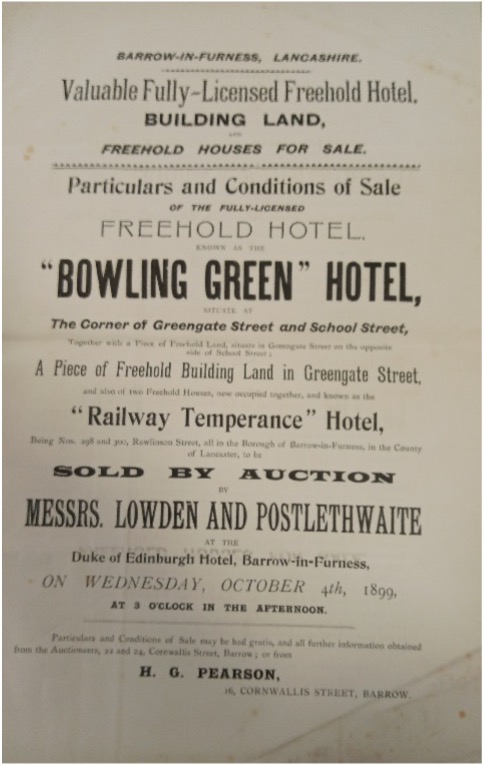
Prospectus for the sale of the Bowling Green Hotel, Greengate/School Street, for 4 October 1899, for which sale H.G. Pearson, 16 Cornwallis Street, was acting.
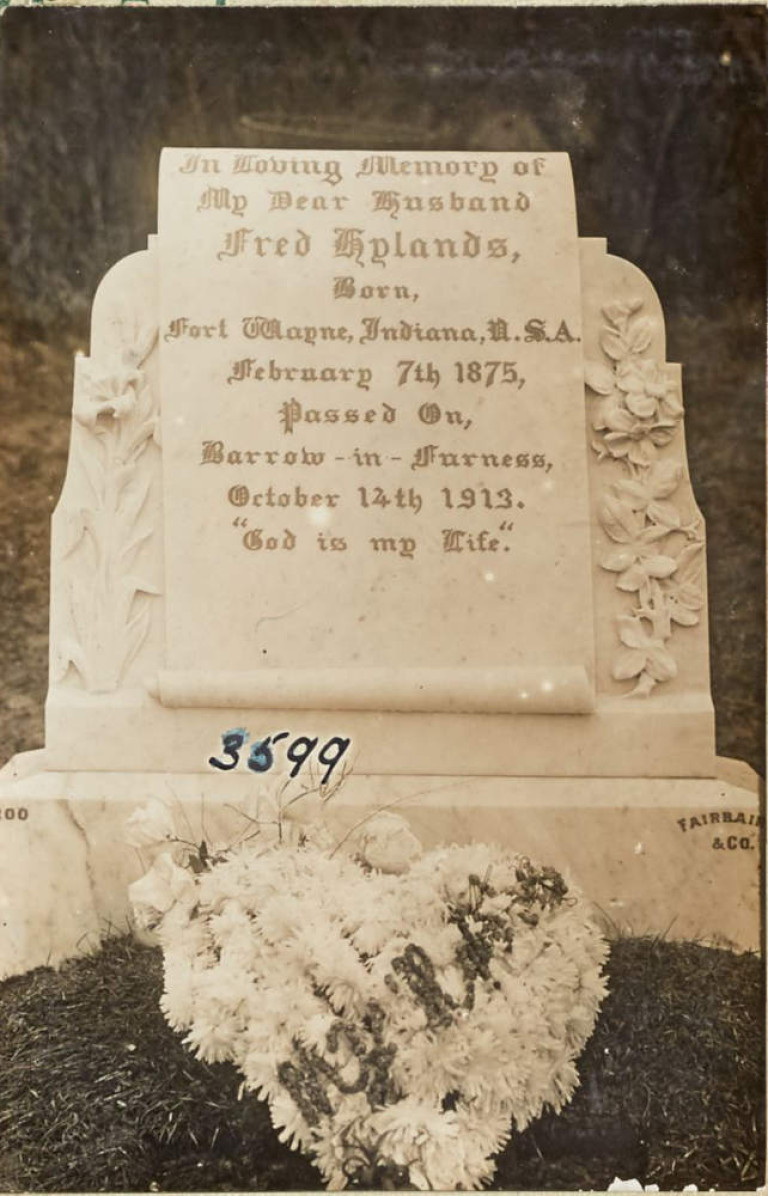
No-one is certain why Edward Sankey took photographs of graves in the period 1910-1920 or later. Were they advertising the skills of his friend William Hull, or later Hull and Fairbairn? Were they to be made into postcards that the bereaved family could send to members who were not able to attend the funeral?
The historic photograph is from the Sankey Family Photographic Collection, courtesy of Cumbria Archives.