The Coroners Poole

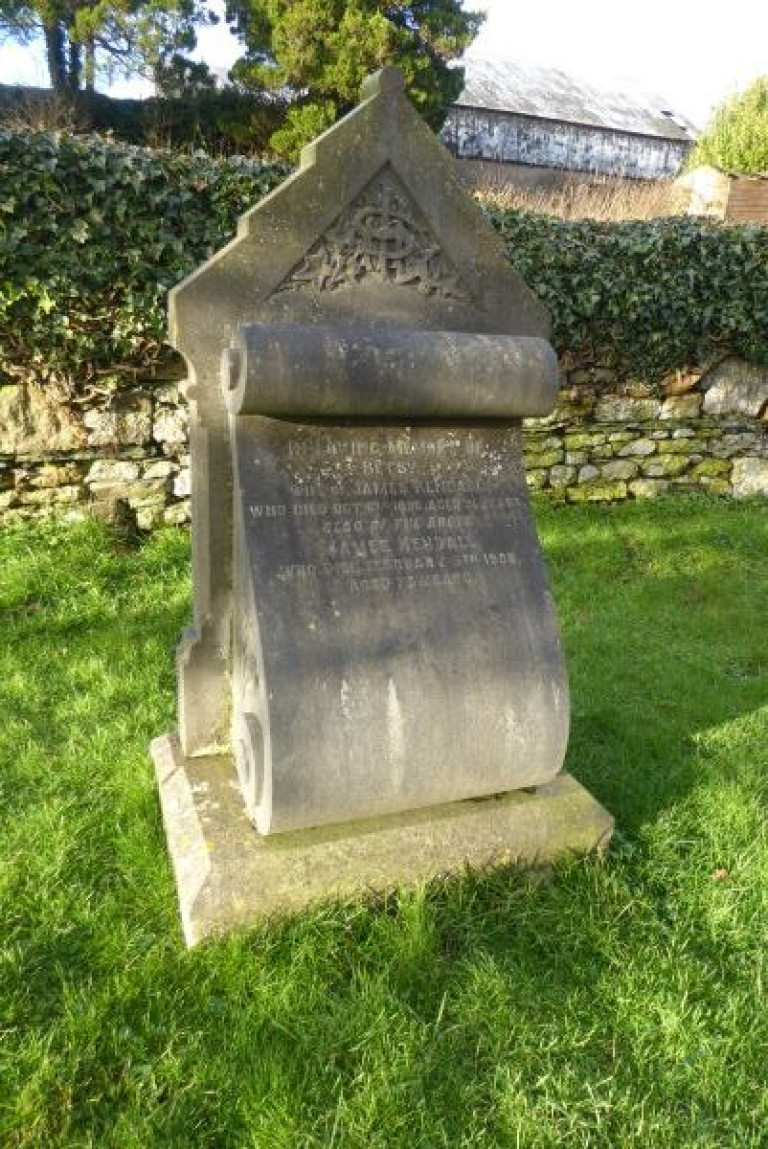
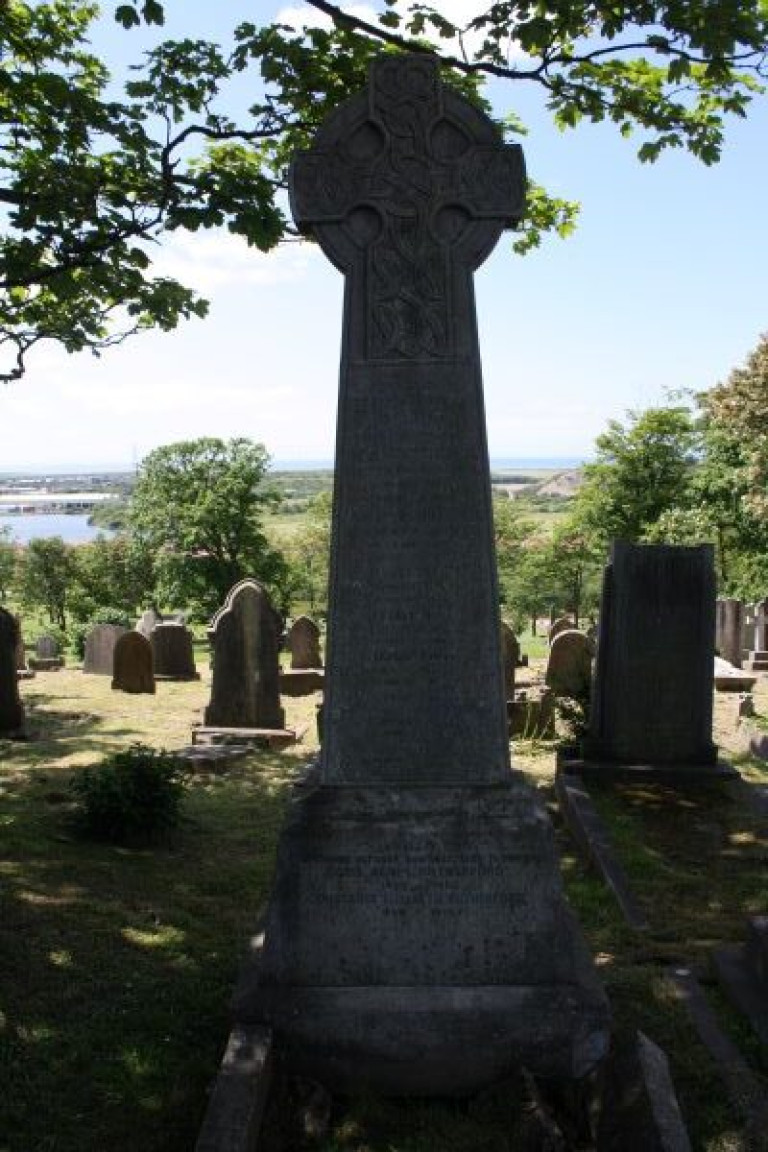
IN LOVING MEMORY
OF
JOHN POOLE, CORONER
FOR THE LIBERTY OF FURNESS
WHO DIED AT ROOSE HOUSE
BARROW IN FURNESS
4TH NOVR 1908
AGED 70 YEARS
ALSO OF
ELIZABETH MARY POOLE
DIED APRIL 6TH 1929
IN HER 81ST YEAR
ALSO OF FREDERICK WILLIAM POOLE
SON OF THE ABOVE
AND CORONER FOR THE LIBERTY
OF FURNESS FROM NOVR 1908 TO
17TH MAY 1943, AGED 73 YEARS
AND MARY HOPE, HIS WIFE
DIED 2ND MAY 1962
A Family business
The local firm of Poole Townsend was started by this John Poole.
There have been three members of the Poole family who have been Coroners for the Liberty of Furness:
John: approx. 1873 – 1908
F.W.: 1908 – 1943
John: 1944 - 1971
Barrow News 7 November 1908 carried news of the death of the Coroner:
DEATH OF MR. JOHN POOLE
A strenuous career ended
40 YEARS OF PUBLIC SERVICE
A wonderfully active and strenuous official and professional career, extending over a stretch of 40 years, has been ended by the death of Mr. John Poole, solicitor, and coroner for the Liberty of Furness, which occurred on Wednesday morning, at his residence, Roose House, Barrow, in his 71st year. The deceased gentleman, who had been confined to the house for about a month, under the treatment of Dr. Carmichael, had been suffering for some time from a weak heart, and dropsy having supervened, the end had been anticipated for several days.
The late Mr. John Poole was born at Gillhead, Windermere, the Gillhead property having been in the possession of the family for many generations: in fact, the late Canon Bardsley, who was an authority on surnames and their derivations, once said that whilst searching in the “Doomsday Book” in the British Museum, he came across an entry showing certain property at Gillhead, Windermere, as then being in the possession of one “Pule”, thus showing that the surname of that date was spelt differently to now. The deceased gentleman came to Ulverston with his widowed mother, about the middle of last century, and served his articles with the late Mr. Thomas Woodburne, solicitor, on the premises now occupied by the Conservative Club, in Fountain-street. He was admitted as a solicitor in 1862, and for some years was in partnership with Mr. Woodburne before commencing practice on his own account. He then removed to the offices in New Market-street, now occupied by Messrs. J. K. Hodgson and Sons, and on the purchase and conversion of the fine block of bank buildings in Queen’s-street into public offices for the town, he transferred his practice to these premises. With the exception of Mr. Stephen Hart Jackson, who was five years his senior in the legal profession, having been placed on the roll in 1857, Mr. Poole had the honour of being the oldest legal practitioner in North Lonsdale and Barrow. Early in his career he acquired the reputation of being a shrewd, hard-headed, sound and painstaking advocate, a powerful pleader and a smart cross-examiner, and as his cases were always prepared with great care, and conducted with much skill and judgement, he found plenty of clients, and enjoyed an extensive and successful practice in the local Courts. He was frequently engaged in arbitration matters, and was professionally associated with not a few of the local actions, criminal as well as civil, coming before the Superior Courts. In 1899 Mr. Poole was joined in partnership by his son, Mr. F. W. Poole, who has since largely assisted his father in his professional and official duties and also in the work of Coroner, thus considerably lightening the toil of his advancing years.
Mr. Poole has ably filled the important office of Coroner for the extensive and scattered area known as the Liberty of Furness for a period of about 35 years, his predecessor being Mr. Wm. Butler, of Dalton, and during that time he has conducted many hundreds of inquests. Many of them were due to the “drink evil”, but though Mr. Poole was a lifelong abstainer he was by no means a bigoted teetotaller, and in dealing with such cases was careful not to allow his feelings to get the better of his judgement.
Mr. Poole’s record of public service was unique in the history of local government, and in April last, whilst he was still in harness – in fact, he continued to attend the Committee and Council meetings regularly until September – Councillor S. Pollitt, as senior representative of the Ulverston Urban Council and the old Local Board, presented him, on behalf of the members, with a very handsome silver rose bowl, suitably inscribed, as a slight token of their regard and appreciation of his long and faithful service as Clerk and legal advisor. Mr. Poole, who was aptly styled the “Father of the Council and of the officials”, was the only surviving representative of the Local Board formed in 1871, under the chairmanship of the late Mr. Myles Kennedy, and as he had previously held the Clerkship of the old Highway Board and Sewer Authority, his official connection with the town covered the long period of 40 years, and he undoubtedly rendered splendid service in getting into working condition the new system of popular local government, the settlement of which was complicated by the existence of ancient manorial rights and customs, which required to be very delicately handled in the work of adjustment. He was primarily concerned in the carrying out of many important matters, such as the drafting an adoption of the Local Board Act of 1874, and of the town bye-laws; the purchase and transfer from private hands to the town of the gas and water undertaking; the taking over of the Burial Board and Town Lands; the negotiation of loans; and the conduct of often difficult and delicate negotiations in connection with the many public widening and other improvements which have been carried out in the town and district during the last quarter of a century – notably the removal of Bryer’s Smithy and the widening and general improvement of the main approach to the town from the railway station; the widening of Fountain- street at the junction with Union-street; the transformation effected in Dragley Beck by the making of the new Victoria and King’s roads, and the widening of the lane between the Devonshire Arms and the old tannery; the fine bridge improvement at Three Bridges; and the demolition of slum property in Leather-lane and at the bottom of Market-street. In fact, Mr. Poole has erected for himself a
LASTING MEMORIAL
not only in connection with the many great improvements which have been carried out under his direction, but in others initiated by him personally in the early 70’s. At a time when Ulverston was likely to change in character and lose some of its old market town trade, he personally invested large sums of money to counteract this. He acquired the purchase of the Lightburne Park property, and it was the opening out and development of this important estate that brought about the construction of New Market-street and Brogden-street, and the erection of the Market House (opened in 1878), and the present handsome Post Office. Mr. Poole was also primarily identified with the development of the Priory and Ford Park Estates, Ulverston, the Storrs Hall Estate, Windermere, and the Walney Estate, and the creation of Vickerstown, besides being connected at different times with stone and slate quarries and other local enterprises in various parts of Furness and the Lake District. He was also interested in the formation of the North Lonsdale Ironworks. Though some of his speculations, unfortunately, involved him in heavy losses, he never entirely lost the spirit of enterprise and indomitable pluck and perseverance which were the striking characteristics of his life, and which, no doubt, served as a healthy stimulus to others to follow his example. Before taking up his abode at Barrow, he resided for some years at Ford House, Ulverston, of which he was then the owner. Mr. Poole also filled the office of Clerk during the 30 years’ existence of the Ulverston and Mansriggs School Board. He was a keen sportsman, and was equally expert with rod and gun. He was strongly imbued with a love of horticulture, and whilst at Ford House was known as a successful breeder of shorthorns, for several years securing the silver cup offered by the North Lonsdale Agricultural Society for the best collection of shorthorns. He was also at one time a noted breeder of dogs and poultry, his name frequently figuring in the prize lists at the local shows. In politics, Mr. Poole was a Conservative, and at the first Parliamentary election for North Lonsdale he acted as agent for the late Mr. Wm. Geo. Ainslie, whom he had the proud satisfaction to see returned. At the general election of 1868 he also acted as agent for the late Lord Derby (then Colonel Fred Stanley), who defeated the late Duke of Devonshire (then Marquis of Hartington) in the representation of North Lancashire.
The death of Mr. Poole is a great loss to the community, and his removal is sincerely lamented both in public and private circles. He has left a widow, four sons and a daughter.
The flags at the Ulverston Town Hall, Liberal, and Conservative Clubs, Magistrates Court, County Hotel, and County Chambers, are flying at half mast.
The interment has been fixed to take place at the Ulverston Cemetery this (Saturday) afternoon at 2.30. A memorial service is to be held at the same hour at St. Luke’s, Barrow.
MAGISTERIAL TRIBUTE
At the Ulverston Magistrates’ Court on Thursday, Col. Baldwin (the chairman) made a fitting reference to the death of the late Mr. John Poole, who, he said, was a very old practitioner at that court. He was sure that the magistrates both at Ulverston and at Barrow deeply regretted that a gentleman so eminent in his profession had been taken away from them. There follows a lengthy tribute, which repeats much of the above.
SOME OF CORONER POOLE’S EXPERIENCES
Some years ago, and inquest was held at the Bull Hotel, Barrow, relative to a death by drowning in the Barrow Jute Works reservoir. Whilst the jury were away viewing the body, Mr. Poole gave some interesting particulars of his experiences.
“I suppose,” remarked a gentleman present, who was watching the case, “you will have had many experiences, Mr. Poole.”
“Yes,” replied the Coroner, “I have had a varied experience since I was appointed Coroner. You see, I have a large district, urban and rural, and accidents of all kinds are continually happening, and I suppose always will do. I find men who are constantly working where there is dangerous machinery grow very careless, but I must say since the Employers’ Liability Act (the early one) came into force fatal accidents have been less frequent. There again, at some of the large works the taking in of beer to the workmen has been stopped. That is a very good thing, for I myself, when in those works, have seen men employed where there is no end of machinery, and yet these men have been in a complete state of intoxication.”
At this stage the Coroner’s remarks were interrupted by a late juror, the 13th man, making his way into the room.
“Who are you?” asked Mr. Poole
“Oh, I’m on the jury about this drowning case.” “Well, this is a nice time to come; you are too late.”
“Oh, that’s all right then. I’ll go.”
“Oh, but it’s not all right.” Replied the Coroner, who looked sternly at the juror. “What made you late? You know I might fine you if I chose. However, you can go this time, but you will not escape your duty next time.”
The man fumbled in his pocket, and muttered something about his watch being wrong.
“You can go.”
“Thank you, sir,” said the man as he left the room.
“I have,” continued the Coroner, “the same trouble with jurors at times. At an inquest relative to some accident at a particular works, or on board a ship, I am sure to get at least one man on the jury, who is intimate with the works, and he is often troublesome, although the point is perfectly clear, just to show off his own knowledge. Then, again, the man who is over-buoyed with the sense of his own importance and who must needs closely question each witness on matters that are as clear as noon-day, or outside the question altogether. Profiting from experience, I have of late given over holding inquests on a Saturday afternoon or night, for the reason that it is inconvenient to most people, and when I hold them at such times I invariably get a man who has had a drop too much. And when in that state he gets cantankerous, and is sure to have some grievance, real or otherwise, he want to ventilate. While some men are anxious to serve on a jury, others, again, are not. I generally have thirteen men summoned. After they are sworn in, I usually make the remark, “Would anyone like to go?” I am sure to see one man off at once.”
“You will have had some peculiar accidents?”
“Yes, I have. Not long after I was first appointed I held an inquest at Kirkby on a man who had drowned in two inches of water. You doubt it. I see that, but, nevertheless such was the case. The man had had too much to drink, and had been supplied with a bottle of whisky to go home with when he left the public house. He had, apparently, taken some of this spirit, and getting more intoxicated, had fallen face downwards in two inches of water by the roadside. Next morning he was found dead. It is a bad habit for beerhouse keepers to supply men who are the worse for liquor with more drink to go home with. I have had several accidents where men have fallen into the docks or river and been drowned after having drink supplied to them in this way. The want of a proper bathing place is also the cause of many drowning cases, and a year or two ago there was never a fine Sunday without one or two cases being reported to me. When times are brisk, and money plentiful, almost every Monday reports reach me of children being overlaid. This, of course, was due to the parents getting too much drink. To my mind, there are many reforms that are necessary with regard to inquests. I don’t know that I would reduce the number of the jury, but I would certainly do away with the jury being bound to view the body. It is an unpleasant duty, and unnecessary. There is a popular idea that a Coroner is bound to take down the evidence of the witnesses. I rather surprised a witness, the other day, who said I was not taking down all he said. I informed him I need not take anything down. I merely did it for my own convenience. All I have to do is to furnish the Registrar with a statement.”
Just then the jury returned and the inquest proceeded.
Barrow News, 7 November 1908
The account of the funeral in Barrow News 15 December 1908 lists the great and the good of Ulverston and Furness who either attended the funeral, or the memorial service at St. Luke’s, Barrow.
Barrow News, 22 May 1943
DESIRED A QUIET BURIAL
Dying Wish Of Late Mr. F. W. Poole
Representatives of many phases of public life assembled on Thursday afternoon to pay their last tributes to the late Mr. Fred W. Poole, of Bankfield Hall, Urswick.
Although his state of health had been such as to cause concern to his intimate friends for some time, the announcement of his passing on Monday evening came as a painful shock to many people in Ulverston and Barrow and throughout the North-west, where he was widely known and universally esteemed. He leaves a widow and two daughters.
CLERK AND CORONER
Admitted as a solicitor just 44 years ago this month, the late Mr. Poole succeeded his father as Clerk to the Ulverston Urban Council in 1908.
He held many public offices in addition to that of Coroner to the Liberty of Furness, being clerk to the Ulverston Joint Hospital Board and North Lonsdale Old-age Pensions sub-committee, secretary to the Ulverston Grammar School Higher Education Committee, chairman of the Barrow Court of Referees, and chairman of the Military Hardship Committee under the National Service Act, Local Fuel Overseer, in addition to other public offices. He was a past chairman of the North Lonsdale Law Association.
In numerous sections of Ulverston’s life he played a prominent part in past years. He was joint secretary with Mr. G. H. Mackereth and later with Mr. F. J. Harrison of the successful Rose Show, which attracted visitors from all over the country, and was largely responsible for the popularity of the Daffodil and Chrysanthemum Show. A keen sportsman, he established a reputation as a rugby footballer and cricketer with Ulverston. A noted breeder of Irish setters, he won many prizes at the leading dog shows, including the Lonsdale Challenge Cup for the best dog in the Kennel Club show in 1928 with “Crispin O’Kilner”. He also acted as a judge at many notable shows.
But every form of outdoor life appealed to him: he as prominently identified with the County Bowling Club. During the last war he was captain of the Ulverston company of the V. T. C., which afterwards became the 2nd. Batt. County of Lancaster Volunteers.
THE FUNERAL
The funeral service was held in the Ulverston Parish Church, conducted by the rector, the Rev. J.S. Rimmer, R.D., who was assisted by the Rev. H.S. Betts, M.A. and the Rev. A. Holt. It was a simple but impressive service, and included the hymn “Pleasant Be Thy Courts Above” and the “Nunc Dimittis.”
The family mourners were: Mrs. Bolus, daughter; Commander and Mrs. Slaughter, son-in-law and daughter; Mr. J. Poole, nephew; Miss K. Poole, niece.Again, there follows a lengthy list of mourners, both individuals and those representing organisations. It ends:
A DYING WISH
Before the mourners left the church the rector referred to the expressed with of the deceased that there should be no flowers and no mourning.
“He also said,” continued the rector, “If my friends gather and want to pay their respect just let them follow me to the Market Cross and then I can be quietly buried.”
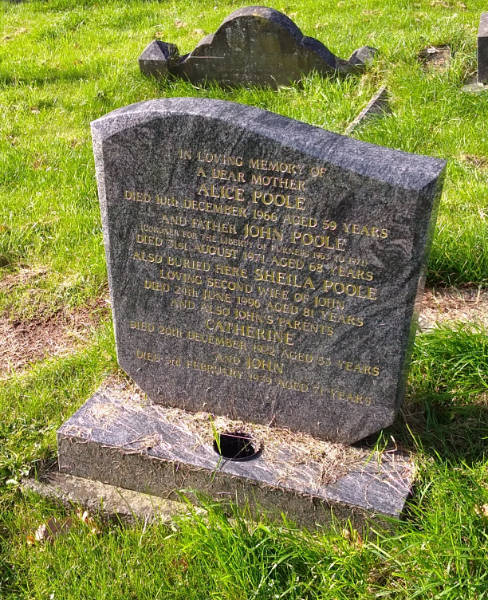
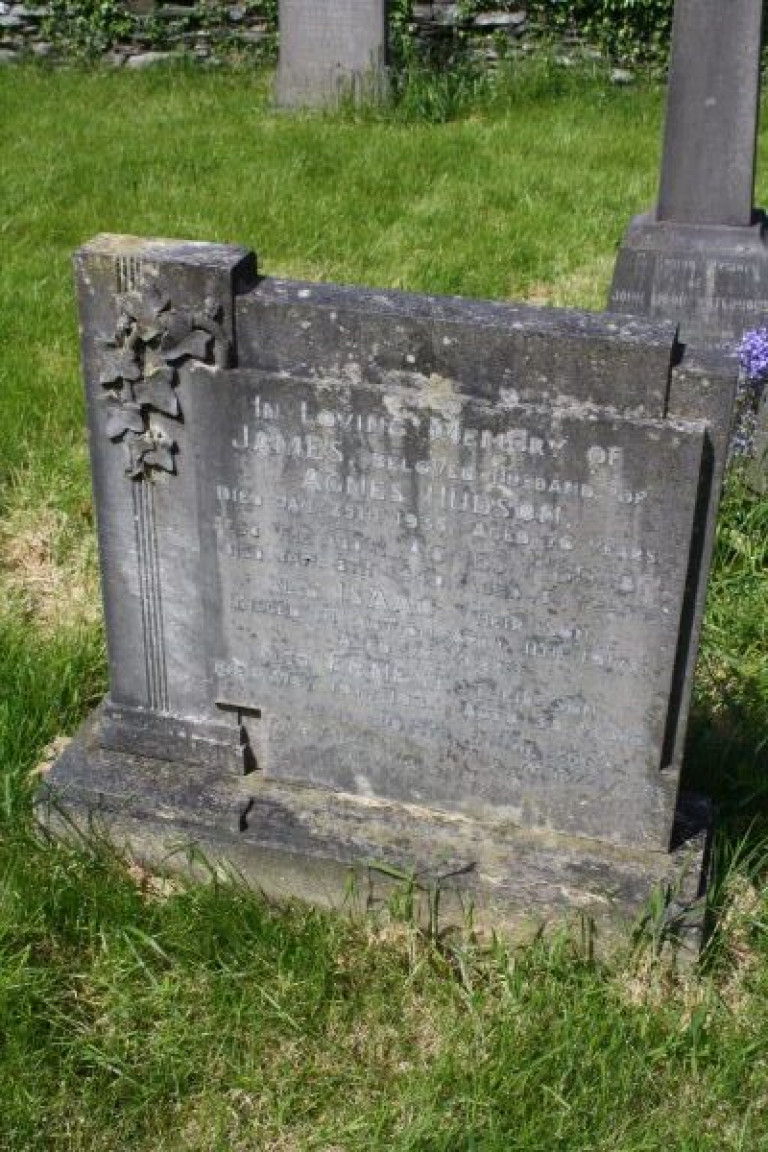
IN LOVING MEMORY OF
A DEAR MOTHER
ALICE POOLE
DIED 10TH DECEMBER 1966 AGED 59 YEARS
AND FATHER JOHN POOLE
(CORONER FOR THE LIBERTY OF FURNESS 1963 TO 1971) DIED 31ST AUGUST 1971 AGED 69 YEARS
ALSO BURIED HERE SHEILA POOLE
LOVING SECOND WIFE OF JOHN
DIED 24TH JUNE 1990 AGED 81 YEARS
AND ALSO JOHN’S PARENTS CATHERINE
DIED 20th DECEMBER 1922 AGED 53
AND JOHN
DIED 3RD FEBRUARY 1939 AGED 71
Barrow News, 3 September 1971Death of Mr. John Poole
MR JOHN POOLE, Furness and District Coroner since 1944, died at his home Danegarth, Dane Avenue, Barrow, on Tuesday after a spell of ill-health which had lasted several months. He was 68.
His death ends a family link with the coronership which has lasted for almost 100 years. Mr Poole took over the office from his uncle, Mr F.W. Poole, to whom he had acted as deputy. Mr F.W. Poole had himself become in succession to his father.
Mr Poole’s death does not, however, bring to a close the family’s association with law practice, for his son, John, has been reading law at the University of Sheffield and not long ago learned that he had been successful in his final examinations.
He plans to enter the family practice, Poole and Son, of Duke Street, Barrow.
Mr Poole, a member of a family which once lived at Cartmel Fell and more recently settled in Ulverston, was educated at Ulverston Grammar School before entering the family practice.
In his conduct of many hundreds of inquests – each in its own way a human tragedy – he showed that he had never lost the ability to feel a real sympathy towards the families involved.
He retired from active work in the practice about two years ago, but continued his work as coroner despite indifferent health.
In his younger and more active days, Mr Poole was a sportsman in many fields. He played rugby for Furness RUFC and cricket for Ulverston.
He was a keen angler and shot, with his own shoot in the Woodlands area and a stretch of fishing on the Duddon.
Another of his interests was bridge, which he played successfully until only a fortnight ago. He was a member of Barrow Bridge Club and chairman of one of the town’s social clubs, the Lisdoonie Club in Abbey Road.
Gardening was another of his leisure interests and the garden of his Dane Avenue home was always spruce and well-kept.
In addition to his son, Mr Poole leaves a widow – his second wife, whom he married three years ago following the death of his first wife Alice – and two daughters.
Interment at Ulverston followed a service at St. Paul’s Church, Barrow, yesterday.