Died
9th February 1884
Sources
Barrow News
dmm.org.uk/colliery
aditnow.co.uk/mines
Place
Walks
Dalton 1 point 4
Themes
George Law Wallwork
Died in an accident at Yarlside mines
Source 1 (More about Yarlside mines and a page for each identified fataility)
Source 2 for photos of its recent state (2005 and 2008)

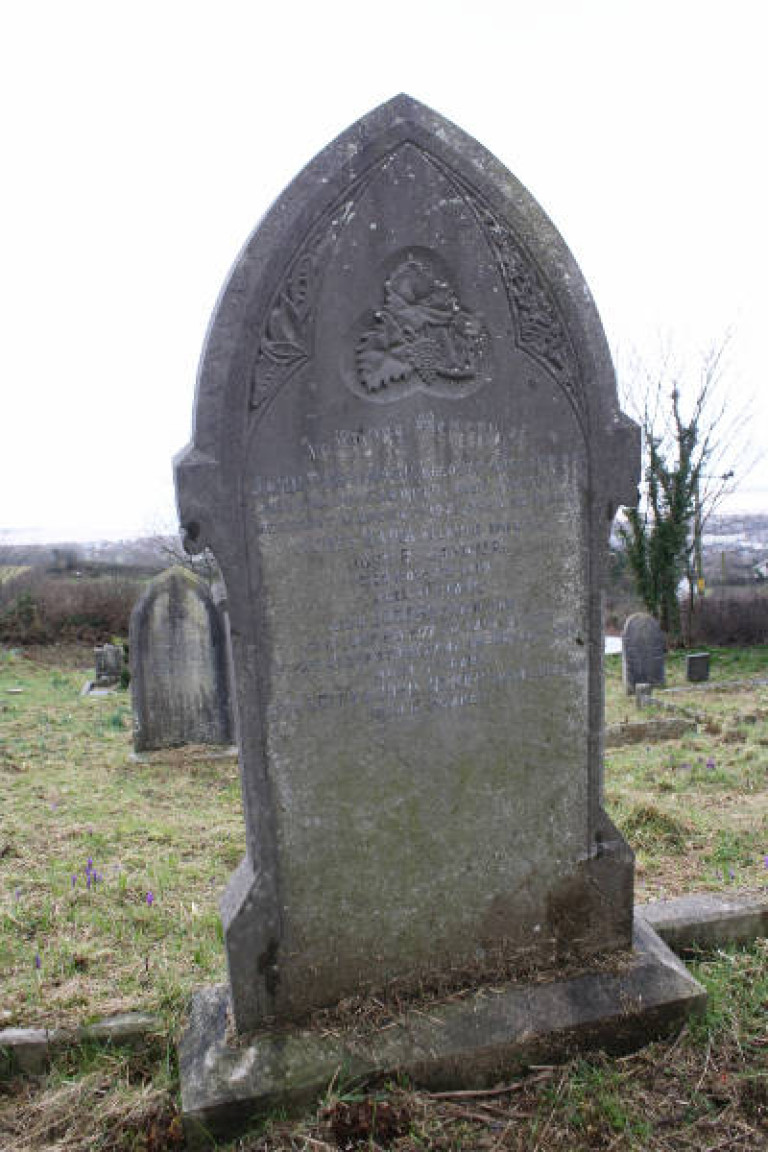
IN AFFECTIONATE REMEMBRANCE OF
GEORGE LAW WALLWORK
WHO WAS KILLED AT NO. 8 PIT
YARLSIDE MINES
FEBRUARY 9TH 1884
AGED 54 YEARS
WE ARE ALSO READY, FOR IN SUCH AN HOUR THAT YE KNOW NOT THE ...... A MAN COMETH
AND ALSO LOUISA M, HIS WIFE
WHO DIED FEB 2ND 1913
AGED 85 YEARS
THIS STONE WAS ERECTED BY THE WORKMEN EMPLOYED AT THE ABOVE MINES AS A MARK OF RESPECT
Where is the grave?
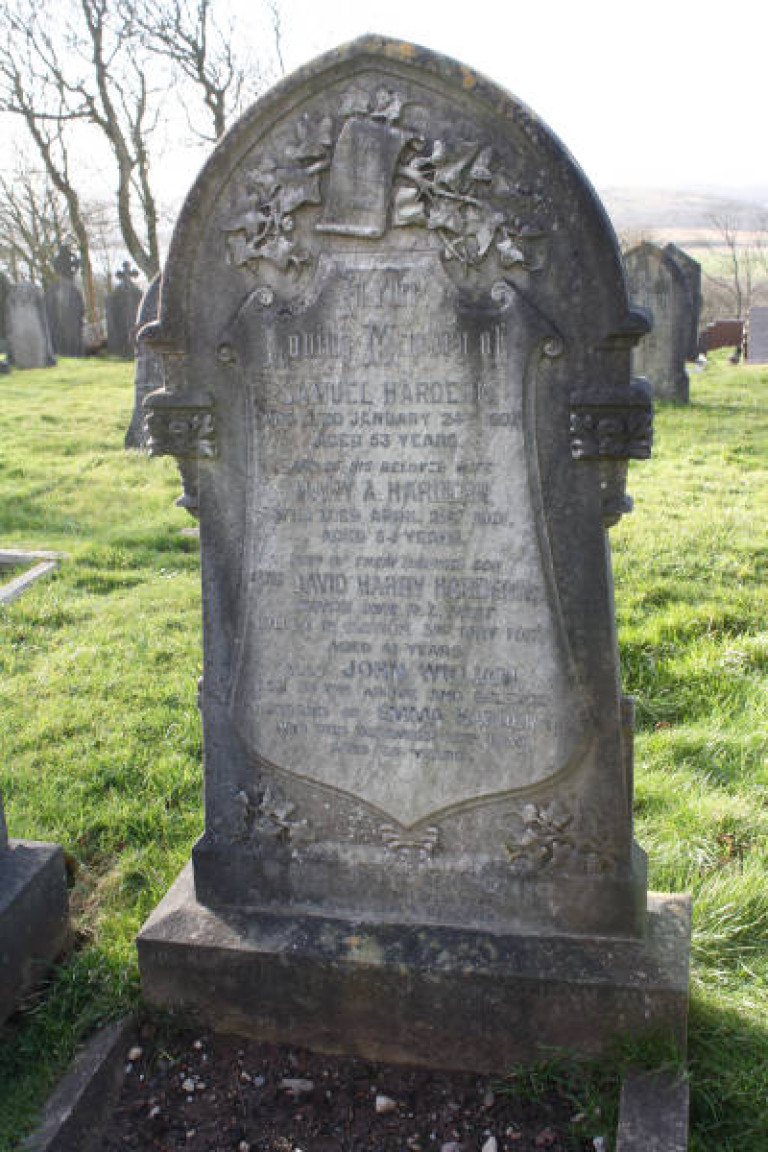
The grave is very close to the eastern end of the South Chapel, and has a distinctive shape
The Barrow News Tuesday 12 February 1884 reported:
Barrow News, 12 February 1884SAD ACCIDENT AT THE YARLSIDE MINES
A CAPTAIN KILLED
A sad accident, resulting in the death of Mr. Geo. Law Wallwork, of Auteher Park Cottage, happened on Saturday morning at the Yarlside Mines. Mr. Wallwork has occupied the position of underground captain at these mines for many years, and is well-known and respected in the neighbourhood. On Saturday morning last he descended the No. 8 pit (“three rings”) to fulfil his usual duties. About eight o’clock he gave the signal to be taken up. His son, John Wallwork, 26 years of age, was driving the engine for lifting the cage. On receiving the signal he started the engine, but through some cause or other over-wound the rope, and drew the cage up to the top of the pully (sic). The cage struck the top beam and threw the man to the ground – a distance of over twenty feet – where he, falling on his head, was killed almost immediately. Dr. Williams was at once sent for, but was unable to render any assistance.
An inquest was opened yesterday at the offices of the Yarlside Mining Co. before Mr. John Poole and a jury, of which Mr. J.R. Patterson was foreman, Mr. Boulton and Mr. Strongitharm were also present. The jury viewed the scene of the accident, and inspected the engine and the indicator by which the engineer is enabled to tell when the cage is at the top or bottom of the shaft. – Thomas Francis Wallwork said he was engaged by the Yarlside Mining Company. The deceased was his father, and was 54 years of age. He had been employed by the company as an underground captain. – The Coroner said he had received a telegram from the Inspector of Mines intimating that either he or his assistant would attend the inquiry. The inquiry would, therefore, be adjourned till Friday.
Repeating the above report in their Saturday 16 February 1884 edition, the Barrow News continued:
Barrow News, 16 February 1884THE ADJOURNED INQUEST
The inquest was resumed last night, at the Ship Inn, Roose. Mr. J. B. Atkinson, of Newcastle, attended on behalf of Her Majesty’s inspector of mines. The first witness called was James Davison, engineer of the Yarlside Mining Company, who said – I know the engine that John Wallwork was driving. It was at No. 8 pit and is used for carrying the men up. We called it a pumping shaft, and is used for that purpose. The depth of the shaft is about 93 fathoms, and John Wallwork has been employed at the work between seven and eight years by the Yarlside Company, and I have always found him a steady, careful and good engine driver. We have a regulated system for fining men but Wallwork has never been fined for doing so. The engine and machinery were in good working order. The usual signal when getting on the cage was drawn up, was to ring three times. The speed for driving the engine is regulated by the engineer. They are allowed to do it at a reasonable speed, so long as they exercise all care. The signal intimates to him that men desire to be drawn up, and he is supposed to be more careful. One ring is the signal for anything else. The engineer is enabled to tell when the cage is near the top by the indicator assuming a vertical position. The engine driver is placed in such a position that he can see the indicator and pit top. The dial is marked, and when the pointer gets to the vertical position he ought to stop. If he was going at a reasonable speed, and had shut the steam off before the cage was at the top, he would be able to stop it altogether at the top. I was in the blacksmith’s shop at the time of the accident, which occurred about eight o’clock on Saturday morning.
Discharging his duties, and if they were of the opinion that the accident happened owing to some momentary inadvertence, and he had allowed the engine to overwind in consequence, it should be their duty to return a verdict of accidental death. If, on the other hand, they thought that he was not in his proper place, and not carefully discharging his proper duty but attending to it in a negligent manner, then it would be their duty to return a verdict of manslaughter. He (the coroner) had asked the Government Inspector whether he thought some detached hooks should not be attached, and he had replied that this was a matter which was optional with the mineowners, and left to their discretion. He thought they were very desirable, however. The room was then cleared of all except the jury. A deliberating for some time, a verdict of ‘Accidental death’ was returned, coupled with a recommendation that one man should have charge of only one engine, and that the company should attach detaching hooks.
The remains of the deceased, who was highly respected, were interred in Dalton Cemetiry (sic), on Wednesday. A large number of friends and sympathisers attending as a mark of respect. The service was conducted by the Rev. J. Waterhouse. The Revs. J. Baker, W. Arrowsmith, and J. Sutton were also present.