Died
20th November 1873
Sources
Barrow Daily Times
North West Evening Mail
Place
Walks
Barrow 4 point 18
Themes
Edward Matthias Moreton
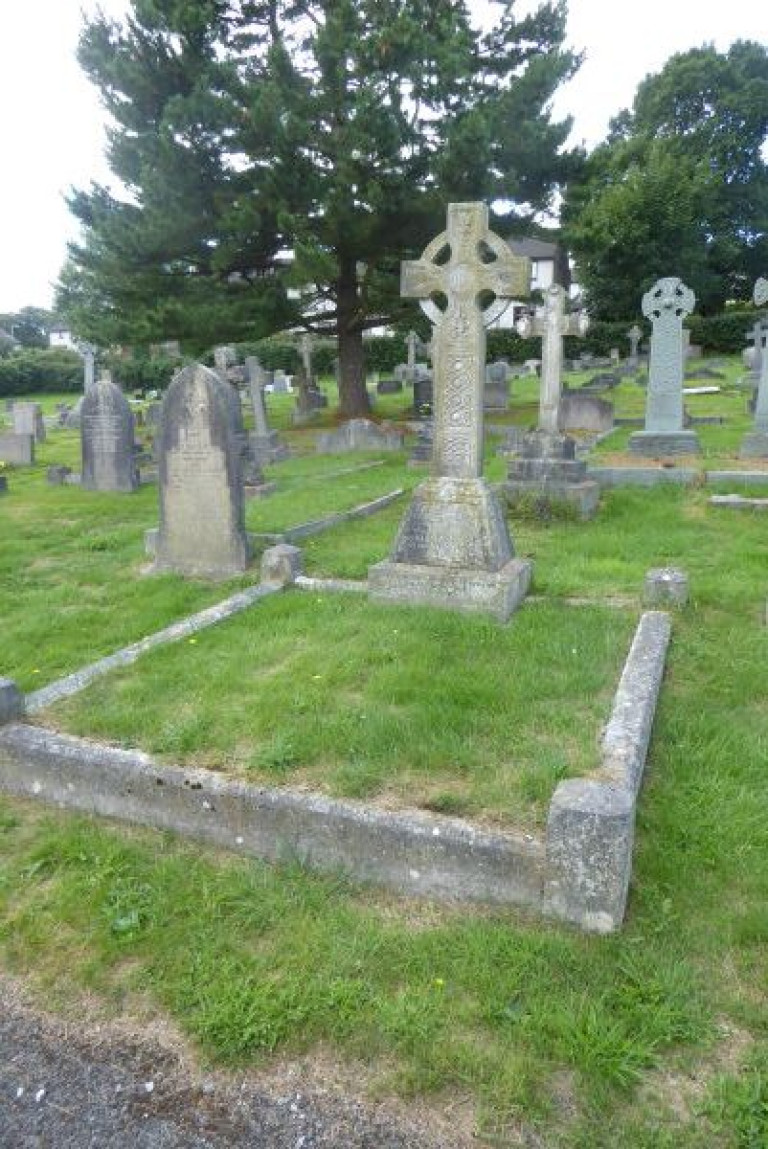
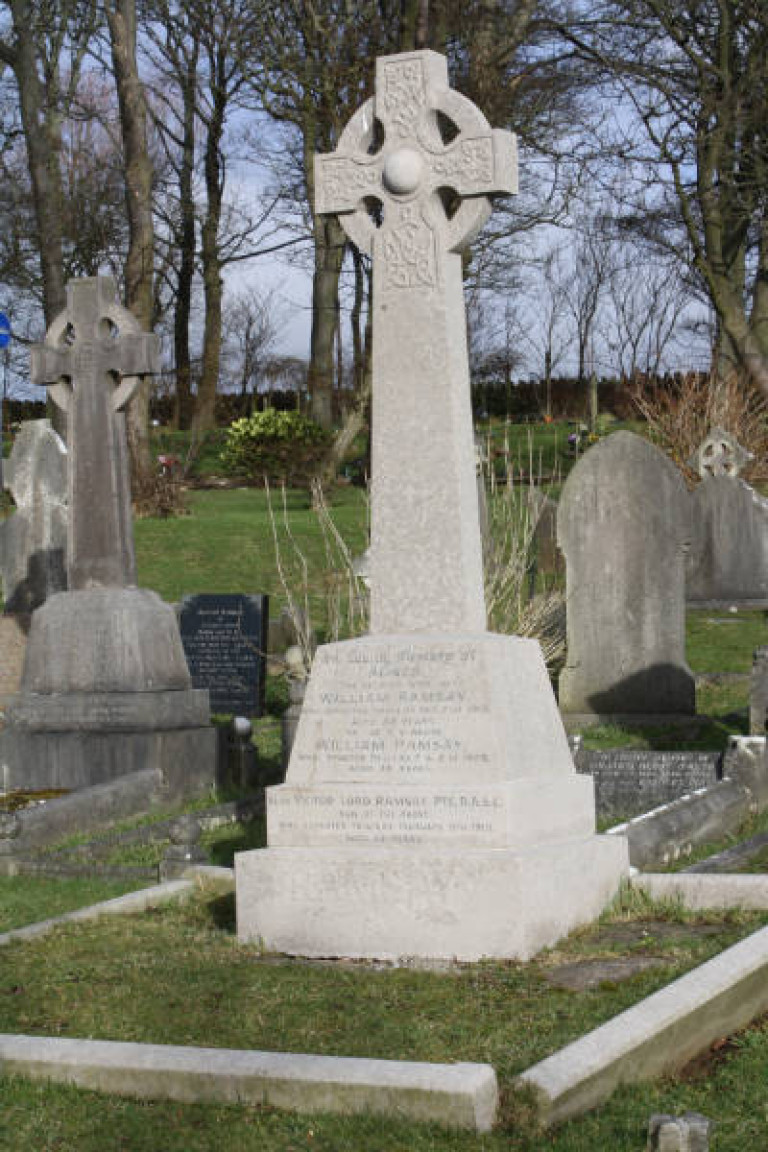
The imposing family grave has been recently (2008) restored by the family.


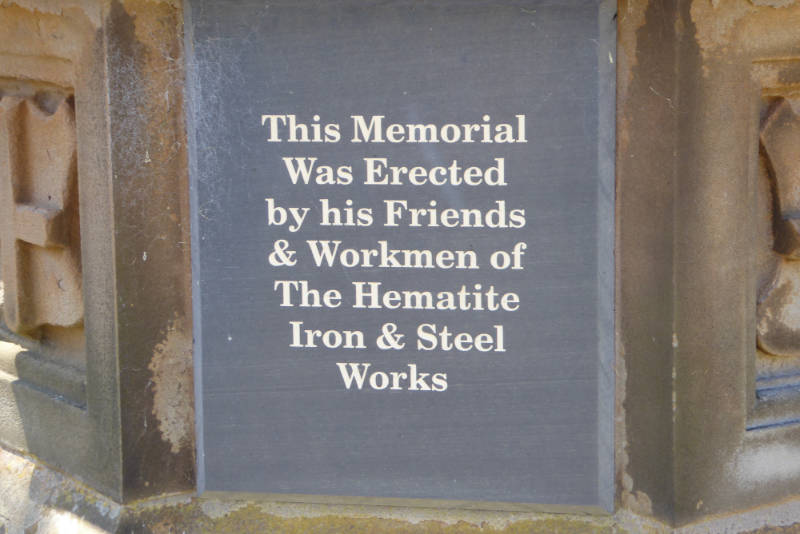
A brief note appeared in the Barrow Daily Times 24 November 1873:
Barrow Daily Times, 24 November 1873SERIOUS ACCIDENT AT CARNFORTH JUNCTION
Mr. Edwd. Moreton, Engineer at the Barrow Hæmatite Steel Works, met with a serious accident last evening at Carnforth. At the Midland junction Mr. Moreton, who was a passenger by the train due at Barrow at nine o’clock, had been looking after some luggage in that train about half-past seven. In attempting to enter the carriage again he slipped, and his left foot went under the wheels, the train having just begun to move. Though extricated with the greatest promptitude, his
foot was crushed to pieces. Immediately the engine was unhooked from the train and a van procured, in which he was placed, and at once despatched to Barrow, another engine being attached to the train which followed, but lost over an hour in the journey. Mr. Addison, the Barrow stationmaster, had been directed by telegram to have a car in readiness, and on the arrival of the special train just before nine o’clock Mr. Moreton was speedily removed to the North Lonsdale Hospital, where surgical attendance was readily given to the case. It was then found that the foot was so hopelessly crushed that amputation must be performed, and the leg was accordingly amputated below the knee. The patient remains at hospital.
On 26 November another brief mention:
Barrow Daily Times, 26 November 1873DEATH OF MR. EDWARD MORETON
We deeply regret to announce that Mr. Edward Moreton, who met with a serious accident on Sunday evening last at Carnforth Junction, as reported in Monday’s issue, breathed his last at the North Lonsdale Hospital at a quarter past three o’clock this morning. Owing to the late hour at which the intelligence reaches us, we are precluded from doing more than making the sad announcement, which will be received with deep regret amidst the circle in which Mr. Moreton was widely known and deeply respected.
On 27 November 1873 there is a long report, and the inquest (It is on the inner edge of the newspaper, and difficult to make out in parts – this is my best effort):
Barrow Daily Times, 27 November 1873THE LATE MR. E. MORETON
We briefly recorded in yesterday’s issue the result of the accident which happened to Mr. E. Moreton, engineer at the Barrow Hæmatite Iron & Steel Works, on Sunday evening, while stepping on a train at the Carnforth Junction of the Furness & Midland Railways. Mr. Moreton came to Barrow from Bilston, his native place, about thirteen years ago, to undertake the duties of the responsible xxxx tion he has held ever since that time, and which he has discharged to the satisfaction not only of his employers, but employed. He was a man of a thoroughly practical mind, and was exceedingly clever in all matters appertaining to his profession. He gained for himself many friends by his universal coxxx(consideration?) and by taking a prominent part in several xxx matters connected with the town he won for himself the esteem of all parties. His death will be deeply and sincerely regretted by all who knew him, indeed when the intelligence of his demise was spread yesterday morning it seemed to have cast a gloom over the whole town. He was identified with the local Courts of Foresters, and passed the xxxx connected with the several offices in the order. He was associated with the local lodges of Freemasons and generally took an active part in friendly and philanthropic institutions. He was connected with the Barrow and Walney Rowing Club, in the capacity of Commodore, and di much to popularise(?) the exercise of aquatic sports on our local xxxx. Mr. Moreton, who was 49 years of age, leaves a widow and five children.
THE INQUEST
Mr. Poole, coroner, held an inquest on the death of Mr. Edward Moreton, yesterday afternoon, in the Royal Hotel. After viewing the body, the first witness called was Robert Brown, a fireman at the Steel Works, who said: I knew the deceased, Edward Moreton, who was managing engineer at the Barrow Iron and Steel Works. I saw him on Sunday night last at Carnforth Station, about 20 minutes to eight o’clock. He was intending to come to Barrow by the train which should have left there for Barrow at a quarter past seven. The train was at least half an hour late on arrival. In speaking of Carnforth I mean the Midland junction. I think he came there by the train from Yorkshire. I saw him on the platform with his luggage, and he appeared to be changing it from one train to the other. I saw a guard helping Mr. Moreton to put his luggage in the train. The guard said to the station master “You look after the hind part of the train while I am looking after Mr. Moreton’s luggage. The station master said, “I’ll come and do your work for you in a bit, then I’ll carry you xxx on my back afterwards.” Mr. Moreton and the guard proceeded to the van with the luggage. Mr. Moreton turned back to the compartment where some of his friends were, but before he reached that part of the train he stopped to shake hands with a friend in a compartment next but one to the one where I was. While so doing the station master gave the guard signal that all was xxxxx behind. The train commenced to move. The deceased slipped, and his right leg fell on the xxxx step, and he was dragged about ten yards with his left leg upon the platform. The deceased still xxx to the carriage, and got his left leg down, and the train dragged him forward between the step and the platform till he came out at the end of the platform(?) where he fell. The train went forward about xx yards, and then returned to the platform. The deceased was picked up and carried to the ladies waiting-room. The left leg was severely fractured around the ankle, and the foot was badly crushed. While deceased was in the waiting-room his leg was xx and I afterwards assisted to carry him into the xxxxx. I think the injuries to the deceased’s foot were caused by it being crushed between the platform and the step. When the station master said to the guard he would do his (the guard’s) work, the guard asked why he xxxx any porters there to do their own work, and xxx him have to do it. The station said there were porters there. I saw none myself until after the accident happened. I cannot say whether there were any lights in the back part of the train. At the time the train started I cannot say whether any of the carriage doors were open or not. The carriage where the deceased was shaking hands with a friend was next to his own. As soon as the station master waved a lamp by way of a signal the train commenced to move immediately. The train commenced moving at the ordinary pace. I should say the station-master could not help seeing the deceased from where he was. He knew he was a passenger, as he had seen the guard helping him with his luggage. The engine of the ordinary was booked off, and a carriage attached, and the deceased was brought to Barrow. – A Juror: What sort of a platform is it? Witness: A wooden one. – Was it wet? –Yes – The Coroner: Are the xxx level with the platform? – Witness: The xxx about a foot below the step above the footxxx. By the Coroner: The deceased seemed to be quite sober. I cannot say that I saw the deceased xxx the platform. The deceased did not seem to be in any for his carriage when the train moved off. A Juror: Was the deceased picked up before the train(?) got back? – Witness: Yes – A Juror: Was the train starting for Barrow, or only shunting? Witness: Starting for Barrow. –A Juror: Do you think the station-master had a right to start the train at that time? – Witness: No, not when a passenger was still on the platform. – The Coroner: What distance(?) would there be from where the station-master was to where Mr. Moreton was standing? Witness xxx carriages; more.
Henry John Taphouse, photographer, xxxing in the Strand, Barrow, said: On Sunday night last I saw the deceased at the Midland Junction, Carnforth, at about a quarter to eight o’clock. He was then in the waiting room. I saw him xxxx passed in the train which had come from Cxxxx. As he passed me I spoke to him, and asked him to come in with me. He said he had some friends in another carriage lower down. That was before the train had stopped. I afterwards spoke to him, when he was passing the carriage I was in to look at(?) getting his luggage into the van, which was xxx engine. The train was twenty minutes late at Carnforth. It had stopped at the Junction from three to four minutes before it started. When the train began to move he was nearer(?) the van than the carriage I was in and walking towards the van when the train began to move. He ran back to reach his carriage, the door of which had been left open. I did not see him shake hands with anyone, nor did he shake hands with me. I did not hear any notice to passengers to take their seats. I heard nothing take place between the guard and the stationmaster. I believe the deceased was the only passenger who had not taken his seat. When the deceased ran back to reach his carriage I noticed him make an attempt to get in, then heard some screaming. It was dark, and I could not then see the deceased. I thought xxx was an accident, and shouted to the driver. Xxxx some men on the platform waving their lamps. Xxx they were also shouting to the driver to stop. Xxx van was pulled up in a very few yards. I got out and went to the deceased. He was lying at the end of the platform with his feet pointed in the direction of the train. The deceased called me by name and asked me not to leave him. I assisted to carry him to a waiting room. The boot had been torn off the left foot which was entirely crushed. I saw several porters about. The place did not seem to be badly lighted. The deceased was put in a special carriage, and I accompanied him to Barrow. The deceased was perfectly sober. The stationmaster might see the deceased when he xxx carriage but I don’t think he could see him when he was near the van. The train consisted of ten or eleven carriages.
William Horner, a guard on the Furness Railway, said: I had charge of the train which should have left Carnforth for Barrow xxxx The train was 11 minutes late. When the train arrived at the Midland Junction I saw and xxx deceased. I saw him as soon as I got to the middle of the platform. I assumed he had come off the Midland line with other passengers. The deceased asked me to take charge of two packages, and to put them into the van. I went to the van with deceased’s luggage, and I stayed at the van to take more luggage in. I did not see where the deceased went and I did not see him until after the accident. I did not ask the station-master to look after the hind part of the train. The station-master never said to me “I will do your work, then carry you on my back afterwards.” The station-master said to me “Lend me your key, Horner.” And I said “Haven’t you a key of your own?” He said “No”, and I gave him my key and told him to open the carriage door. The train stopped about four minutes. A xxx light was shown from behind, which is the signal to start. There was a porter on the platform, a Midland guard, and the station-master. When the signal was given for the train to start all appeared ready(?). I was standing near the van, and could see the length of the train. I did not notice the deceased, because there were many persons on the platform who were not going by the train. None of the carriage doors were standing open. I could have seen them if there had been, but not if they had been closed and not fastened. I did not see Mr. Taphouse looking out of the window. The first I heard with xx the accident was some-one calling “stop,” xxx looked out and saw the red lights. We pulled up as quickly as possible – in about forty yards. We started with the ordinary speed. I went back and saw the deceased lying at the end of the platform. His boot and ankle were severely crushed.
This was all the evidence adduced.
The Coroner said that this was so serious a matter that, with what the first witness had said, he thought he would not be doing his duty if he did not call the station-master before them. Whether the occurrence was purely accidental or not – and in all probability it might have been – it was very highly improper that anything of the kind deposed by the first witness should have taken place. If what was said to have taken place between the station-master and the guard xxxx, it might have remotely contributed to the accident. At all events, after what the witness had xxx the station-master ought to be called to have the opportunity of clearing the matter up; because it anything of the sort did take place, it behoved the Furness Railway Company to look into the matter, to see if there was any truth in it.
The inquiry was then adjourned until Monday next, xxxe o’clock.
The account of Edward Moreton’s funeral takes two columns of tiny print in the Barrow Daily Times 1 December 1873. Some is copied below:
Barrow Daily Times, 1 December 1873FUNERAL OF THE LATE MR. E. M. MORETON
..... We believe that it was first intended by the family of the deceased that his remains should be interred at Rampside, but in deference to the very strong (views) expressed by all those connected with the Iron and Steel Works to be permitted to take part in some funeral ceremonial which should constitute a last mark of their respect for the deceased, this intention was abandoned, and it was arranged that interment should take place at the Borough Cemetery. ... The funeral took place on Saturday after noon, the body having been removed after the inquest to Cocken Villa, the residence that Mr. Moreton had recently built for himself, in close proximity to the works. There follows a long list of the principal mourners, ...
The cortege passed by way of Walney-road, Duke-street, Abbey-road, and thence to the cemetery. The thoroughfare along the whole route was thronged by an immense crowd of persons of various stations in society, and the procession was joined here and there by professional gentlemen and tradesmen occupying prominent commercial and social positions. At the corners of the principal streets the pavements were densely packed with well dressed people, and in some places it was almost impossible to pass.
There were from four to five hundred people in the cemetery ground when the cortege arrived there. ...
... The place of burial is situate a few yards to the front of the Church of England Chapel, and is made of brick, being twelve feet deep and nine feet square. .....
John Edward Moreton wrote in the NWEM 12 June 2013 about his great-grandfather: His son John Moreton retired from the steelworks on September 1 in 1882. Edward Matthias and John Moreton were both eminent engineers with Edward Matthias being responsible for recycling air in Bessemer converters – saving 45 per cent in energy costs to the company.
Matthew Matthias Moreton
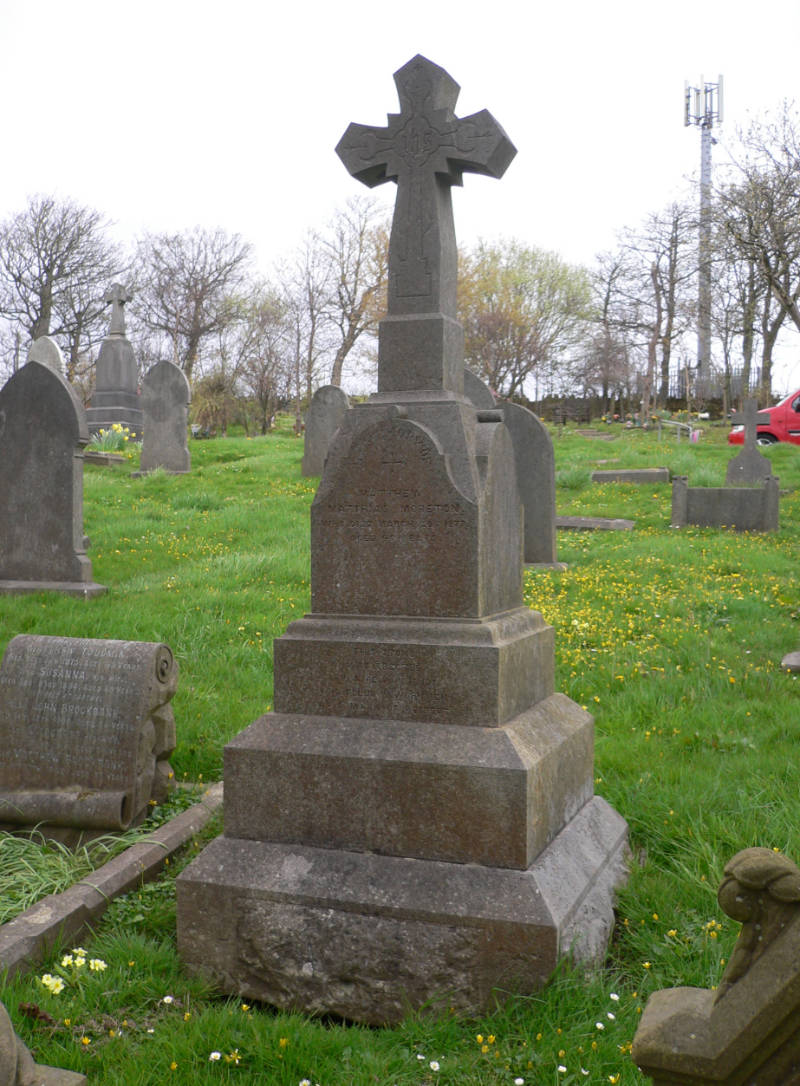
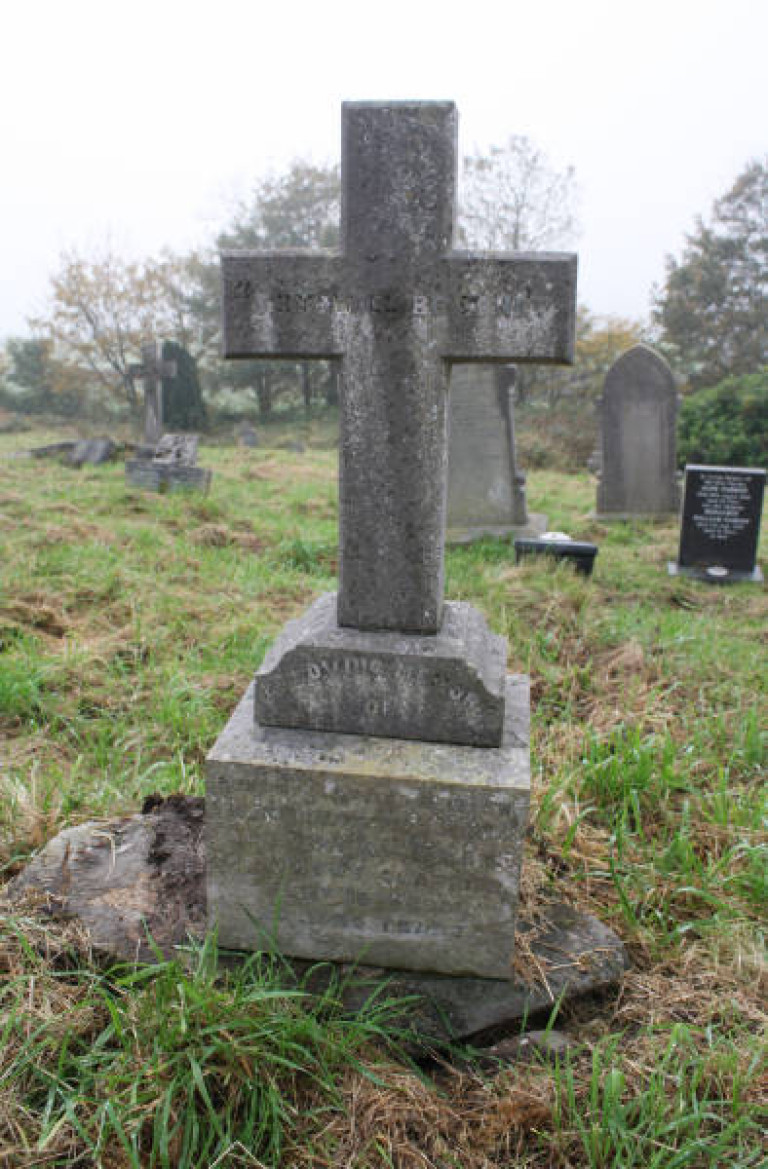
IN MEMORY OF MATTHEW MATTHIAS MORETON WHO DIED MARCH 28TH 1877 AGED 46 YEARS
On the plinth it reads
THIS STONE
WAS ERECTED
BY A FEW FRIENDS AND FELLOW WORKMEN AS A MARK OF RESPECT
Is this another family member?
Barrow Cenotaph: MORETON, Robert H. A. Private, 33972, 1st/4th Battalion, King’s Own Royal Lancaster Regiment. Killed in action on 9th April 1918.Aged 20. Vielle-Chappelle New Military Cemetery, Lacouture. Son of John and Annie Moreton, of 1, Dryden St., Barrow-in- Furness. Born at Bowness-on-Windermere.