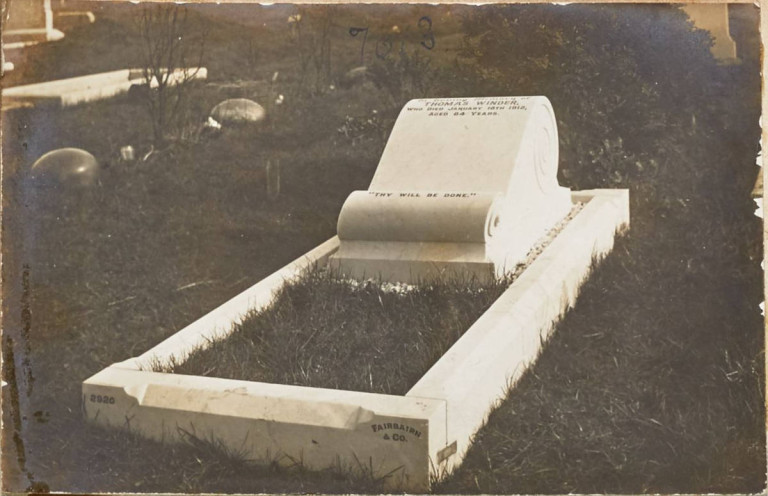
Corporal Henry Airey

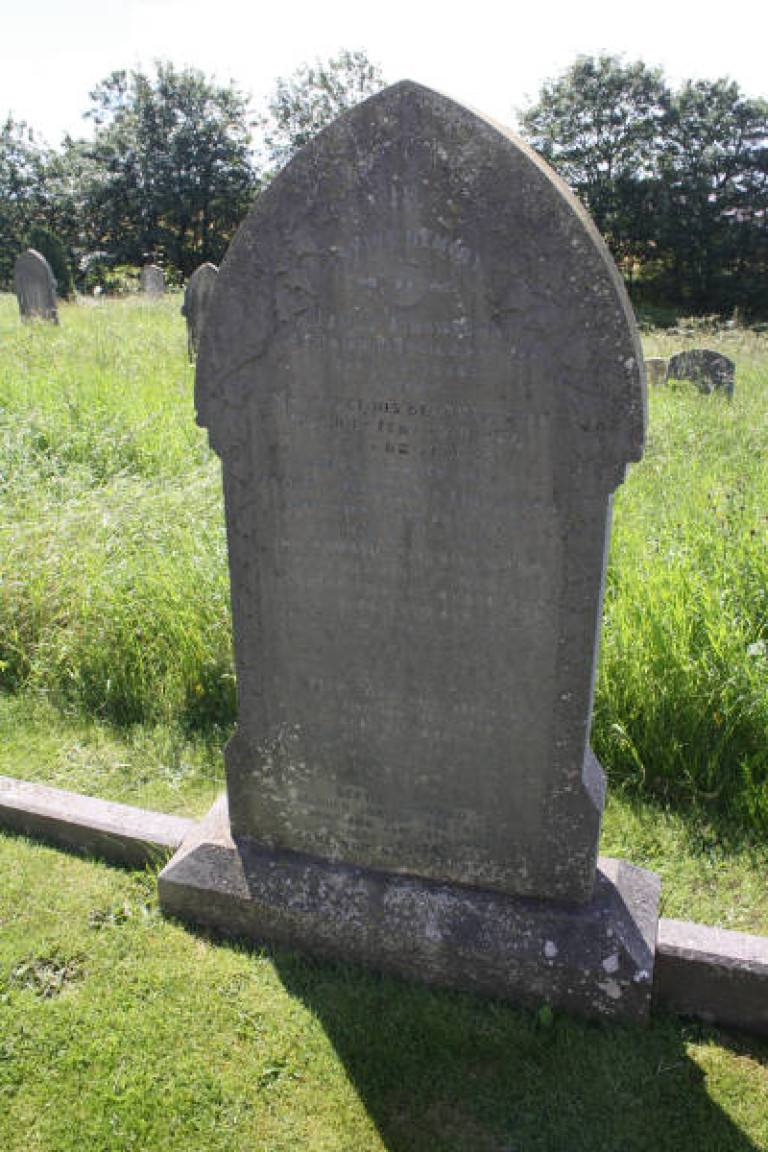
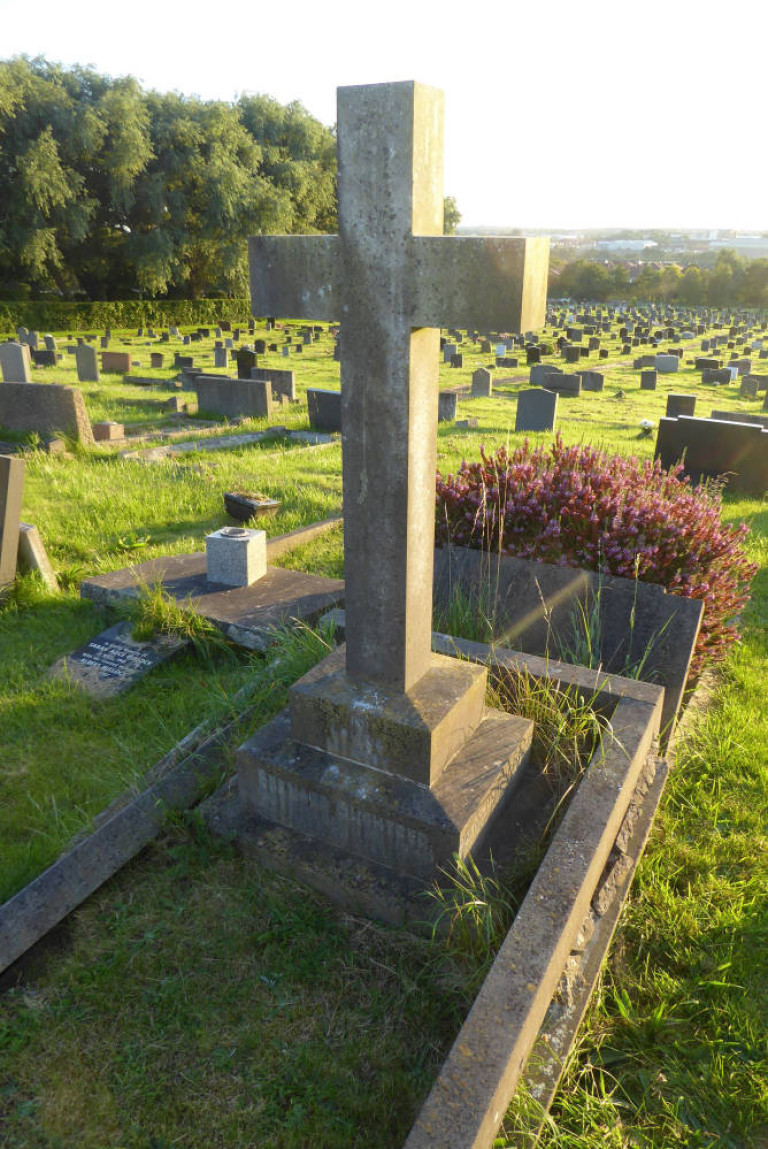
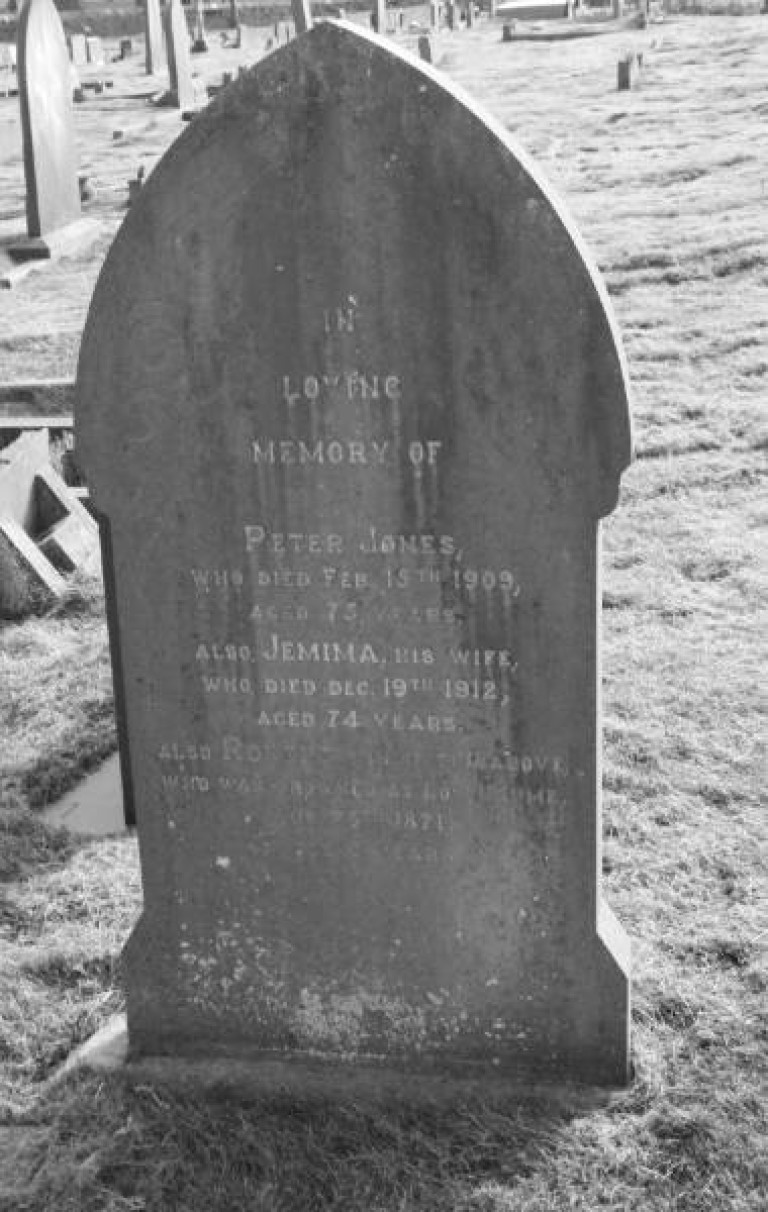
IN MEMORY OF
HENRY AIREY
CORPORAL OF PIONEERS 1ST VOL: BATT: KING’S OWN ROYAL LANCASTER REGIMENT D CO ULVERSTON
Who was accidentally killed whilst in the discharge of his duty at the encampment at Grange
ON AUGUST 8TH 1884,
Aged 24 Years.
THIS MEMORIAL WAS ERECTED BY THE OFFICERS AND MEN OF THE REGIMENT
ALSO IN MEMORY OF WILLIAM RAWCLIFFE AIREY
PRIVATE IN THE 2ND ROYAL MUNSTER FUSILIERS
Who was killed whilst on duty at Malta
ON THE 20TH DECEMBER 1882
And was interred in the Protestant Cemetery
STRADA DOLAN, PIETA, MALTA
Aged 20 Years.
ALSO OF JOSEPH, FATHER OF THE ABOVE WHO DIED JAN. 16TH 1896
Aged 70 Years
ALSO OF DINAH, HIS WIFE, WHO DIED JAN. 16TH 1900
Aged 79 Years
Barrow News 12 August 1884 headlined:
Barrow News, 2 August 1884THE ENCAMPMENT AT GRANGE
SHOCKING DEATH OF VOLUNTEER
The volunteer encampment at Grange of the first battalion King’s Own Royal Lancaster Regiment which terminated on Saturday morning, was on Friday evening the scene of a shocking fatal accident to a corporal named Harry Airey, of B Company, Ulverston. On Friday afternoon the camp was the scene of considerable bustle and excitement owing to the inspection and review and the men had been dismissed to their quarters well pleased with the complimentary terms which had been bestowed on them by the inspecting officer, Colonel Eccles. Owing to its being the last night in camp, an amount of merriment was indulged in, the men being in high spirits, and congratulating themselves on the splendid weather they had experienced during one of the most successful camps ever held in connection with the battalion. About half-past nine, however, those in camp became aware that something dreadful had happened, and those who were stationed in proximity to the cannon which was fired every night and morning heard a loud report, which told them too surely that the cannon had burst. It soon became known that a man had been killed and another severely injured. The sad intelligence cast a gloom over the camp, and where all had been jollity and good fellowship a short time before was now hushed. Everyone was thunderstruck at the terrible nature of the accident and at the sad termination of what had been looked upon as the best day of any that had been spent in camp. In the camp the stillness of death reigned, and on Saturday when the tents were struck the work was done in a noiseless way, showing that the men were painfully remembering the sad tragedy which had taken place in their midst but a few hours before. The Barrow, Dalton and Ulverston Companies proceeded home by special train on Saturday, the Lancaster, Rossall and Hawkshead detachments being conveyed by ordinary trains. It would be useless to go into the details of the accident at this point as the inquiry which was opened before the Coroner on Monday will give full particulars as to how it occurred. It may be stated, however, that the cannon which exploded with such fatal effect was fired every morning at 5.30 to sound the reveillie, and again at half-past nine at night for the last post. The cannon, which was only a small one, and mounted on a carriage, was literally blown to atoms by the force of the explosion, one of the pieces being carried over 14 tents, and another piece something like 300 yards away. Airey was blown a slight distance, his injuries being chiefly about the back of his head. Indeed, it may be said that the back part of his head was literally blown off. A man named Jones, a sergeant of the pioneers, was standing near the gun at the time of the explosion, and was struck on the thigh by one of the pieces. His trousers were much cut, and a very ugly bruise was inflicted on the leg besides a slight cut. He was also struck on the left breast by another piece, but not so seriously. He was removed home to Ulverston on Saturday, but was unable to attend the inquest at Grange on Monday, and the Coroner, Mr. Holden, of Lancaster, held that the testimony of Jones was most important in the inquiry, which was adjourned.
THE INQUEST
An inquest was opened at the Grange Hotel yesterday before Mr. Holden, Lancaster, and the following jury: - Mr. Mason (foreman), and Messrs. John Newby, Thomas Jopsom, R. Tinkler, John Trotter, Gilbert Wilson, T. Richardson, H. Johnson, H. Caddy, E. Holmes, T. Trotter, and B. Barber.
The Coroner, in opening the proceedings, said he was sorry to have kept the jury and witnesses waiting for forty minutes, but it was the fault of the railway people, and he felt it difficult to repress his indignation at the disreputable service of trains provided by the Furness Railway Co., which had kept a large train waiting at Carnforth Station for forty minutes. He came from Lancaster, and on arriving at Carnforth the train was kept waiting for three others from the south. He only got the police information respecting the accident on Sunday morning, and he at once telegraphed that he would take the inquest on Monday. Had the information been received by him on Saturday either he or his deputy would have arranged for the holding of the enquiry on Saturday.
Joseph Airey, 20, Fountain-street, Ulverston, said he was a mason by trade, and the deceased was his son, who was 24 years of age on the 20th of last July. He was a joiner by trade and a corporal in the King’s Own Lancaster Regiment of Volunteers. Bennett Johns said he was a sergeant of volunteers and deceased was a corporal. They had encamped under Castle Head. On Friday evening, about 9.15. witness was told off as sergeant of the rear guard, his duties being to see that the guard conducted themselves properly and that the sentries did their duty. The duty of the deceased was to fire the cannon and to assist the pioneers to load and fire the gun for the last post. Witness believed that Sergeant Jones loaded the gun.
Major Harrison explained that he thought this was incorrect.
The witness, continuing, said he was not present when the gun was loaded, and had given no directions about loading the gun. Did not know where the gun came from. The gun had been used all week for reveillee in the morning and last post at night.
The Coroner asked if Sergeant Jones was present.
P.S. Sims said he was at Ulverston still unfit to come.
Johns, continuing his evidence said, he was about four yards away from the cannon when it exploded. Witness had his back to the gun, and on hearing a groan on his right hand, turned round and saw Jones lying. Witness exclaimed that he believed the gun had burst. Witness went to Jones first and then to deceased. He and a corporal examined him, and witness put his hand to him and said, he believed he was dead. Witness then ran for the doctor. Deceased was wounded on the head. Witness saw a mark there. He was also cut on the left temple and was wounded behind the ear. Dr. Parsons, of the Hawkshead Company came about two minutes after, and deceased died just after. Sergt. Jones was wounded, but no one else that witness was aware of.
John H. Jackson, of Roper-street, Barrow, said he was a joiner by trade, and was a corporal in the same regiment as the deceased. Witness was corporal in charge of the guard, and deceased came up about nine o’clock with powder and candles for the guard for the night. Deceased said the gun was to be fired at 9.30, and again in the morning. He went away and came back about a quarter of an hour afterwards and began loading the gun. He had got the powder in, and asked witness if he had any paper to ram it home with. Witness has none, and deceased got a bit of a sports programme and used that. Deceased then went to the fence, which was close by, and got some loose sand and gravel, which he held in both his hands. He put it in the gun and rammed it home with a mallet.
The Coroner: Is that usual? – Witness: I have seen it done without frequently.
The Coroner: Have you seen it done before? – Witness: I have not, sir.
The Coroner: You were the corporal in charge? – Witness: Yes, sir.
The Coroner: Did you object? – Witness: No, sir.
Major Harrison explained that the authority was entirely in the hands of Jones, and this witness had no power to object to it. In fact, he had no right to say how the gun should be charged.
Witness, continuing, said the deceased came to the guard tent and waited till 9.30. He then went to the gun and struck a fuse, and applied it to the touch hole. Witness was standing immediately in the rear of the gun, about five or six yards away. Deceased was standing on the left, and Jones on the right. The gun exploded, and the first thing witness saw was Jones lying on the ground. Witness ran to him, and seeing he was not much worse, ran to Airey and found him alive. He died about three or four minutes afterwards. He was wounded on the back of the head. He was lying on the ground when the doctor came, and died directly afterwards.
The Coroner: Do you know anything about loading guns? – Witness: Yes, sir, a little. It is the only gun we have in the camp of the kind. It was the last evening we had to put in camp.
A Juror: Was there anything unusual in the quantity of powder that was used to load the gun with? – Witness: he told me that he had put more in. When he came a second time he said “If you will come and waken me up in the morning I will fire the gun for you,” and I said “You need not,” and he replied “I don’t think there will be sufficient powder in the canister (sic) tonight, as I have put a large charge in the gun, and there will not be enough for tomorrow.” I asked him how much he had put in, and he said “Three cannisters.” (sic)
The Coroner: How much is a load? – Witness: Two is a load.
Major Harrison said he thought that one would have made sufficient sound, but two was plenty.
Witness said the three pieces of metal produced were part of the gun that exploded. One of the pieces was blown about 250 yards.
The Coroner asked how soon Jones would be fit to appear to give evidence. – The witness Airey said it might be a week or a fortnight.
Major Harrison said he was senior major of the battalion, and, in the absence of Colonel Massey-Westropp who had returned to Ireland, had command of the Regiment. The battalion went into camp on the 2nd August. Witness knew the deceased very well. He was a most respected man. Deceased had often fired the gun, and was experienced so far as a Volunteer could be. The gun was kept in the store at the Armoury, Ulverston, and had been at the camps in Douglas in 1882 and 1883, and at Cartmel for three years. Witness believed it had been used at previous camps, but could not swear.
The Coroner: Is it ever examined before being sent into camp? – Witness said it was not examined by any official outside the Regiment, but it was examined at the armoury. There was no certificate, however, to say how the gun was. It was fired at 5.30 every morning. It should have been fired at 12 o’clock, but they desisted from doing so as it was dangerous to the horses.
The Coroner: Are three canisters of powder too much to load the gun? – Witness said he would not have expected the gun to explode even with three charges. One canister would have made a report, but two as quite plenty.
The Coroner: How about the gravel? – Witness said he thought that if that had been rammed tight the gun would not have burst. He had no doubt that the gun exploded through there being no vacuum.
The Coroner said he did not think he had rammed the paper home. – Witness said he thought it had stuck in the chamber and left a space, and that was how the accident happened.
The Coroner: Can you bring a skilled gunner to tell us something about this gun?
A Juror said Mr. Tinkler knew something about metals.
Mr. Tinkler said the metal appeared to him to be rather rough and coarse grained.
The Coroner said he proposed to adjourn the enquiry as he was not at all satisfied about the gun. He would really like to have further evidence both for the satisfaction of the battalion and of the public. If they went into camp again it was important that they should be provided with a proper gun and men to load it properly.
A Juror: Where did the gun come from?
Major Harrison: I really cannot say. There has been no time to get evidence.
A Juror: Is it usual to allow the men to have access to the ammunition?
The Witness Jackson: Deceased and Jones were in charge of the ammunition.
The Coroner: I am afraid we can do nothing without Jones. Cannot he come before a fortnight?
Major Harrison said he had been removed to Ulverston.
The Coroner: I should like to have the case clear about this gun. A man is blown to pieces by a gun, and it is important that the cause should be ascertained in order that such like occurrences might be provided against in the future. I think it would be as well to have some history of the gun, and to have Sergt. Jones here.
Major Harrison asked if high scientific evidence was required.
The Coroner: No; just what you can get from your own resources.
A juror thought they should have the gun before them.
P.S. Sims said the gun was blown to atoms, and there was only the carriage left.
Mr. Tinkler: Would it not be wise to have it tested. I am not satisfied about the metal.
The Coroner: Well, we can do that.
Major Harrison said the regiment had nothing to fear from a thorough investigation of the matter. They
would like to have a full enquiry.The Coroner said a man had been killed, and that should have been unnecessary, and they must see how far the explosion could have been prevented.
The enquiry was then adjourned till Monday next at ten o’clock.
THE FUNERAL
Never before have the local detachment of Volunteers had such an unpleasant ending to their annual camp. The untimely death of Corpl. Airey is the only one that has ever taken place during the camp, and the officers concluded that the deceased should not only be buried with the usual military honours, but the companies belonging to Ulverston, Barrow, and Dalton should attend, and as many as could possibly make it convenient from other companies. The remains of the deceased were brought from Grange by the 12.20 train on Monday, and taken to the residence of his father, with whom he had lived in Fountain-street. Word of the sad occurrence had been sent to the chaplain of the battalion (the Rev. C. W. Bardsley) who was staying at Seascale, and he at once returned to Ulverston in order to be present at the last earthly ceremony. The Barrow and Dalton detachments arrived in Ulverston about three o’clock, and marched down to the Drill Hall, and from thence they proceeded to the residence of the deceased, accompanied by the Ulverston detachment. Considering the inconvenience that the men were put to to attend, there was a very good muster, and there would not be less than 300 rank and file present. Amongst the officers present were Hon. Col. Sir James Ramsden, Major Harrison, Major Strongitharm, Rev. C.W. Bardsley (chaplain), Capt. and Adjutant Malby Crofton, Capt. Tosh, Capt. Gradwell, Capt. Ashburner, Lieut. Rawlinson, Lieut. Woodburn, Lieut. Kennedy, Lieut. Mansfield, Lieut. Wadham, Lieut. Huthwaite, Lieut. Butler, Q.M. Case, and Dr. Robinson. The order of procession was as follows: - Band, firing party, under the command of Colour-Sergeant Spender; the corpse, borne by relays of volunteers; friends of the deceased; members of the Ulverston Grapplers Football Club, Ulverston; Barrow and Dalton Volunteers, officers. The route was up Fountain-street, King-street, Market-street, New Market-street, Dragley Beck-lane, to the Cemetery. Along the whole line of route immense crowds had gathered to witness the sad procession, and many of the tradesmen had blinds drawn or shutters partially closed out of respect. In the Cemetery a very large number of people had gathered. The coffin was covered with the Union Jack and on this were laid the helmet and bayonet of the deceased and three beautiful wreaths, two being circular and one in the shape of a cross. Xxxx (unreadable). On arriving at the Cemetery the body was met by the chaplain, who was accompanied by Col. Sir James Ramsden. The service was conducted in the open air. The Rev. C.W. Bardsley, before proceeding with the service, addressed a few words to those present, and said he was exceedingly pleased to see such a good muster of the men belonging to the Barrow and Dalton detachments, especially considering the great inconvenience the majority of them were put to. He was also very proud to see amongst them on that solemn occasion their respected Colonel, Sir James Ramsden. It was a grand thought for the mother of the youth whose funeral rites they were celebrating to think that two of her sons had, as it were, died in harness. Both doing what they could for their country and constitution. One of these sons had been in the army, and had died at Malta, the other, as they were all aware, was a volunteer, and had met a sad and sudden death. His death on Friday night had resulted in a marvellous impression being made on his comrades, and a wonderful discipline. He (the Chaplain) had intended to ask for an offertory from those around, and the deceased comrades to raise a suitable memorial, but found this intention had been forestalled by the privates and officers of the battalion, who had already collected £20. If anything was left out of this fund after a suitable memorial had been provided. It would be given to the aged parents of the deceased volunteer. All dues belonging to him as vicar would be added to the fund, and he had much pleasure in foregoing the fees in such a case, and he hoped the Ulverston Burial Board would, as far as they legally could, forego all claims. The Chaplain then proceeded with the first part of the burial service. The latter part was read as usual at the grave side, and the solemn words of this beautiful service, said in solemn and impressive tones, had a most touching effect, many of those present being unable to restrain their emotion. Col. Sir James Ramsden stood at the right hand of the Chaplain, and at the words “Dust to dust, ashes to ashes”, sprinkled a little earth on the coffin. At the conclusion of the service a number of beautiful wreaths were put on the coffin. The solemn proceedings terminated with the firing party paying their last tribute to their comrade – firing three volleys over the grave.
The inquest resumed, and was reported in the Barrow News 26 August 1884:
Barrow News, 26 August 1884THE FATAL ACCIDENT AT THE GRANGE ENCAMPMENT
THE ADJOURNED INQUEST
THE CORONER CRITICISES THE FURNESS RAILWAY
The adjourned inquest on the body of Corporal Airey, of Ulverston, who was killed at the Grange encampment by the explosion of a small cannon, was resumed at Grange, yesterday, before Mr. T. Holden, coroner.
The Coroner, in commencing the proceedings, said he did not know whether to apologise to the jury for being 30 minutes late this time, as he had apologised to them on the last occasion for being 40 minutes late. The remarks he had previously made had been commented on by one of the papers. Still he was of opinion that it was only becoming of him that he should apologise to the jury for keeping them waiting for the long time of 40 minutes. He had been taken very pleasantly to task for it; but notwithstanding these remarks he still adhered to the opinion that the service of trains was not a good one. He further pointed out that at least 200 tickets had been sold at Morecambe for the circular tour excursion, and all these people had been kept waiting for half an hour at Carnforth. He had that morning counted the passengers who arrived by the after train, and found there were only five. Thus the whole system between Carnforth and Whitehaven was kept waiting for five people. He merely wanted to apologise to the jury for having on two occasions kept them waiting.
The Coroner intimated that he had had parts of the gun examined by Mr. Simpson, a partner in the Phoenix Foundry at Lancaster, a gentleman who had considerable experience. He might state that the firm during the Crimean War had a contract with the government for casting shells.
Sergeant Thomas Jones, who still appeared to suffer considerably from the effects of his accident, having to walk with crutches, said he resided at Ulverston, and was a sergeant in the Ulverston Volunteers. It was witness’s duty to supply the sergeants of the guards with ammunition and to give instructions as to the loading and discharging of the gun. Deceased had had quite as much experience in firing the gun as witness, and had frequently loaded and discharged it during the late camp and last year. Witness gave him no instructions how the gun was to be fired on the night of the explosion, as he relied on his knowledge as to how it had to be done. Witness asked him if he had loaded it, and he said he had. The corporal got the powder from the stores. Witness did not know how much he got. He considered two “bottle tops” a charge for the gun.
The Coroner: Was three excessive?
Witness said he should think not. He had loaded that very gun with six charges when he was testing it before it was mounted. They usually rammed the powder with paper, but used no sand or gravel. At the time of the explosion witness was four or five paces away from the gun. After the deceased applied the match to the gun witness felt something strike him on the leg, and that was all he knew about it, not having any idea that the gun had burst. Witness was disabled at once. He heard someone say the gun had burst and that Airey was killed. Witness was carried into the guard tent. As far as his experience went, he thought the gun was sound. He had fired the gun on Friday himself.
Sergeant-Major Wardle, Ulverston, said he was instructor to C. and D. Companies, Ulverston. He was not accustomed to the loading and discharging of ordnance, only rifles. The gun that had burst had been kept in the armoury under his charge, and as far as he knew it was quite sound and in perfect condition. It was cleaned out a fortnight before camp by Airey. It was not tested then. Mr. Simpson said, he was a partner in the Phœnix Foundry Company, at Lancaster, and was acquainted with castings of all kinds. He had examined portions of the gun, and could not detect any flaw. The quality of the metal was good, and such as would be used for that particular purpose. It also showed a very good fracture. It was a good quality and had been carefully cast.
The Coroner: Supposing there had been any latent defect it would have shown itself before now, considering the time the gun has been used.
Witness: I should certainly say it would.
The Coroner: Six charges of powder would be a severe test, would it not?
Witness: A very severe test. If anything had been rammed down on the powder it would increase the strain on the gun. To put three charges in and then load with sand and gravel would greatly increase the strain.
The Coroner: Supposing the charge had not been properly sent home, then the danger would be great. A Vacuum would be left.
The Witness thought it would not be sufficient of itself to explode the gun. He accounted for the gun bursting by its not having been carefully rammed. That the presence of the sand and gravel burst the gun.
Mr. Stones, junr., Ulverston, said they supplied the gun to order, but did not make it. He thought the accident had been caused by a vacuum in the gun.
The Coroner then briefly summed up, and said they had now got before them all the evidence regarding this deplorable event, which had cast a great sorrow over the camp and bringing death to the unfortunate corporal who discharged the gun. The facts could be briefly summarised. The Coroner then proceeded to point out to the jury the evidence of the different witnesses, and said from the evidence of Mr. Simpson, who was skilled in the art of metallurgy, and he had stated explicitly as to the quality of the gun, and that it had been carefully cast. The gun had been used for many years at the camp, and on one occasion had been charged with six charges of powder. They knew how the gun had been loaded just before it burst. He thought it would be impossible for any of them to put their finger on any part of the evidence which pointed to the culpable neglect of anyone except the unhappy man himself.
A verdict of “Accidental death” was returned.
The son who died in Malta, William Rawcliffe Airey, was born 15 September 1863 and baptised in St. Mary’s, Swansea on 7 October 1863.
Mr Simpson: Obituary from Grace’s Guide, originally from 1893 Institution of Civil Engineers: Obituaries.
MATTHEW HENRY SIMPSON, son of Mr. Matthew Simpson, of Lancaster, was born on the 12th of August, 1853, and was educated at Birkenhead Proprietary School.
After serving articles for six years in the engineering department of Laird Brothers of Birkenhead, he became in 1879 managing partner in the firm of Sharpe and Co of the Phoenix Foundry, Lancaster.
Feeling in the management of that foundry the lack of theoretical knowledge, he entered the metallurgical laboratory of the Royal School of Mines, where he passed the examinations in a highly satisfactory manner. Having a decided taste for original research, he spent a large portion of his time on returning to Lancaster in metallurgical investigations, more particularly in connection with the properties of iron and steel.
Mr. Simpson’s work at the Phoenix Foundry ceased in 1886, when he dissolved partnership. He then continued his metallurgical studies at the Royal School of Nines and in 1887 became Assistant to Charles Appleby, Mining Engineer, with whom he remained for some eighteen months, his time being devoted the the design of machinery and to the metallurgy of the precious metals. In dealing with processes for the extraction of gold from its ores by chlorine or by bromine, he realised the difficulty of transporting those materials and devised and patented a process for transporting bromine in a solid form. He had previously taken out, in conjunction with Francis Sharpe, a patent for a machine for breaking pig-iron.
At the beginning of 1889 Mr. Simpson went to British Guiana as Managing Engineer to the Demerara Gold Association, a company engaged in mining alluvial gold deposits. In the summer of the following year he returned to England on the conclusion of his agreement with that Association, but shortly afterwards went back to British Guiana to take charge of an exploratory expedition which he himself had organised and fitted out. Unfortunately, however, he fell a victim to the unhealthy climate and died on the 29th of February, 1892.
Mr. Simpson’s enthusiasm for work and his genial manners and keen sense of humour made him very popular with all who knew him. He was elected an Associate Member of the Institution on the 3rd of March, 1891.