Charles Fleet
Died at Millom Ironworks

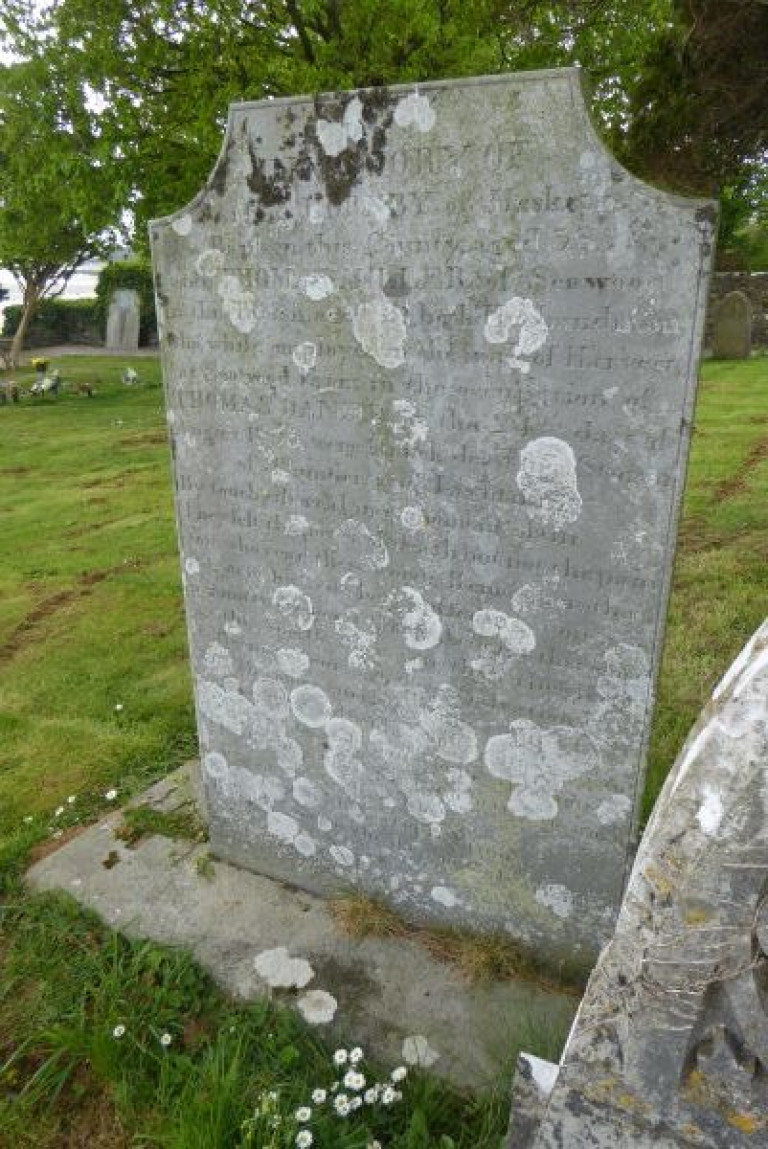
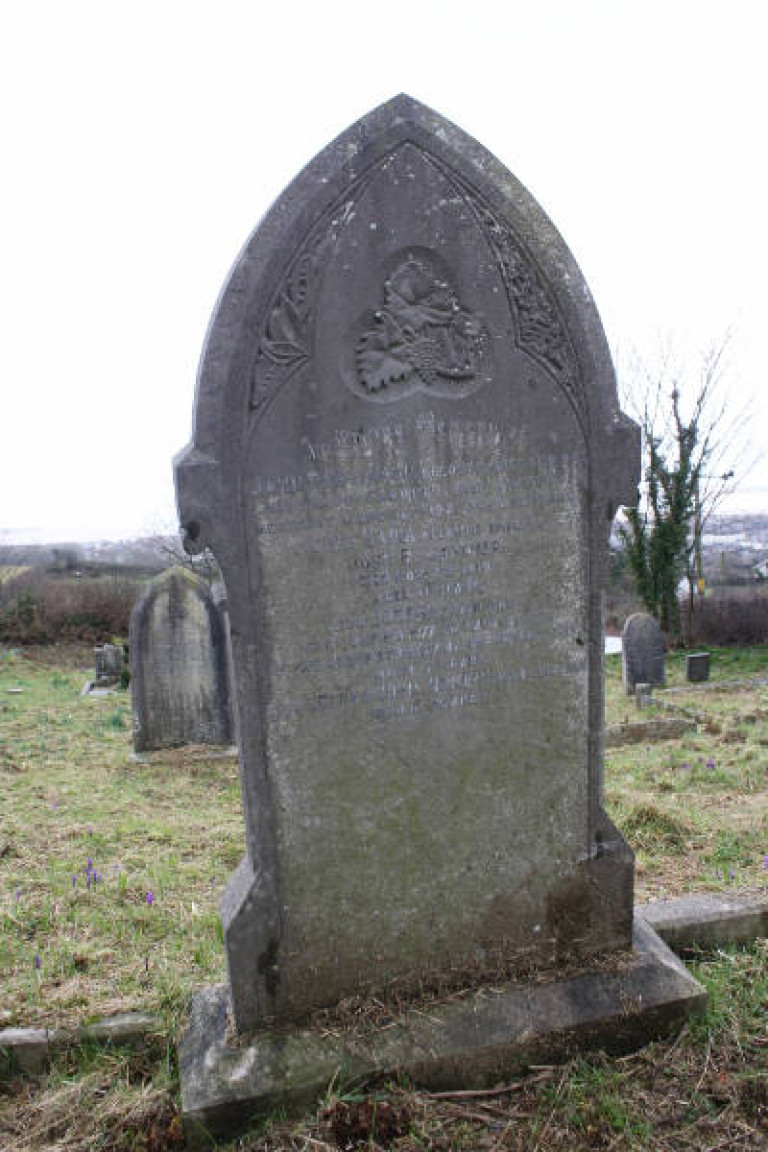
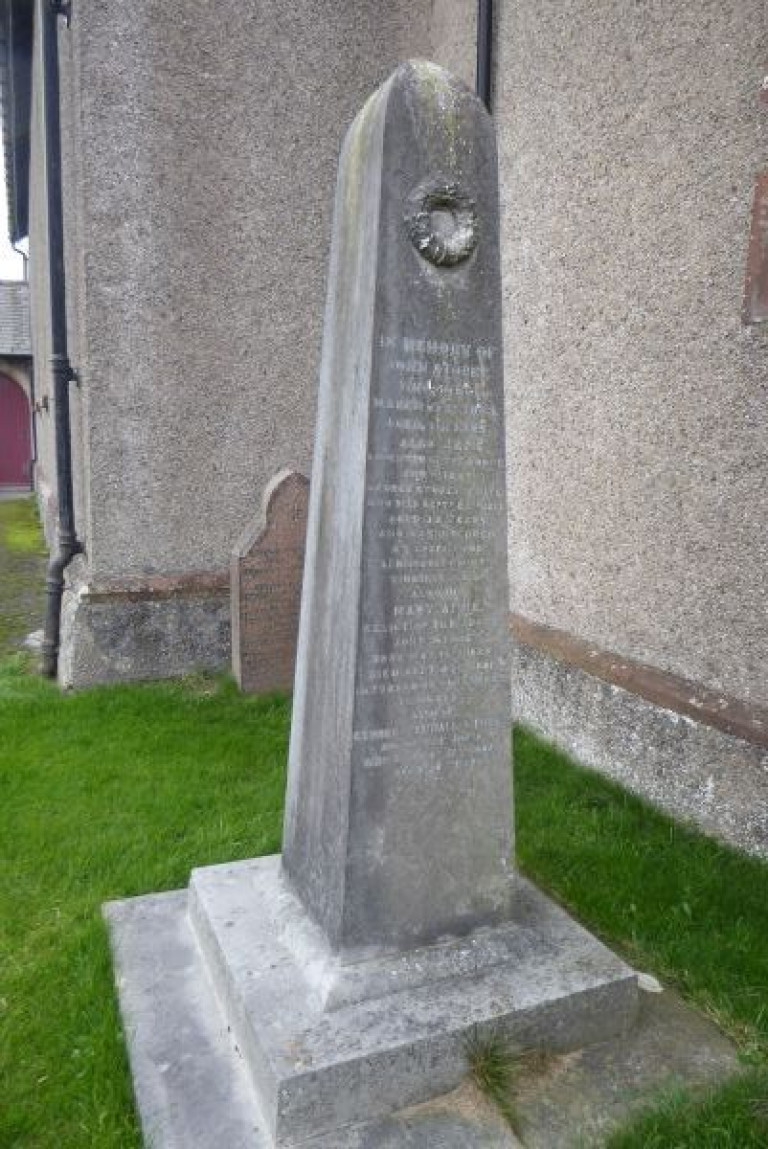
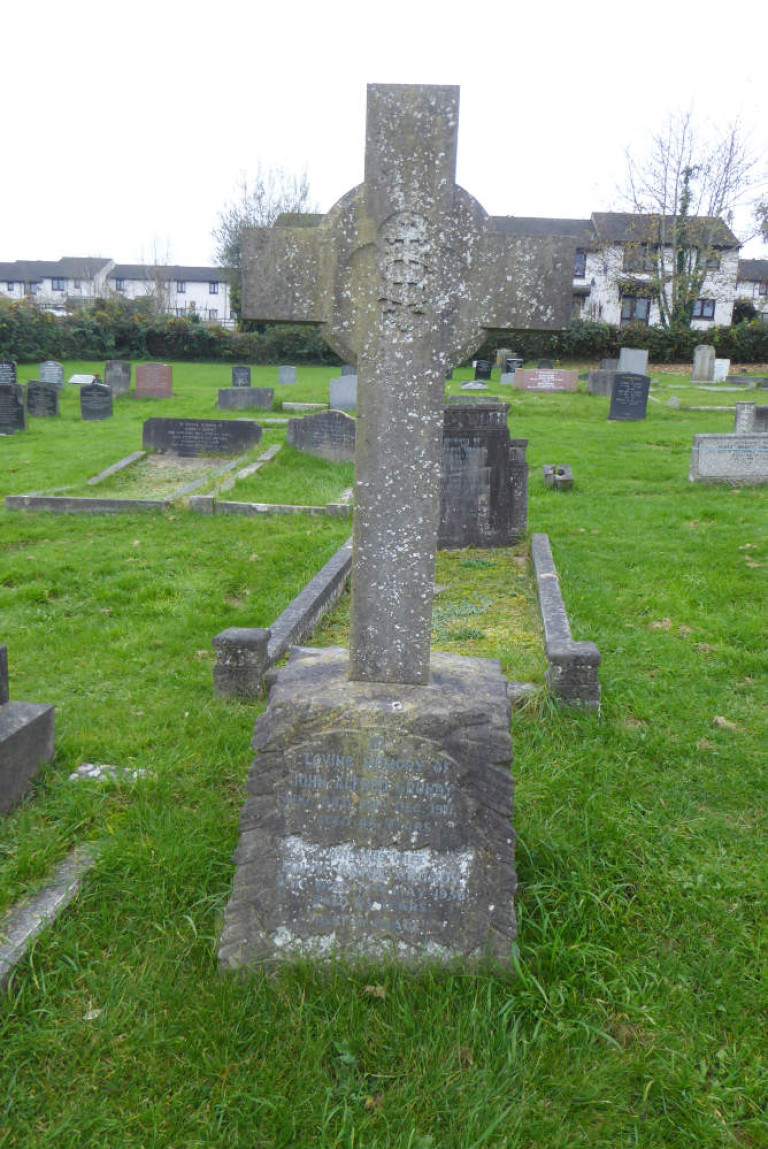
IN LOVING MEMORY OF
CHARLES JAMES
BELOVED SON OF JOHN AND MARY FLEET
WHO WAS KILLED
AT MILLOM IRONWORKS 12TH SEP. 1916
AGED 28 YEARS
“IN THE MIDST OF LIFE WE ARE IN DEATH”
ALSO ETHEL GIBSON
THEIR DAUGHTER
WHO DIED ON HER VOYAGE FROM INDIA 16TH AUG. 1919 AND WAS BURIED IN THE RED SEA AGED 26 YEARS.
ALSO JOHN FLEET
DEARLY BELOVED HUSBAND OF MARY FLEET
DEPARTED THIS LIFE JULY 17TH 1926 AGED 73 YEARS
ALSO OF THE ABOVE MARY FLEET WHO DIED 7TH MAY 1937
The Barrow News 16 Sept 1916:
Barrow News, 16 September 1916DASHED TO DEATH
MILLOM MAN’S FATAL FALL
A fatality of a peculiarly distressing character was reported from Millom early on Tuesday morning, a man named Charles Fleet, employed as foreman labourer at the Millom and Askam Ironworks Co., falling from a height of 60 feet from the explosive door of a furnace, and being instantly killed. The unfortunate man was single, living in lodgings at 25, Devonshire-road, Millom. His parents kept the Devonshire Hotel at Millom for some years.
It appears that Fleet, at about 7.15 a.m. on Tuesday morning, was engaged in stopping an escape of gas at the explosives door of the down comer of No. 5 furnace, which had been put in blast the previous day. He was working at a height of about 60 feet, and was accompanied by Peter Mullen, foreman blacksmith, who was watching Fleet pating (sic) clay on the explosive door. The deceased was seen to suddenly roll over and disappear, falling to the bottom. Hearing a noise a workman, named William Robinson, who was engaged near the fire well of No. 5 furnace, looked round and saw the deceased lying upon some flats, to all appearance being then dead. He was raised on to a bogey and removed to a store house. Information was then given to the police, and Dr. Craig was sent for, and examined the body of the deceased, and found a fracture at the base of the skull. P.C. Wren went to the works and had him removed to his home.
----------------------------
THE INQUEST
An inquiry into the circumstances attending the death was held at Millom Police Court on Wednesday afternoon. Mr. Lawrence attended as the Coroner for the Lordship of Millom, and the Local Government Inspector (Mr. Lamb) was also present. Mr. Butler represented the relatives, and Mr. Hart Jackson the Millom and Askam Ironworks Company. Mr. List, general manager of the Millom Ironworks, was also present during the whole of the inquiry.
The jury summoned were: Mr. Kenneth Ling (foreman) and Messrs. A. Boodle, Christopher Batallick, J.R. Johnson, J. Tyson, M. S. Spry, W. Stephens, I. Newby, F. Fell, R.P. Impson, E. G. Teasdale, and J. Kelly.
The Coroner said that before proceeding to view the body, he thought that the jury would wish him to say that they all came there with regret to perform a melancholy duty with regard to a fine young man taken away so suddenly. He was sure that they ought to express their sympathy with the sorrowing relatives of the deceased.
Mr. Hart Jackson, on behalf of the Millom and Askam Company, joined the Coroner in his expressions of sympathy. They felt that they had a lost a very good workman in the death of this young man.
Mr. Butler said, on behalf of the relatives, he would like to thank the Coroner and Mr. Hart Jackson for the expressions of sympathy. It must be some consolation to the parents to know that he had been such a good workman. He had certainly been a good son to his parents.
John Fleet, father of the deceased, identified the body viewed by the jury as that of his son, Charles James Fleet, aged 28 years. He was a foreman labourer in the employment of the Millom and Askam Ironworks Company, and a single man. Witness know nothing about the accident.
William James Robinson, helper at the blast furnace, and employed by the Millom and Askam Ironworks Company, said that he knew the deceased, and had last seen him alive at about ten minutes past six on Tuesday morning, when he was coming up the pig beds. His attention having been drawn by a rattle, and then a thud, he looked around and saw a man’s body lying between the down-comer and the furnace. Sending two of his mates to the place, witness called to Mr. Sirett, the head foreman, and then went for a stretcher. When witness came back, the deceased was laid on the stretcher, and he then recognised the body. He (witness), was not in any way connected with the work the deceased was doing.
In reply to the Inspector, witness replied that No. 5 furnace was working and was in blast.
In reply to Mr. Butler, witness said the head foreman was standing on the wall of the next furnace when the accident happened. He did not himself know what really happened. The first he saw was this man’s body lying on the flat sheets.
WORKMATE’S STORY
Peter McMillan said he knew the deceased, and had last seen him alive at about ten minutes past seven on Tuesday morning. At that time he was on the platform connected to No 5 blast furnace, near the explosive door near the top of the furnace. He was at the top of the furnace about eight or nine feet above the deceased, the latter being at work stopping a leak of gas from the explosive door of the down-comer. That was a kind of shaft that took the gas down to the flue. The gas was coming out of the sides of the door, but not with any great force. Leaks of gas often occurred at furnaces, but he could not say that they occurred oftener in a furnace recently put in blast than others. Whilst watching the deceased closing the leak around the door, he noticed he had hold of a rope, which was fastened to a valve spindle on the palisading. Deceased suddenly let go of the rope and rolled over, falling of the platform, falling off the platform, dropping 60 or 70 feet, to the bottom of the furnace. The platform on which deceased was standing was about 2 ft. 6 ins. long by 2 ft. wide. There was no guard of any kind around it. Unless he was gassed, witness could not account for deceased letting go of the rope. He thought the deceased must have inhaled gas, and become dizzy. The gas was not blowing out sufficiently strongly to knock him over without inhaling it.
In reply to the foreman, witness said he on the wrong side to have inhaled which may have overcome the deceased.
INSPECTOR’S QUESTIONS
In reply to the Inspector, witness said that he went to the top of the furnace to put a weight on the explosive door because it was lifting with the gas. The deceased did not go up with him but came up after him. Witness did not give the deceased any instructions. He thought that it would have been possible to have put the weight on the explosive door without the leakage being stopped, but there would be a danger of being gassed if the furnace was on. The gas could not be cut off unless the furnace was put out of blast. The deceased got into the platform by getting over the palisade and going down a ladder that had been put there by the foreman. If a rail was put round the platform it would have to be considerably enlarged, but assuming it was made larger it probably would be safer to have a rail round it.
In reply to Mr. Butler, witness stated that the name of the foreman was Mr. Sirett. The gas was put into a flue for the purpose of driving the boilers. There was no arrangement between him and the deceased as to how the job had to be done. He had never seen rails of palisading round platforms of this kind, although he had been working at furnaces for 36 years.
In reply to Mr. Hart Jackson, witness said he was a blacksmith not a furnaceman. The reason the foreman, Mr. Sirett, was unable to stop the leak was that the clay was too hard, and he came up the ladder and told Fleet to put some water on the clay to soften it. Sirett then went down the lift to the bottom of the furnace. Witness did not hear Sirett give the deceased any instructions about putting clay on the door. Whilst Sirett was away, Fleet came back and got over the palisading to lute or clay up the door. Sirett had not returned when the accident happened.
........FOREMAN’S EVIDENCE
Charles Frederick Sirett, head foreman at Millom Ironworks for the blast furnace department, and had occupied that position for 18 years. The deceased who was an assistant foreman, was under witness, and had occupied that position for eighteen months. On Monday last another furnace had been put in blast, and the pressure of gas from this new furnace kept the explosive door of the down-comer slightly open. This door would be about 7 ft. from the top of the furnace, and there was a platform about 6 ft. square on which to stand. Owing to the escape of gas annoying the men at the top of the furnace witness decided to stop it, and brought the blacksmith and the deceased to rectify it.
The account goes on, but is barely readable on microfilm due to being on the edge of the binding, so half of each line is illegible. From what can be read, a verdict of ‘Accidental Death’ was returned, with a recommendation that where dangerous work was undertaken, a rope should be used for added security.
I have been unable to find any reference to Ethel’s death, or her burial ‘in the Red Sea’.