Died
29 September 1921
Aged 7
Born
1914
Sources
Barrow News
Ancestry
Place
Walks
Themes
Charles McLinden
Children had no computers, computer games or television to distract them. Even young children had a fair amount of freedom to play beyond their back-yard or back street. Although there were few motor vehicles in the 1920s, there were still plenty of dangers.
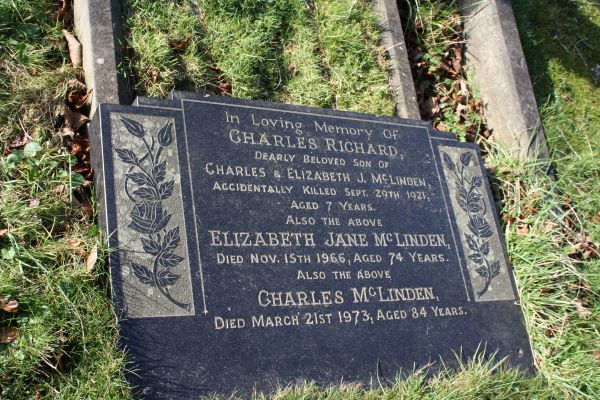
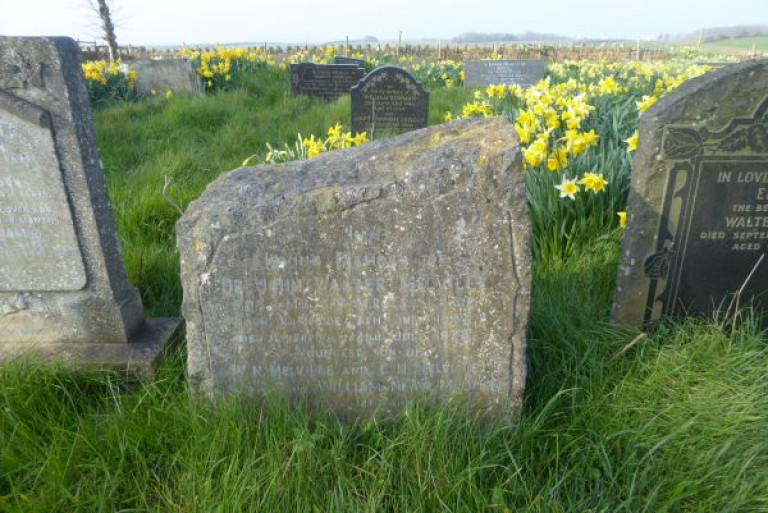
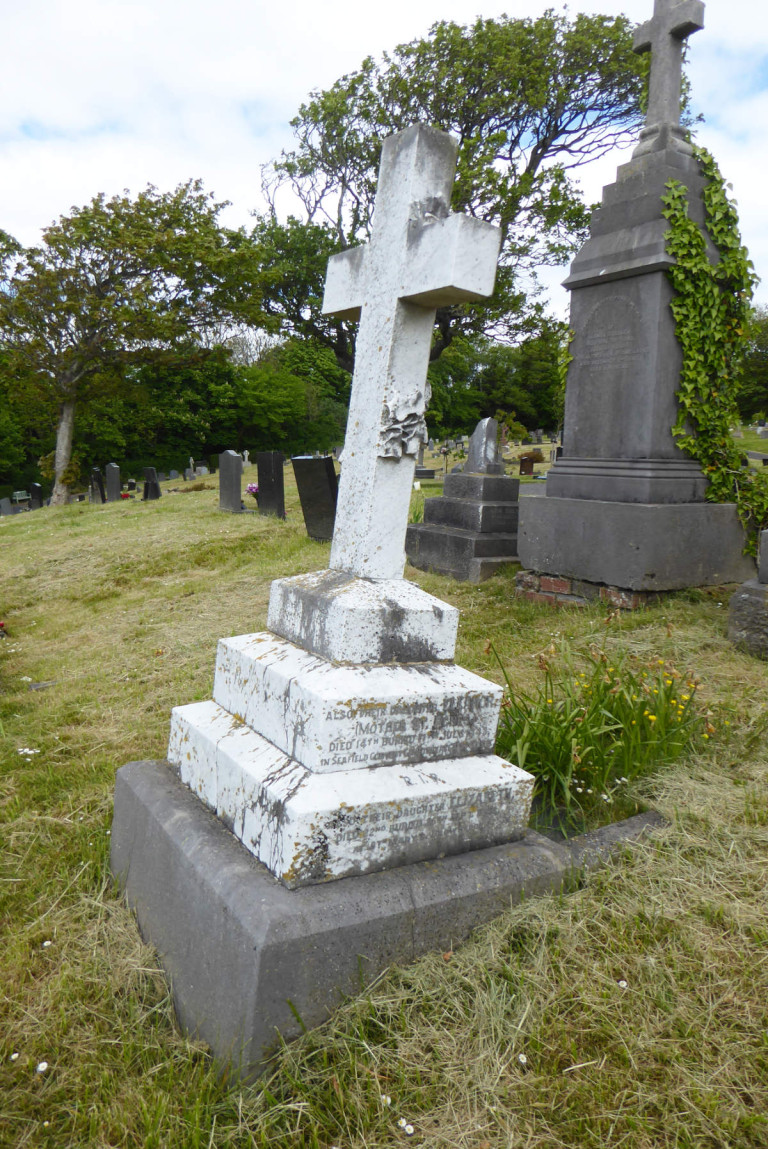
IN LOVING MEMORY OF
CHARLES RICHARD,
DEARLY BELOVED SON OF
CHARLES & ELIZABETH J. MCLINDEN
ACCIDENTALLY KILLED SEPT. 29TH 1921,
AGED 7 YEARS
ALSO THE ABOVE
ELIZABETH JANE MCLINDEN
DIED NOV. 15TH 1966, AGED 74 YEARS
ALSO THE ABOVE
CHARLES MCLINDEN
DIED MARCH 21ST 1973, AGED 84 YEARS.
The Barrow News 1st October 1921 reported:
BARROW BOY’S DEATH
CAUGHT BETWEEN THE BUFFERS OF A TRAIN
A seven-year-old boy named Charles Richard McAlinden (sic), of 11E Steamer-street, Barrow, was killed on the railway line at Bridge-road, Barrow, on Thursday evening.
It appears that the boy had climbed up on to one of several railway wagons standing on the line at this place, his purpose being to procure a piece of rope which was attached to the covering sheet on the wagon.
While he was so engaged the wagon moved, causing him to fall with his head between the buffers. The train was in two halves, and was being coupled together.
Directly after the coupling had been completed, the shunter at North Gate crossing was informed of the accident, and on proceeding to the scene of the occurrence it was found that the boy was beyond human aid, his skull having been badly crushed.
The coroner has been informed of the facts, but the inquest has not been fixed.
The following week the Barrow News reported:
Coroner’s Strictures
THE BRIDGE-ROAD SHUNTING FATALITY
ALLEGED DANGER SPOT
In finding that Charles Richard McLinden, aged seven years, of 11E Steamer-street, who was fatally crushed between wagons in Bridge-road, was accidentally killed, the Furness Coroner (Mr. F. W. Poole), on Saturday evening, severely criticised the nature of the fencing provided at the scene of the fatality, and suggested to the responsible authority the advisability of an improvement.
The inquest, which took place at the Sailors’ Home, was attended by the Inspector of Factories (Mr. A. B. Franklin), Mr. J. Hanning (on behalf of Messrs. Vickers, Ltd.), and Major Pearson (instructed by the parents of the deceased).
John William Ridding, 5, Worcester-street, stated that he was a shunter in the employ of Messrs. Vickers, Ltd., and that along with a fellow shunter named Threlfall, he was in attendance on the engine Kitchener on Thursday evening, bringing some wagons out of the Shipyard on to a siding in Bridge-road. It was witness’s duty to act as flagman at the crossing by the North Gate. The engine had eight or nine wagons attached, and had to be backed on to about 20 other wagons on the opposite side of the crossing. As the wagons were being moved by the engine, witness looked up the railroad, and near the end of the stationary wagons he saw two boys in the six-foot way, apparently picking up coal. Witness gave the driver of the engine the signal to whistle, and this the driver did until the two sets of wagons had been brought together. Directly after he was informed that the boy had been crushed.
SHOUTED AS WELL
In reply to Major Pearson, witness said he shouted to the two boys as well as giving the signal to whistle to the driver. They disappeared and he presumed the line clear.
The Coroner: Was the deceased one of the two boys? – Witness: I could not say.
By Mr. Hanning: When the engine backed on to the stationary wagons the wheels of the latter would not be disturbed by more than half a revolution.
Andrew Anderson, 58 Vengeance-street, the driver of the engine, corroborated. He said he could not see the boys in respect of whom Ridding gave him the signal to whistle.
SCHOOLBOY’S EVIDENCE
A schoolboy named Robert Crane, of 7F Brig-street, said that when he was passing along Bridge-road, he saw the deceased climbing on a wagon. He asked witness to go up, but witness declined. There were three boys with the deceased, but witness only knew one of them besides the deceased. They were getting the rope off the wagon covers. Deceased was standing on the buffer, and then when witness crossed the road he heard the wagons bang together. As the wagons became ‘slack’, he saw the deceased fall to the ground.
Samuel Slater, 11, Derry-street, said that while passing the wagons he noticed some children swinging on the railings adjoining the lines. The wagons moved, and then witness saw an object like a body falling above the buffers of a wagon. When he got to the spot, 12 yards distant, the deceased’s body was lying on the rail, and witness informed the shunter Ridding.
Ridding (recalled) said he and Threlfall were on the side of the train opposite that on which the boys were swinging on the railings. It was not necessary for them to be on the same side of the train.
Shunter Threlfall, of 11, Teasdale-road, gave evidence. He said that he had not seen the boys referred to by Ridding.THE CORONER’S COMMENT
The coroner found that the boy was accidentally killed. The evidence, he said, was not quite clear as to how the deceased got his head between the buffers. It was not necessary for him to find how the accident actually occurred, but it was possible that the boy was shaken off the buffers by the impact of the wagons first coming together, and that then, in falling, he was nipped between the buffers as they rebounded together. This was an exceedingly dangerous place for children. It was a temptation almost for children of this age to have a railroad fenced in a main street by a railing on which they were almost asked to swing. Whether anything could be done to avoid a similar accident in the future he did not know, but it seemed to him that some better fence might be provided to keep children away. He granted that it was a difficult matter to keep children out of any place they had the intention of getting into, but it was another thing to have a place properly fenced and not improperly fenced. (sic) In his opinion this placed was not fenced at all except to prevent grown people tumbling on to it.
“I suggest,” he went on, “to the powers that be, whether the Railway Company or Vickers, that they might take into consideration the advisability of providing some fence which would at any rate be a reasonable means of preventing people getting on to the wagons or on to the line into the dangerous position in which this boy was.” He added that the driver of the locomotive and the shunters were carrying out their work in a proper manner, and no blame could be attached to them.
Ancestry
The 1939 Register on Ancestry tells us that in 1939, Charles McLinden (DoB 27 September 1888), a slinger in the shipyard, was living at 45 Hollow Lane with wife Elizabeth J. McLinden (DoB 15 August 1892) and son William McLinden (DoB 22 April 1920), an apprentice fitter and turner in the shipyard.