Died
Sunday 9 June 1918
Sources
Barrow News
briercliffesociety.co.uk
thewreckoftheweek.wordpress.com
Bill Myers, NWEM
Place
Walks
Ulverston 1 point 5
Themes
Ulverston boating disaster
Sunday 9th June 1918
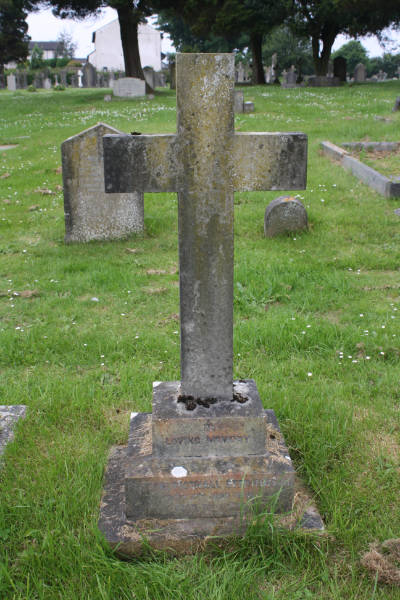
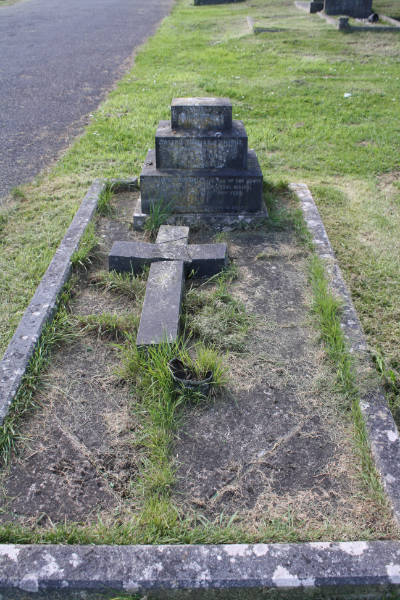
Fenton Stephenson 1/6/14
Rayment 21/5/14
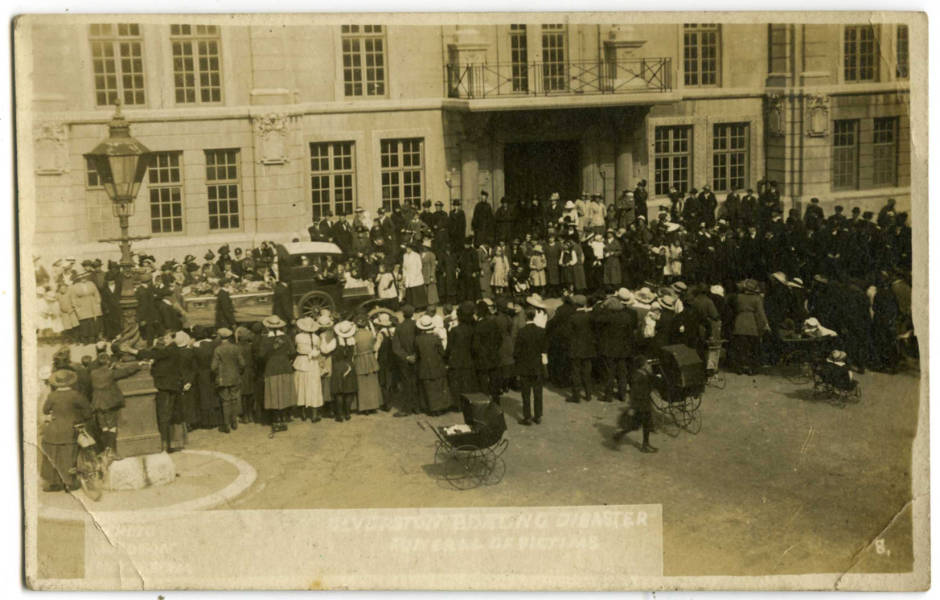
Postcard courtesy of Bill Myers, NWEM
While researching WW1 stories in the Record Office in Barrow, I came across a report of a major boating disaster in Morecambe Bay, involving a pleasure trip from Ulverston in June 1918. Seventeen people lost their lives when a fishing boat capsized. The Barrow News Saturday 15th June 1918 wrote:
Barrow News, 15 June 1918Boating Disaster
TRAGIC END TO SUNDAY FISHING PARTY
17 LIVES LOST NEAR ULVERSTON
On Sunday Morecambe Bay was once more the scene of a shocking pleasure boat disaster, involving the wreck of a small fishing craft and the reported loss of 16 or 17 lives. Shortly after midnight on Saturday a made-up party of friends belonging to Ulverston and South Ulverston, according to a previous arrangement, went on an all-night fishing expedition to Piel in a boat which was in charge of an experienced Sandside fisherman named Wm. Johnson, who was accompanied by his two young sons, and it was on the return journey from the fishing grounds that the sad catastrophe took place. It was beautifully calm and fine when the party set off from Ulverston, but with the turn of the tide the wind freshened considerably, and the sea became rough with ___ squalls. The ill-fated boat was accompanied both ways by another sailing craft containing a fishing party of nine, including the skipper, Thos. Gardner, fisherman, of Sandside, and, according to the narratives of several of these men, they left Piel a little in advance of Johnson’s boat. About nine o’clock in the morning they were sailing up the Ulverston channel when, it was stated, the boat in question grounded on a sandbank, and directly after was overturned by a sudden squall. At this time the boats were something like a mile apart, and Gardner noticed that Johnson’s party seemed to be in difficulties, and made the remark, ‘Keep your eye on them; it looks as if the boat is going to be over.’ Immediately after the boat was seen to disappear. Gardner hurried back to render what assistance he could, but they failed to see any sign of the boat or its passengers. It was, they ___, misty and rainy, with a rough sun running and a strong wind. Shortly after, Gardner’s boat also got aground, but as the tide was coming in fast, they quickly floated again, and eventually landed safely at Priory Point. It is freely alleged that the wrecked boat was much over-crowded, but this will be a matter for future investigation. Late in the afternoon the boat, badly damaged, was washed up on the Aldingham ____ near Baycliffe. The whole of the fishing parties were expected home in good time for dinner and when, after a long weary wait and many anxious inquiries in all directions by the distracted relatives, the missing men and youths failed to turn up, the worst was
feared.The calamity has naturally cast a deep gloom over the town and district, and plunged into grief and mourning a dozen or more homes. With two exceptions, the ___ of the missing men, seven of whom are married, are well known locally, and all respectably connected.
The wrecked boat, it is stated by a relative of the owner’s, was a half-___, 29 feet long and 7ft 6in. beam. ____ of the smaller fishing craft seem to be licensed, but the boat in question has been frequently used at the week-ends for conveying fishing parties to Piel and back. The boat is reported to have founded on what is known as the Moat Bank, (Mort Bank on current OS maps) distant about three miles from Piel, and about five miles from the Aldingham coast in the direction of Heysham. On Sunday morning it was found stranded somewhat nearer the shore, with its small punt still attached. As the masts and tackle were missing, and the boat smashed almost in two, it is assumed that it was swamped by the heavy sea. It was an unusually high tide on Sunday forenoon, and the sea was so uncommonly rough that local fishermen are ___ that it was fortunate that Gardner’s boat did not meet a like disastrous fate. Fortunately, however, with only half the number of passengers, it was much lighter than Johnson’s craft, and consequently it was much easier to clear the treacherous sandbanks. The difficulty of making a nearer inspection of the spot where Johnson’s boat disappeared from view was increased by the fact that there was a powerful inshore current, with a strong wind. At first a larger number of men of men were reported to be missing, but it was ascertained that they were rather passengers in Gardiner’s (sic) boat or had changed their minds at the eleventh hour in regard to their intentions to join Johnson’s party.
During the whole of Sunday night and Monday morning about 20 special constables and other search parties were on duty scouring the coast, and their activities here continued during the week with partial success. The washing ashore on Monday of a couple of luncheon baskets and haversacks destroyed the last hope of the relatives of the missing men and youths. There are several deep holes in the channel where it is thought not unlikely the bodies may be found, and here dragging operations have been conducted. The fishing trawlers with their nets have also been very active.
THE DEATH ROLL
The following is a complete list of the 17 unfortunate victims of the catastrophe:-
William Johnson (45), fisherman, of Sandhall Cottages, and his two sons, William Johnson (17), and Harry Johnson (15). Widow and one little girl left.
William Jackson (40), North Lonsdale-road, engine driver at Messrs. Sadler’s Chemical Works, and his 16 year-old son. Leaves a widow and five young children.
Thomas Errington (16), of Sandhall, office boy at North Lonsdale Ironworks.
Harold Noel Gorst (16), Sandhall Cottages, a clerk at the North Lonsdale Ironworks; and only son of Mr. and Mrs. Gorst.
Robert Walker (19) of Sandhall Cottages.
Lawrence (Lal) Rigg (40), Town-street, Ulverston, employed at Messrs. Sadler’s Chemical Works, and a well-known local cricketer. Leaves a widow, but no family.
Fenton Pickthall Stephenson (37), single, butcher, Market-street, Ulverston.
Joseph Thomas Rayment (53), Ainslie-street, Ulverston, a printer at the Otto Printing Works. Leaves a widow and a grown up family.
Thomas Crawford (49), licensee of Union Jack Inn, Hart-street, and formerly a member of the Ulverston Postal Staff. Left a widow but no family.
James Thompson (38), builder and contractor, Ainslie-street, Ulverston. Left a widow but no family, an only daughter having died last year.
John Charles Warham (19), Union-lane, Ulverston, employed by Vickers Ltd., the eldest son and main support of a widowed mother.
Richard Farmer (26), fitter at Vickers Ltd., a married man, lodging at Mrs. Nelson’s, 9, Princes-street, Ulverston. Home address: Peel Green, Eccles, Manchester.
Patrick Joseph Mitchell, single (22), fitter at Vickers Ltd., lodging at the same address. Home address: Bradford.
Frederick Bernard Bunclark (27), employed by Vickers Ltd., and lodging at Miss Booth’s, Queen-street, Ulverston. Home address: Tennyson-road, Otley-lane, Bradford.
At South Ulverston the disaster is most keenly felt.
Thomas Jackson, of Sandhall Cottages, has suffered the loss of a son and three grandsons – the youths George Jackson, E. Gorst and Errington. The fact that William Johnson, the owner of the ill-fated boat, had two sons with him makes the sympathy with his widow and relatives very deep, the home having thus been bereft of three bread winners. A similar remark applies to Mrs. Jackson, North Lonsdale-road, who has lost a husband and a son and been left with five young children. ‘Lal’ Rigg was a popular cricketer with the South Ulverston Club and had a capital reputation as a fast bowler in pre-war times. Johnson’s father, popularly known as ‘Bonny John’, lost his life by drowning whilst attending to the lock gates of the Ulverston Canal on a dark and stormy night 26 years ago. In Ulverston especially sympathy is expressed with the Rayment family, a son having been killed in action not so many months ago, and also with Mrs. Warham, who has had a large share of domestic trouble. The present boating tragedy is a painful reminder of the rather greater loss of life involved in the capsizing of a pleasure yacht in Morecambe Bay about 25 years ago, when the lives of between 20 and 30 visitors who were sailing from Morecambe to Grange were sacrificed. (September 3rd 1894, when a boat full of Burnley holidaymakers capsized) [Source 1 (quoting from the Times; and Source 2]. It is only about six years ago since three Flookburgh fishermen lost their lives in a storm in returning home from fishing.
RECOVERY OF THE BODIES
Up to noon on Tuesday, four of the bodies of the 17 victims had been recovered. On Monday afternoon, Thomas Athersmith, fisherman, Quebec-street, Ulverston, one of the search party, found the bodies of Stephenson, Farmer and Mitchell on the outscar of Morecambe Bay, situated five miles from Aldingham, in the direction of Piel, where they had been left by the tide, and it is a striking coincidence that the two latter, found close together, were fellow lodgers in Ulverston, and both working for Vickers, Ltd. The body of Stephenson was conveyed to the home of his brother, George Stephenson, butcher, of Tarnside, and the remains of the two others were taken to the mortuary of the Ulverston Cottage Hospital. On Monday morning the body of William Johnson, the owner of the wrecked boat, was recovered by a Roosebeck fisherman named Edmondson, whilst looking after his nets at Rampside; it was found just below high water mark. The body was brought to Ulverston for the purpose of identification, and subsequently removed to the deceased’s home at Sandside.
Mr. Peter Butler, the official guide over the Ulverston Sands, who is thoroughly familiar with the treacherous character of the shifting channels and sandbanks of Morecambe Bay, in an interview granted to our Ulverston representative, strongly supported the general opinion of the fishermen that Johnson’s boat was very much overcrowded even under normal conditions of weather, and that the disaster was entirely attributable to this cause, owing to the heavily laden craft becoming practically unmanageable in the strong southerly gale and heavy sea which suddenly sprang up, making the negotiation of the sandbanks extremely difficult. Gardner’s boat, he pointed out, was slightly larger, stronger, and newer than Johnson’s, and yet with a load of only nine persons it narrowly escaped a similar fate.
THE INQUEST
An inquest on the four bodies recovered was held on Tuesday evening at the Ulverston Police Court, before Coroner F.W Poole and a jury of whom Mr. Cookson (Hart-street) was the foreman. Supt. Pincock was also in attendance. The Coroner said, before starting the inquiry, he thought it only right that on behalf of those present, and indeed everyone in Ulverston, he should express their deep sympathy with the relative and friends of these four men and also for those whose bodies had not yet been recovered. The disaster was the most serious of the kind that had ever fallen upon the town. All the men were well known locally except three, and he was sure they all felt the deepest sympathy for the bereaved families.
Evidence of identification being called, Mrs. Kate Nelson, 9, Prince’s-street, Ulverston, testified that the deceased Patrick Joseph Mitchell (22), and Richard Farmer (26) had lodged with her since June 1st. She last saw them alive about 10 p.m. on Saturday last, when they said they were going with a fishing party. They were both fitters in the employ of Vickers, Ltd.
Wm. Stephenson gave evidence that the deceased Fenton Pickthall Stephenson (37) was his oldest son. He was a butcher.
Jno. Beardmouth, an ironworker, of 10, Sandside, said he lived next door to the deceased Wm. Johnson, and knew him well. He was a fisherman, 45 years of age.
THE CAUSE OF THE ACCIDENT
Thos. Gardner, fisherman, of 21 Canal Head, Ulverston, stated that about 1 a.m. on Sunday he set sail for the Piel Island fishing grounds in a boat containing eight men and himself. A second boat was in charge of Wm. Johnson, who had a fishing party of 16. Both boats set off together from Priory Point, and it took them a couple of hours to go down. They remained fishing until 8.30 a.m., when both boats started on the return journey.
Replying to the Coroner, witness said the weather was fine with a nice wind when they left Ulverston. During the night the wind freshened, and it gradually got worse. On returning the tide was running very strong, and there was a rough sea. Both the tide and the wind were against them when they were negotiating what was called the West Hollow Bank. His (Gardner’s) boat was leading by about quarter of an hour, and got to the bank first. There was about half a mile between the two boats.
The Coroner: Did the wind and the tide force you to cross the bank? Yes, we first tried to get round it. Johnson’s boat could not get as low down, and tried to cross higher up. I kept watching the boat as I knew what the consequences would be if it struck on this particular bank. A very heavy squall came on. We lost sight of the boat for a second, and then it was grounded. When it disappeared we at once turned back.
You sailed back on the off chance of picking someone up? – Yes, we did.
But the wind and the tide were so strong that you then thought it better and safer to make for home? – Yes, it was impossible to go back any further.
Witness went on to say that Johnson’s boat was 29 feet long, with 7ft. 6in. beam. His (witness’s) boat was 30ft. long and 9ft. beam.
The Coroner: - Are these boats are licensed for leisure trips? – No: we only follow it at week-ends. The boats are registered for fishing, but not licensed.
But there is no regulation as to the number of passengers? – That is so.
What condition was Johnson’s boat in? – Just fair.
You say that you set off together about the same time. Why did you not divide the passengers, seeing there were nine persons in one boat, and 17 in the other? – Well, we were not in partnership. I had nothing to do with Johnson’s party, and they had nothing to do with us.
You were two distinct parties? – Yes.
How did you charge? Was it so much per head or so much for the boat? – I charged a sovereign for taking the party down.
You charge a sovereign irrespective of the size of the party? – Well, I never take more than eight or nine persons.
And on this occasion you thought ten quite sufficient to take? – Yes.
You would not have liked to take Johnson’s party in Johnson’s boat. – I would not.
In your opinion was Johnson’s boat overcrowded for safety? – Well, there is a doubt about it, looking at the weather and the way it came on.
Harold Robinson, clerk, of Hart-street, Ulverston, generally confirmed Gardner’s evidence. The weather, he said, became rather rough during the night; and it had got worse when they started on the return journey; and continued to get worse.
Peter Butler, the official guide over the sands, testified that he knew Wm. Johnson, and also his boat, very well.
The Coroner: What sort of boat was it? – It was an oldish boat.
How many should it carry? – With a day like that no boat should carry more than eight or nine. He had spoken to Johnson about getting another boat, because he thought he was taking a risk in taking this old boat out; and he understood he was trying to get a new boat.
He was a competent boatman? – Yes, he had had a life-long experience of the job. Witness added his opinion that the bad weather conditions and the heavy load were responsible for the accident.
Evidence as to the recovery of the bodies of Stephenson, Framer, and Mitchell was given by Thomas Athersmith, fisherman, Quebec-street, Ulverston, and by Joseph Edward Edmondson, fisherman, Roosebeck, concerning the recovery of the body of Johnson, which was found below high water mark at Rampside about 10 a.m. on Tuesday. The Coroner, in briefly summing up, said those were the facts in this unfortunate case. According to the evidence of Gardner and Robinson, it appeared that during the night the wind freshened, and the weather got considerably worsened (sic) on the return journey. Gardner’s boat, which was some distance in front, managed with its lighter load to get over the bank. Johnson’s boat was unable to get as far down as Gardner did, the result being that when Johnson started to get across the bank the boat got into difficulties and was struck by a squall, and what then happened they could only imagine where they had an old boat in a bad condition. This calamity must have brought home to them the importance of having these fishing boats licensed to carry a certain number, so as to prevent overloading or overcrowding. Mr. Peter Butler had explained to them that Johnson’s overcrowded boat destroyed her buoyancy, so that she dipped and dived into everything, with the sad result they had seen. It was unfortunate that Johnson, who was responsible for the safety of the party, had himself paid the extreme penalty, and under all the circumstances the jury could only find that these four men were accidentally drowned in Morecambe Bay.
The jury at once returned a verdict in accordance with this recommendation.
Elsewhere in the same edition, the Barrow News recorded:
Barrow News, 15 June 1918THE BOATING TRAGEDY
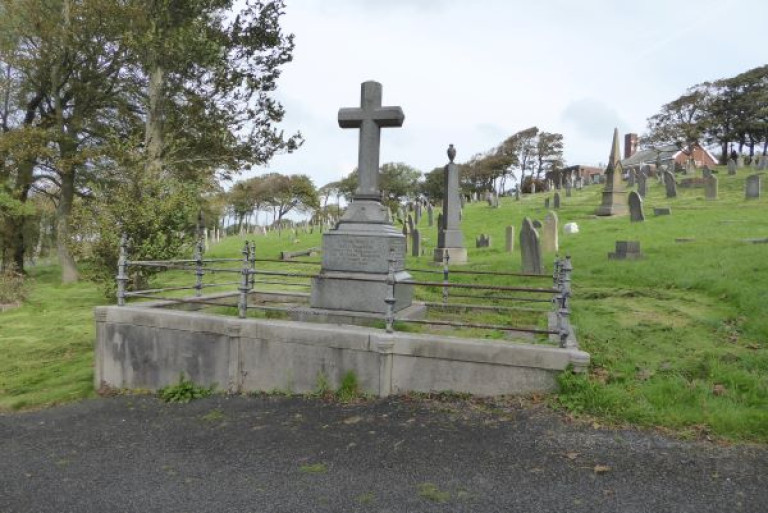
The first funeral in connection with the Ulverston boating tragedy took place on Wednesday afternoon, when the remains of Fenton Pickthall Stephenson were laid to rest in the Ulverston Cemetery in the presence of many hundreds of mourners. On the route blinds were drawn, and flags on the public buildings and clubs were floating at half-mast. The solemn cortege, which left the residence of the deceased’s brother and sister-in-law, Mr. and Mrs. George Stephenson, was headed by the whole of the butchers of the town and other tradesmen, and a public character was given was given to the funeral by the attendance of Councillor C. E. Court, the Chairman, and members of the Urban Council. The burial service was conducted in the open-air, and the scene at the graveside was extremely impressive and touching, a great many sorrowing friends being visibly affected. The final sad rites were performed by the Rector of Ulverston, the Rev J. Stuart Rimmer, M.A., and the Rev. J. W. Watson, curate-in- charge of St. Jude’s, and following the committal xxxxx (unreadable) the Rector delivered a fitting address full of sympathy for the whole of the bereaved. Many chaste floral tributes were laid on the grave, including a beautiful wreath from the Master Butchers’ Association.
The interment of the remains of Farmer and Mitchell took place on Thursday, the coffins being conveyed to Manchester and Bradford on Wednesday evening. The intelligence of Mr. Farmer’s tragic end was forwarded to his home address at Eccles, but his wife happened to be staying at Morecambe at the time, and the first intimation she had of his shocking fate was obtained from the daily newspapers. She has been left with two young children, one a baby.
Amid similar manifestations of sympathy and sorrow, the interment of William Johnson, the owner of the ill- fated boat, whose sons are still unfortunately missing, took place yesterday afternoon, with the solemn cortege from Sandhall Cottages through the town to the cemetery by way of the Ellers, Market-street and New Market-street. The hearse and mourning coaches were followed by fishermen of Sandside and workmen from the Chemical Works and the Ironworks, and their wives and daughters and other friends from South Ulverston. The coffin was covered with beautiful floral tributes, including wreaths from the fishermen and some of the relatives of the men who have been drowned, and at the cemetery there was again a large concourse of mourners. The burial rites were impressively conducted by the Rector of Ulverston and the Rev. J Watson.
The following week, the Barrow News 22 June reported:
Barrow News, 22 June 1918ULVERSTON BOATING DISASTER
THREE MORE BODIES RECOVERED
A body has been washed ashore at Roa Island, where it was found by Mr. Robt. Charnley, a local pilot, and is believed to be that of Mr. Lawrence Rigg, a well-known local cricketer, belonging to Ulverston, who was one of the ill-fated fishing party drowned in Morecambe Bay on Sunday morning, June 9th, when returning to Ulverston from Piel. This makes the fifth body recovered, leaving twelve bodies still missing.
Later in the day the body was identified by Mrs. Rigg, as that of her husband, who was 41 years of age formerly employed as a stillman at the Ulverston Chemical (Works), Ulverston, and residing at 6, Town-street, Ulverston. Mr. Charnley was sailing in his boat in Piel Channel when he discovered the body floating in the water near No. 1 buoy. The bodies of three more victims of the Ulverston boating disaster were discovered yesterday.
The Barrow News 15 June 1918 had reported on the rapid creation of a Relief Fund on 10th June by Mr. C. E. Court, and a meeting at the County Auction Rooms the following day. Barrow News 13 July 1918 reported on a Benefit Concert held at the Tower, Morecambe by the Morecambe Fishermen’s Association, where over £120 was raised. Mr. C. E. Court, Chairman of the Ulverston District Council’s address said that Morecambe, by stretching her hand across the Bay in sympathy with the distressed people of Ulverston had brought him there with a direct message from the people of Ulverston conveying their appreciation and thanks.