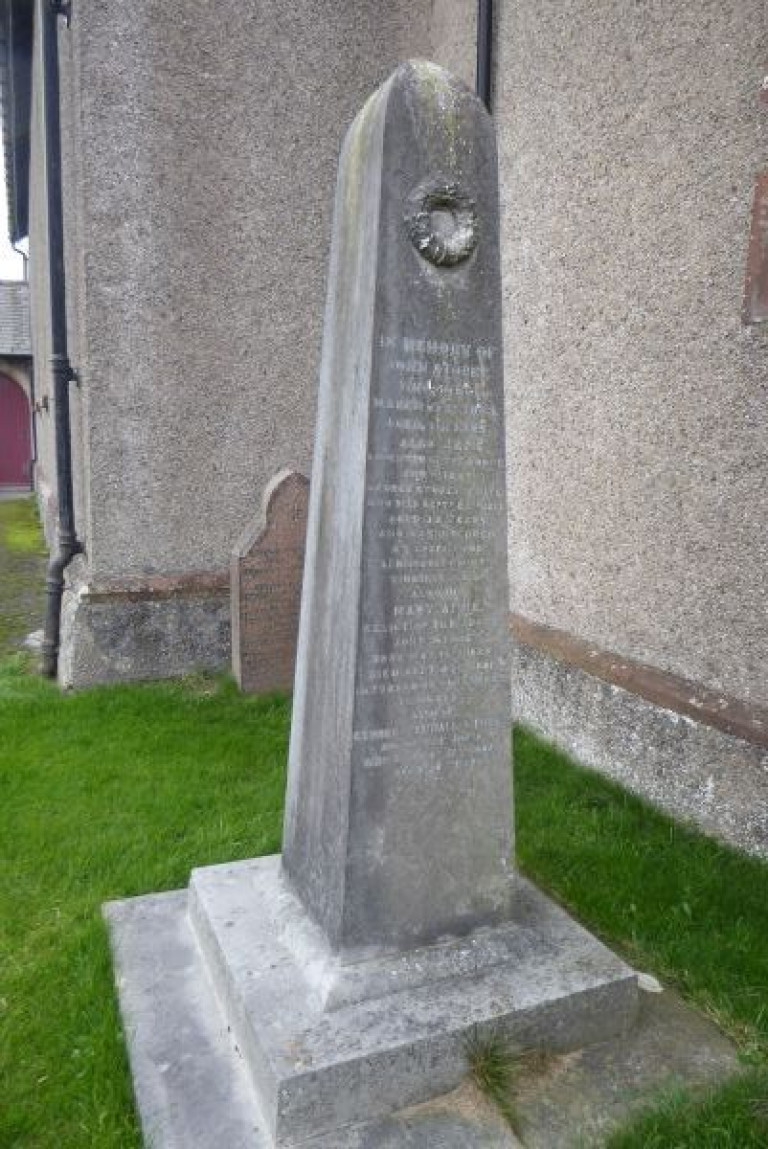
Died
Mr Mellon: 12th February 1936
Mrs Mellon: March 1939
Sources
Place
Walks
St. Peter's, Ireleth 1 point 2
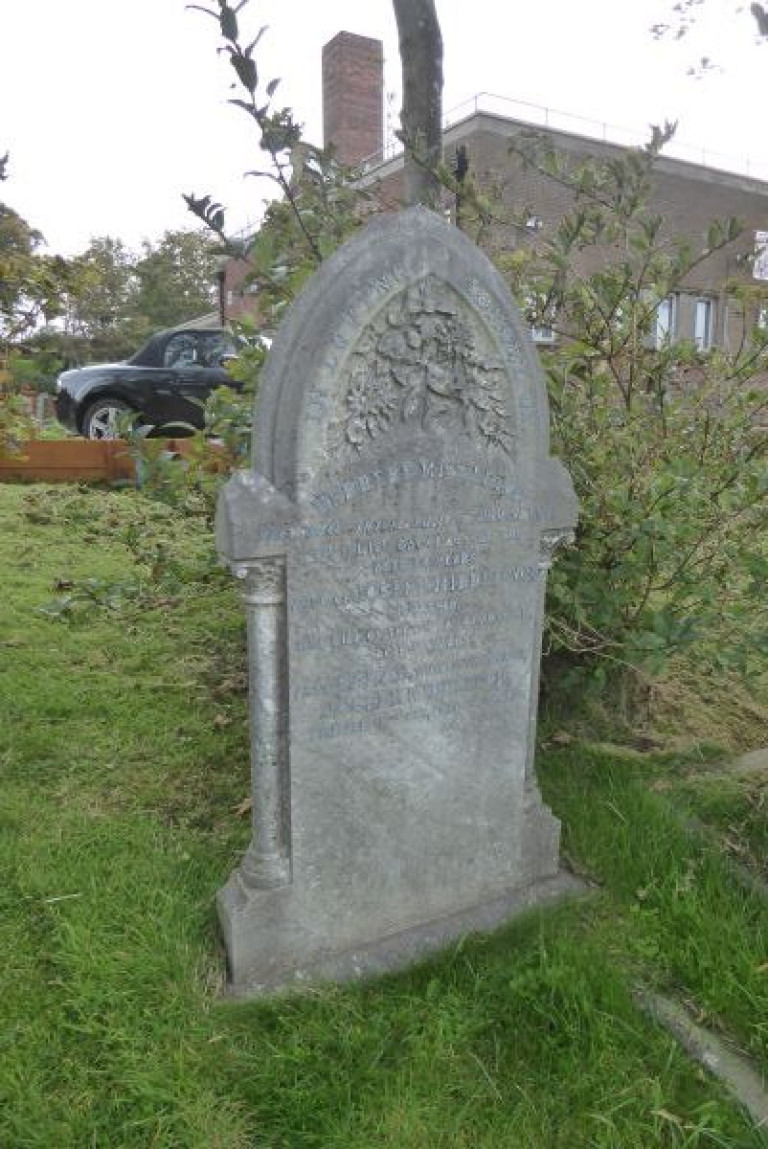
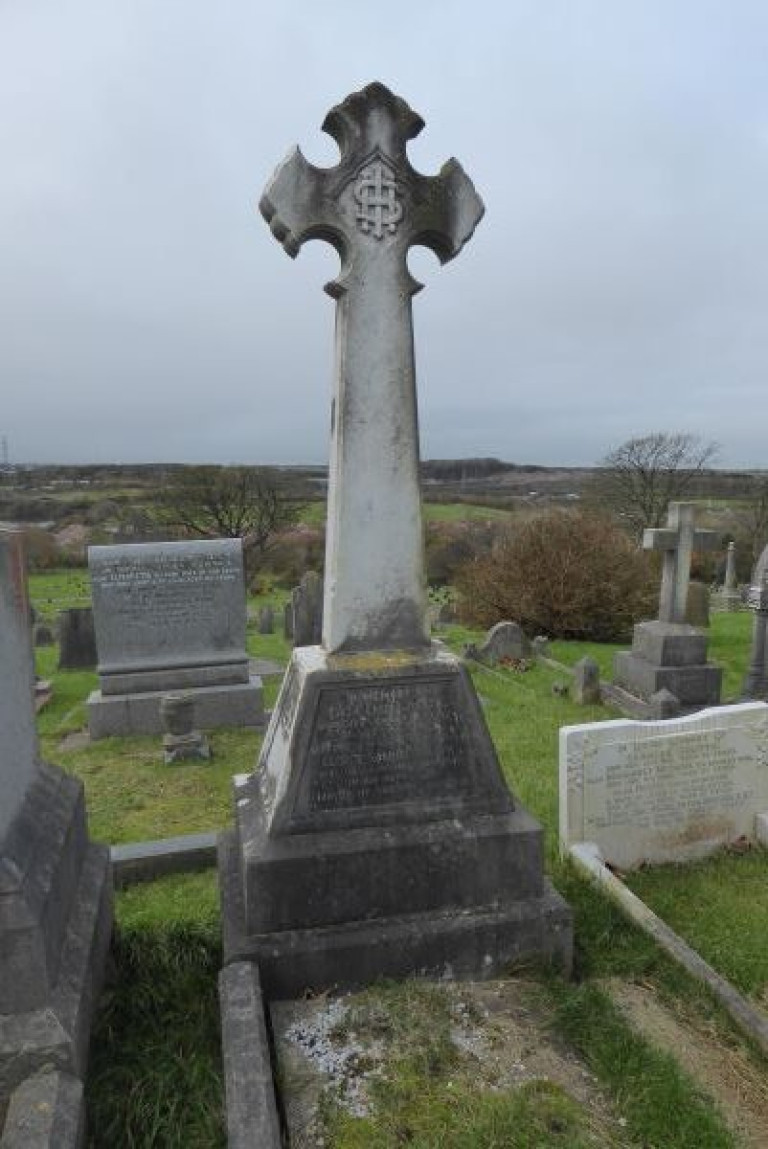
Mr and Mrs Mellon
The Mellons were a prominent Askam family.
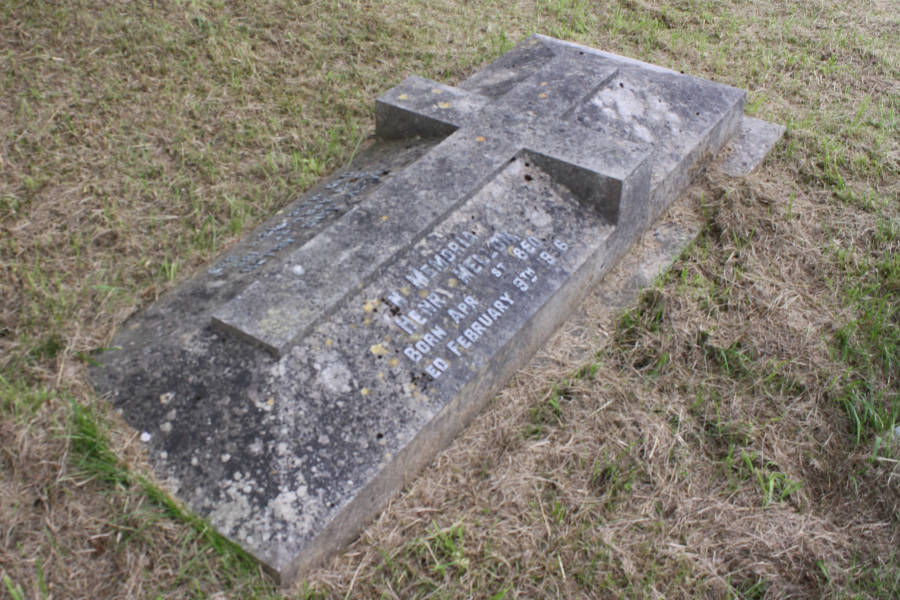
The Mellons were a prominent Askam family. Janice Cumming provided:
Henry Mellon was born in the Kirksanton area in about 1851 and came to Askam as a Mining Engineer. In 1871 he was boarding with the Newby family in Ireleth. By 1891 he was married to Mary Jane (née Brockbank – married 1881) and had 5 children [source]. A son Bertram was a Captain (KOSB regiment) in the first world and afterwards spent a lot of time in India. Henry and Mary lived at Brook Lea in Saves Lane, Ireleth and were very much an integral part of life in Askam and Ireleth. Henry Mellon’s name is mentioned on most committees and church life, contributing to many charities. It was Henry Mellon who, in no small part, managed to get the war memorial built in Askam, with a lot of his own money. The Mellon’s were a prosperous family and always had a couple of servants working for them at Brook Lea.
The Barrow News Saturday 15 February 1936 recorded the funeral of Mr. Mellon:
The Barrow News, 15 February 1936THE LATE MR. H. MELLON, J.P.
INTERMENT AT IRELETH
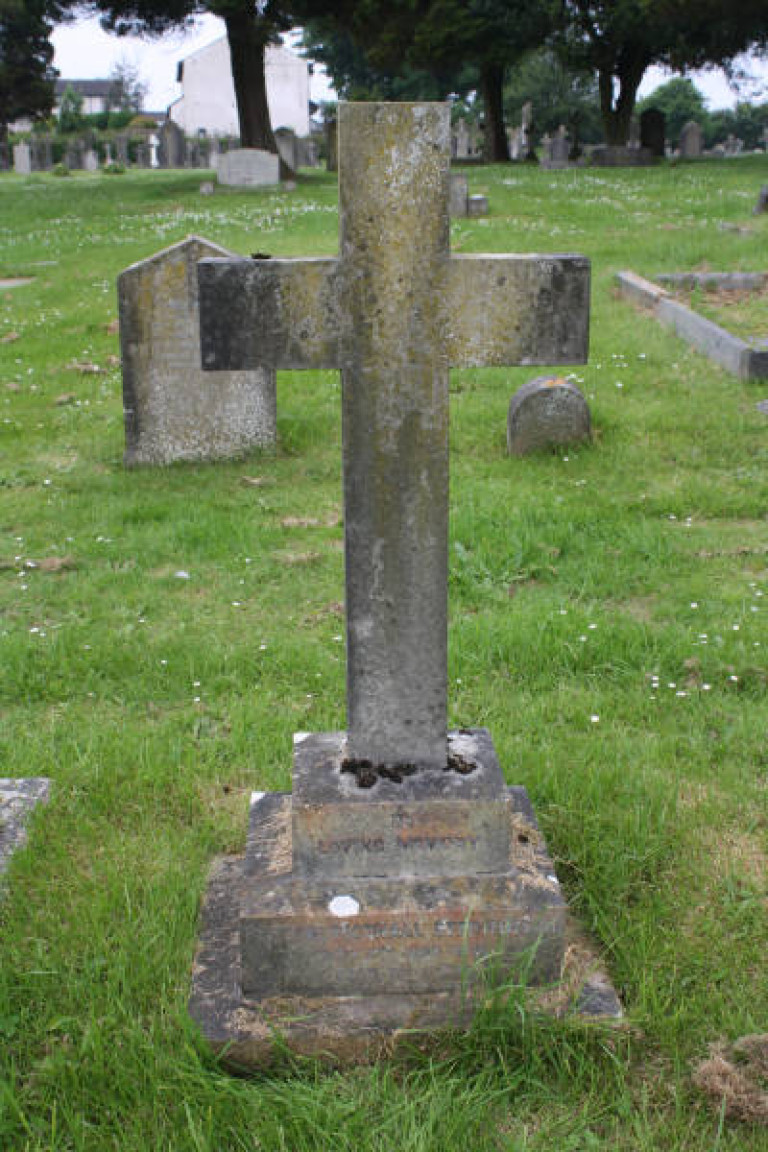
The remains of the late Mr. Henry Mellon, J.P., of Brooklea, Ireleth, were laid to rest in the little hillside churchyard of Ireleth on Wednesday, his colleagues in public life and the villagers mingling to show reverent respect and sympathy with the family mourners.
A special form of service printed for the occasion was used in the Parish Church where the vicar, the Rev. W. A. Chare, officiated, and Mr. W. H. Williams presided at the organ.
After the opening sentences as the coffin was met at the entrance, the hymn ‘Lead kindly light’ was sung and Psalm XV, ‘Lord who shall dwell’, was recited. The lesson read was from Wisdom III, 1-9, and the service closed with the hymn ‘On the resurrection morning.’
Mrs. Mellon, the widow, was not well enough to attend, and the family and other mourners were: Mr. and Mrs. H. Thackeray (Cardiff), son-in-law and daughter; Miss Nita Mellon and Mrs. Challinor (Torver), daughters; Mr. and Mrs. R. Mellon (Grasmere), son and daughter-in-law; Mrs. Brockbank, sister-in-law; Messrs E. and S. Brockbank, nephews; Messrs. C. Severs, A. Carruthers, Dr. Dooley, Couns. J. Gill, J.P., and T.B. Grice, T. Davies, A. Atkinson, J.T. Hool, R. Chapman, W. Kitchin, W. Cox, J. B. Daniels, H.A. Slater (representing Col. Wadham), Mrs. Grice, Mrs. E. Benson, Mrs. Postlethwaite, head of the Ireleth School and the elder scholars, Mr. and Mrs. T. Hughes (Broughton, Mrs. Chare, Miss Spencer, the Misses Ridley, Mrs. Constable, Mrs. Kirby, Mrs. Duckworth, and many others.Amongst the wreaths was one from the Askam Women’s Unionist Association.
Six of the villagers acted as bearers. (How snobbish is this? They’d be named if they were relatives of members of the village aristocracy! RMW)
The Barrow News Saturday 18 March 1939 recorded the funeral of Mrs. Mellon:
Barrow News, 18 March 1939THE LATE MRS. M. J. MELLON
LARGE ATTENDANCE AT IRELETH INTERMENT
There were blinds drawn, the flag at half-mast at the Conservative Club and other evidences of mourning on Wednesday when remains of the late Mrs. Mary Jane Mellon, formerly of Brooklea, Ireleth, were brought from “Meresyke”, Great Lansdale, to Ireleth for interment.
The Vicar, the Rev. W. A. Chare, conducted an impressive service at the church where the choir led the singing of the hymn “We love the place, O Lord” and the 23rd Psalm, Mr. W. H. Williams, the organist, accompanying.
The family mourners were: Mr. and Mrs. Roland Mellon (Great Langdale), son and daughter-in-law; Mrs. Thackeray (Cardiff), Miss Nita Mellon and Mrs. Challinor (Great Langdale), daughters; Mrs. Brocklebank, sister-in-law; Messrs Sidney and Cyril Brocklebank, Nephews.
Representatives of the Mothers’ Union, the Conservative Club, the Women’s Unionist Association, St. John Ambulance and other organisations were amongst the large concourse of mourners, which included the elder children from Ireleth School, under Mrs. Homan. About 40 floral tributes were laid on the grave, including those from the Mothers’ Union and the Women’s Unionist Association.