Died
Esther Ellis: 10th December 1918
Isabella Pattinson: 26 October 1918
Born
24th February 1918
Sources
NW Evening Mail
Place
Themes
Esther Ellis
Queen Mary’s Auxiliary Army Corps
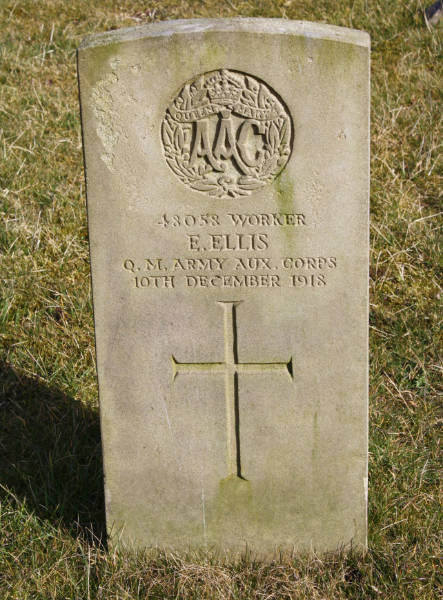
Where is the grave?
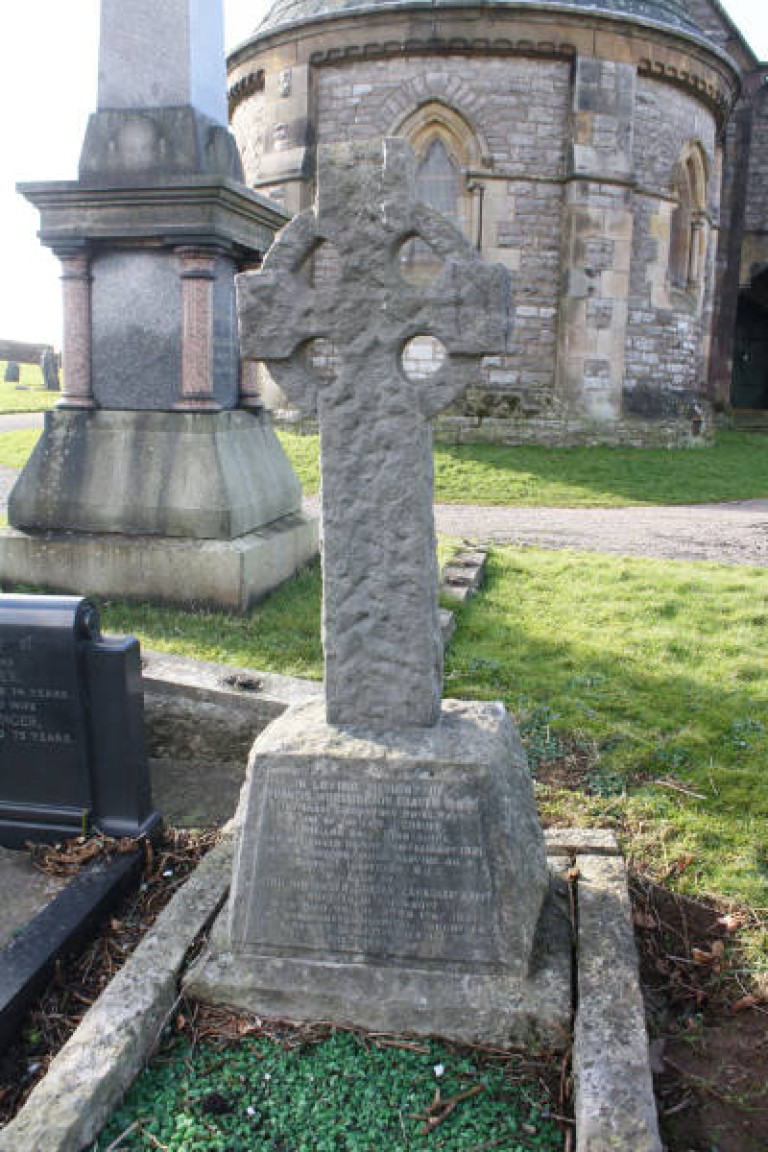
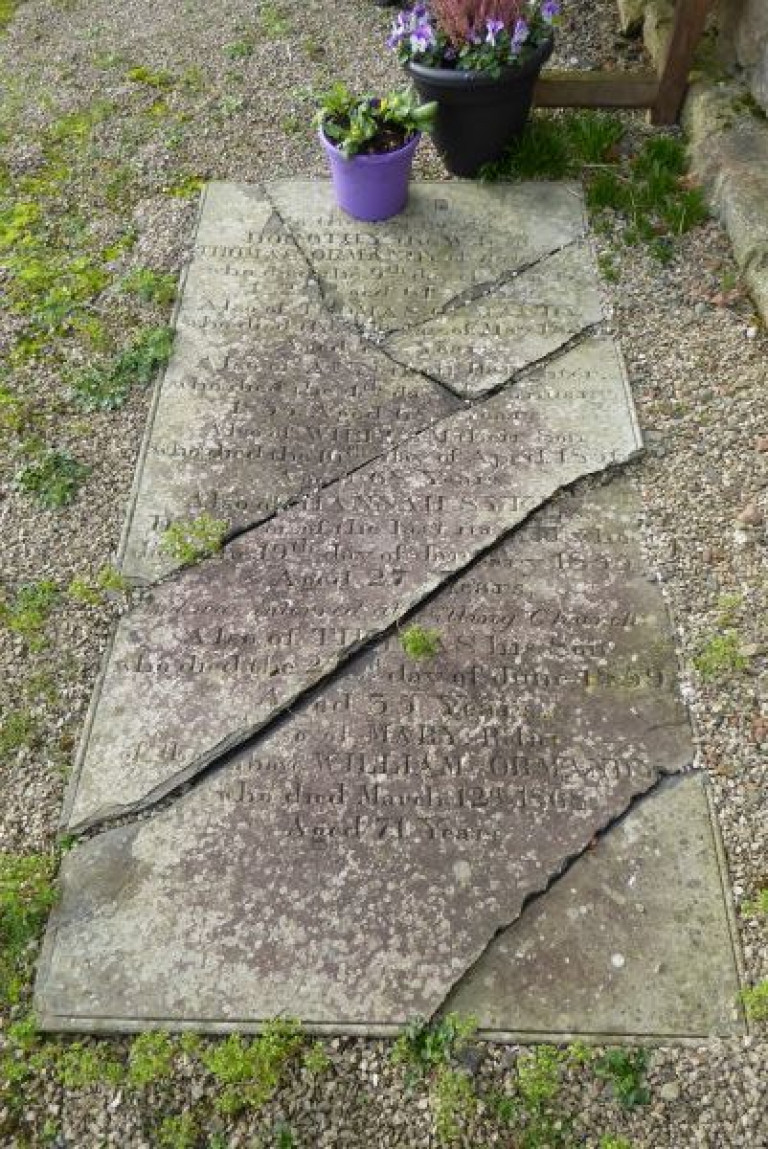
Mrs. Ellis’s grave is in the lowest portion of the cemetery, which can often be wet. If entering by the main cemetery entrance, walk up the path past the North entrance, take the next left and then left again. Walk down the hill, following the bend to the right. After joining one path dropping in from the right, at the bottom of the slope another joins from the right. The grave is very close to this point, on the right.
NW Evening Mail, December 14 1918Death notice
The beloved wife of Private Ellis, in India, also the beloved daughter of Mary Crawford of 6 Telford St, B/w.
James Ellis married Esther Crawford sometime in 1917 at the Wesleyan Chapel, Hindpool Road (Cumbria BMD A201/6/14)
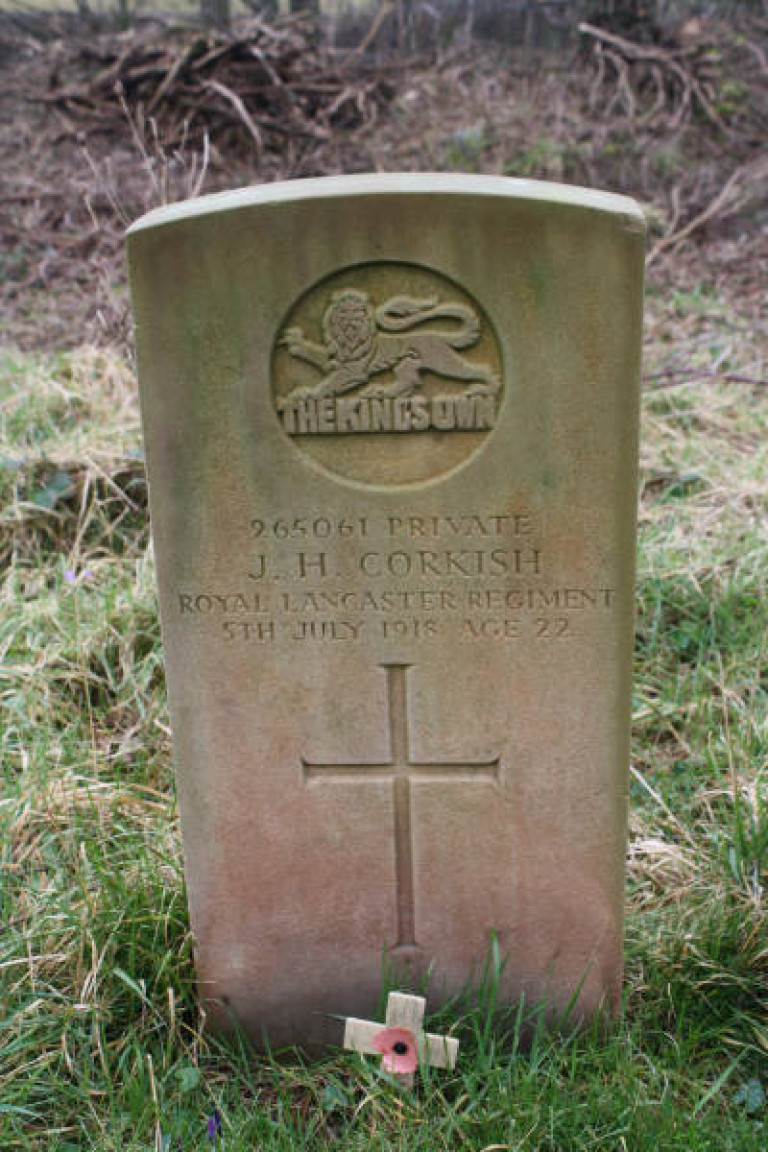
Esther Ellis is the only female member of the forces commemorated by a CWGC gravestone in Barrow Cemetery.
Isabella Pattinson
The Soldiers Friend
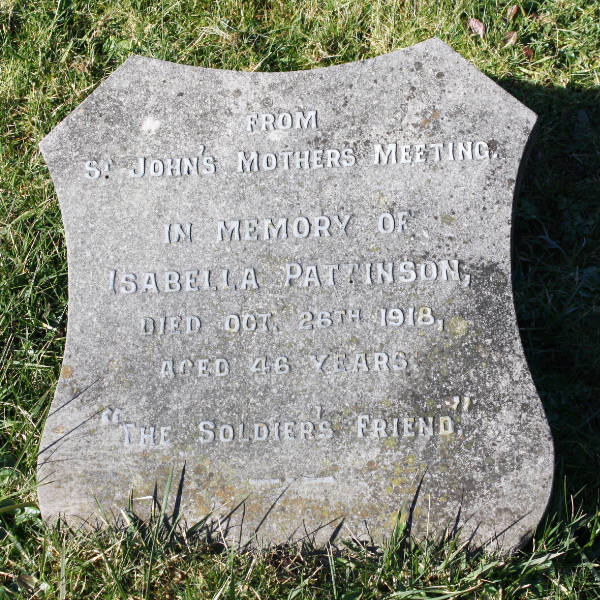
3 March 2014
Where is the grave?
Three graves upwards from Wright (no. 12) and about opposite Strongitharm
Women’s support for serving soldiers was strong: knitting and sewing groups, fund-raising for cigarettes and other packages for prisoners of war were common. Many of these were linked to churches – in Isabella Pattinson’s case, St John’s on Barrow Island. She must have been especially enthusiastic to earn the epithet ‘The Soldier’s Friend’.
It has not been easy to identify memorials to women who were part of the ‘home front’. In most cases their contribution will not have been recognised. However, there are unmarked graves of Belgian refugees who died in Barrow during the war, where a number worked in the shipyard or munitions industries. Similarly, Barrow women and those from elsewhere in Lancashire e.g. Wigan, Manchester, who worked in the munitions industry (open to women to release men to fight at the Front), will be buried in the cemetery.
It has been impossible to discover more about these two women: no obituary in the papers, and no record of St. John’s Mothers’ Meeting that I have identified.