Died
James 31 May 1893
Benjamin 18 August 1893
Born
Benjamin 1863
James 1866
Sources
Ancestry
Lancashire On-Line Parish Clerk
Barrow News
Manchester Evening News
Place
Walks
Themes
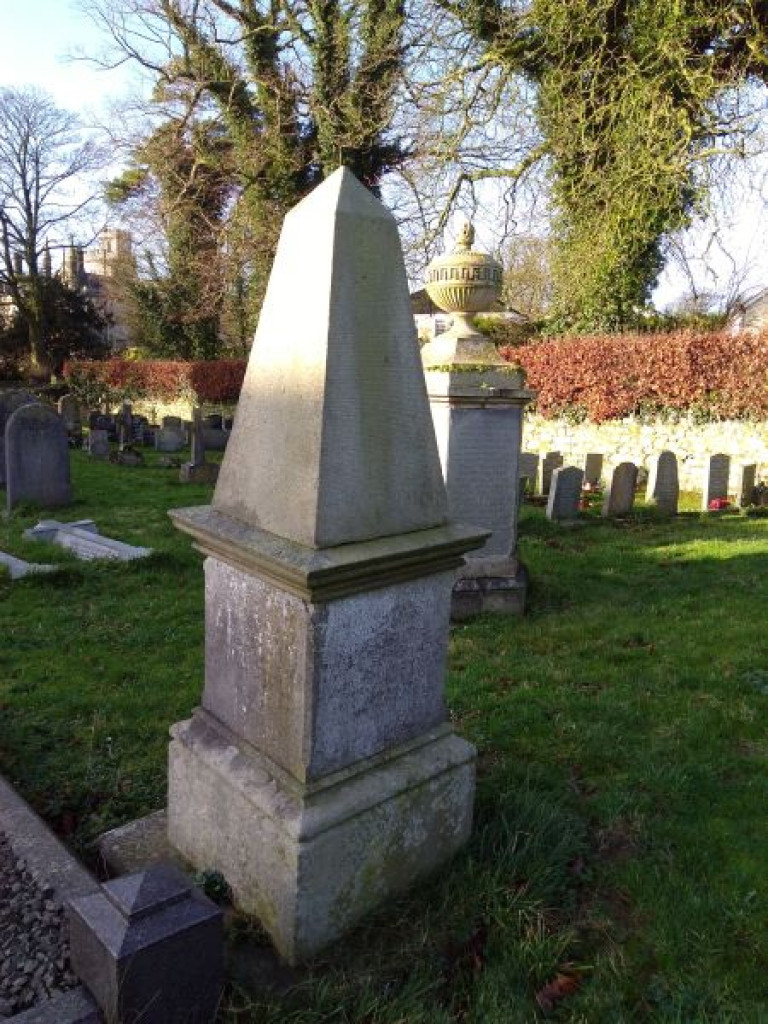
James & Benjamin Robinson
Both accident victims

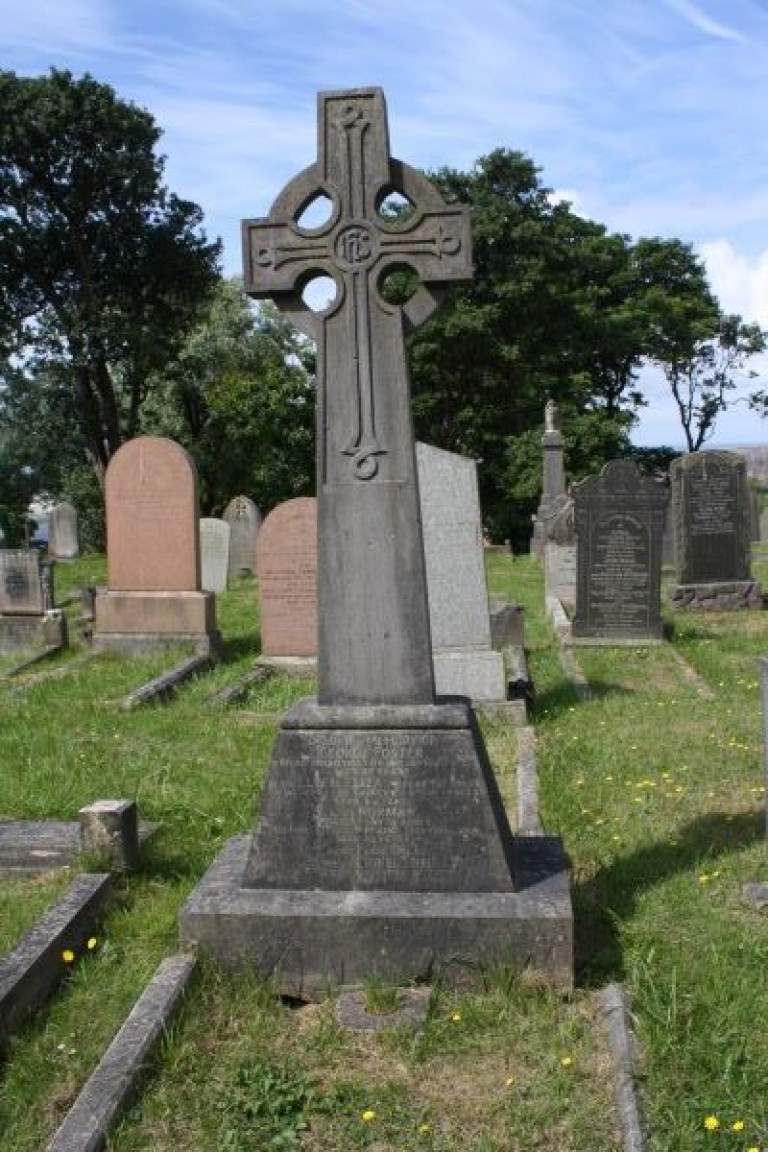
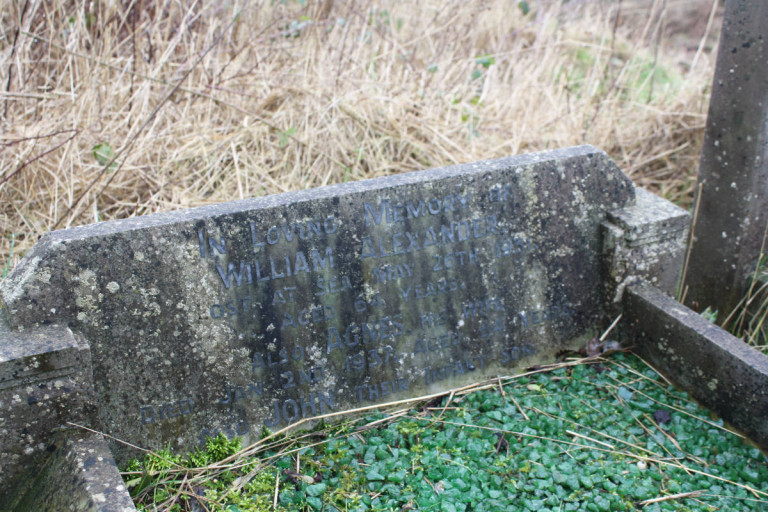
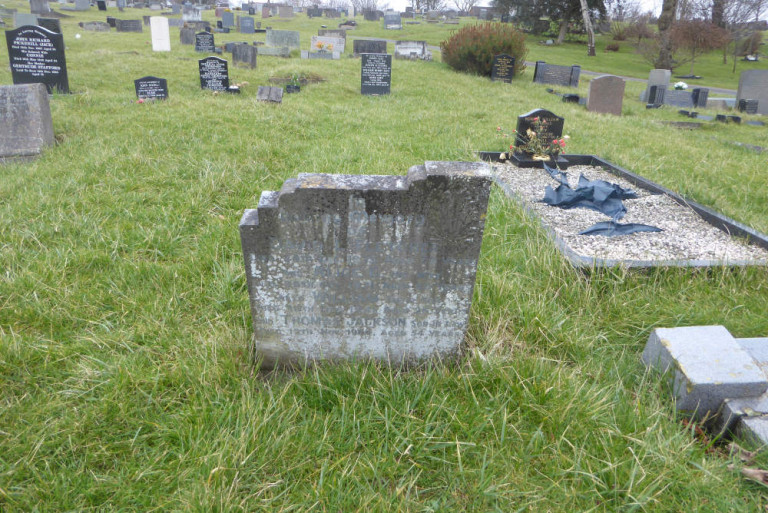
IN LOVING MEMORY OF
JOHN ROBINSON
OF STAINTON
WHO DIED DECR 18TH 1874
AGED 59 YEARS
ALSO ELIZABETH HIS WIFE
WHO DIED OCTR 12TH 1890
AGED 66 YEARS
ALSO JAMES HENRY THEIR SON
WHO WAS ACCIDENTALLY KILLED AT
STAINTON QUARRIES ON MAY 31ST
1893 AGED 26 YEARS.
ALSO BENJAMIN HOLME THEIR SON
WHO WAS ACCIDENTALLY KILLED AT
ALDWARKE COLLIERY ROTHERHAM
ON AUG. 18TH 1893 AGED 29 YEARS
ALSO LAURENCE WHO DIED JULY 21 1899
AGED 47 YEARS
ALSO GEORGE THEIR SON WHO DIED
MAR 15TH 1911 AGED 55 YEARS
ALSO GEORGE LANGHORN GRANDSON
OF THE ABOVE WHO DIED NOV 24th 1906
AGED 13 YEARS
BLESSED ARE THE DEAD WHICH DIE IN THE LORD
According to Ancestry, John Robinson married Elizabeth Holme at Urswick on 25 November 1852, though this does not appear on the Lancashire Parish Clerk online website.
1861 Census
Living at Billingcoat, in the Yarlside Division of Dalton, in the 1861 Census were John Robinson (45), Stone Mason, born Whalley, Lancashire; Elizabeth Robinson (35), born Millom, Cumberland; and their children Laurence (or Lawrence) (7), Scholar, born Urswick, Lancs; George (5), Scholar, born Ulverston; Elizabeth (4), born Urswick; Edward (1) born Dalton.
1871 Census
In the 1871 Census the Robinsons were living at Newton (-in-Furness). John Robinson (55) Stone Mason, born Whalley, lived with Elizabeth Robinson (45), born Millom, Cumberland; and their children Laurence (17), Stone Mason, born Urswick, Lancs; Edward (11), scholar, born Dalton; Enlels (Isabella on Cumbria BMD) (9), scholar, born Dalton; Benjamin (7) scholar, born Dalton; and James (4), born Dalton.
Benjamin Holme Robinson was baptised in Dalton on 11 October 1863.
1881 Census
In the 1881 Census Benjamin was living in Stainton with his mother and siblings at Sunny Bank Cottages. The household consisted of Laurence Robinson (27) Unmarried, Stone Mason, born Dalton; Elizabeth Robinson (56), Mother, born Millom, Cumberland; George Robinson (25) Limestone Quarryman, born Ulverston; Edward Robinson (21) Brother, Limestone Quarryman, born Dalton; Isabella Robinson (19), Sister, Helps as Housekeeper/Domestic Servant, born Dalton; Benjamin H. Robinson (17), Brother, Iron Miner, born Dalton; James Hy. Robinson (14) Brother, no occupation recorded, born Dalton; John Robinson (6) Nephew, Scholar, born Clitheroe, Lancs; Elizabeth A. Robinson (1), Niece, born Urswick.
1893 Census
By the time of the 1893 Census Benjiman (sic) Robinson (27), born Newton-in-Furness, was a coal miner boarding with the Murray family at 56 Juddfield Street, Haydock, Lancs.
I don’t know when Benjamin moved to Rotherham, but the Manchester Evening News 19 August 1893 reported:
PIT-SINKING ACCIDENT
THREE MEN KILLED AND ONE INJURED
Yesterday afternoon an alarming pit accident, involving the death of three men and the serious injury of another, took place at Warrenhouse, near Rotherham. Shortly before Christmas last, Messrs. John Brown & Co., the owners of the Aldwarke Main, Carhouse, Rotherham Main Collieries, commenced operations for the deepening of a shaft intended for ventilation purposes in connection with the Parkgate Seam of the Aldwarke Main Colliery. Up to the present time a distance of 250 yards has been reached. Two sets of men were engaged, and at two o’clock, the time for changing the shifts, the first batch of men – four in number – went down. They descended the shaft in a bowk, or trunk, and, owing to oscillation, from a cause which the officials are unable to explain, when about fifty yards from the bottom it struck one of the timbers, from which the sinking chains are suspended. Three of the men, named Benjamin Robinson, Thomas Stoddard (chargeman), and James Welsh, were precipitated to the bottom. The other man, William Wood, it is believed, was struck with the bow of the trunk, and was afterwards found at the bottom of this vessel. Robinson, who, it is stated, is the third son of his family, who has been killed in pit-sinking operations, and who hails from Stainton, near Barrow-in-Furness, was killed instantly, his body being fearfully mangled. Stoddard was so seriously injured that he died about two hours later. Welsh and Wood were removed to the Rotherham Hospital, the former dying before his arrival at the institution, and the latter is not expected to recover. At the time of the accident, the contractor, Mr. John Gladders, and the chargeman of the other shift, Thomas Stoddard, father of the young man already referred to, were in the bottom of the shaft preparing to ascend. Fortunately, however, for them, they received a slight warning, and were able to get clear of danger.
James Henry Robinson was baptised in Dalton on 18 August 1866.
1881 Census
After the 1881 Census (above) he stayed in the household in Stainton. In the 1891 Census, living in Sunny Bank Cottages were Lawrence (sic) Robinson (37), Head, Stone Mason, born Urswick; George Robinson (35), Brother, Limestone Quarryman, born Ulverston; James Robinson (25), Limestone Quarryman, born Dalton-in-Furness; Sarah Duffy (37), Single, Housekeeper, born Whitehaven, Cumberland; and Eleanor Duffy (1), Housekeeper’s child, born Ulverston.
The Barrow News 3 June 1893 carried news of his death, and the inquest:
SHOCKING FATALITY TO A QUARRYMAN
A FALL OF 48 FEET
NARROW ESCAPE OF A COMPANION
On Wednesday afternoon a quarryman named James H. Robinson, aged 26 years, unmarried, lodging at Sunny Bank, Stainton, met with a terrible death at the Stainton Limestone Quarries, worked by the Barrow Hematite Iron Co., and another quarryman named John Jackson, had a miraculously narrow escape from sharing a similar fate. It appears deceased, his brother, and Jackson had just fired two shots at what was thought to be solid rock in the face of the quarry, the shots, however, having very little effect. The men then commenced to use “bars” to pull down a portion of the top, so as to allow room to bore more holes for blasting. Whilst doing this the portion of rock on which deceased and Jackson were standing commenced to give, and before deceased could get out of the way he fell backwards, and was precipitated into the quarry below, a distance of some 40 feet, death being instantaneous. The body was badly mutilated. Jackson had a marvellous escape, he fortunately jumping on to a solid piece of rock above.
THE INQUEST
An inquest on the body of the unfortunate quarryman was held at the Farmer’s Arms, Stainton, on Wednesday night, before Mr. John Poole, coroner for the Furness District, and a jury, of whom Mr. William Hartley was the foreman. Mr. John W. Lawn represented the Barrow Hematite Steel Company. – The first witness called was George Robinson, who stated that he lived at Sunny Bank, and was a quarryman. The deceased was his brother, and was 26 years of age. He lodged with witness, who had worked at the quarry for 20 years. Deceased had been employed there seven or eight years. They were working by the piece. There were three of them in the shift, the deceased, witness, and John Jackson. Witness was the leading hand. They had fired a shot in the limestone rock on Monday. They put the powder down a crack, the shot only moving the rock a very little. They then tried to move it by six of them pulling with a bar, but their efforts were ineffectual. They put in another shot yesterday, which did not go off, and they placed still another shot in, both going off together about two o’clock. They had about half a hundredweight of powder in. It was a big lump of rock, about 60 tons he should say. They found that the shots had only slightly shifted the rock, and Jackson then drilled a hole so as to shut off the top. Witness was also drilling a hole. This morning Jackson fired his hole, which would be about 2ft. 6 in. deep. That did not do much execution, and deceased and Jackson then commenced to bar the place, when witness heard a crack, and in an instant the rock had fallen to the bottom. Witness shouted, and Jackson jumped on to a solid piece above, but the deceased fell to the bottom of the quarry, a distance of 30 or 40 feet. He was badly bruised, and the doctor said he would never know anything after he fell. If the stuff that fell had come on to him he would have had to be picked up in a swill, as about 60 tons of rock fell. i.e. in a small basket, since he would have been so badly damaged – RMW. (The Coroner visited the scene of the accident). The rock had not been undermined, but the width at the bottom was not so much as at the top. The overlooker had seen the place that day. The weight of powder might have stirred the rock, but very little. When the shot was fired no smoke came out at the bottom. Witness considered it quite safe. The lump cracked at the bottom, then gave way all at once. The rock was full of joints and seams. – The Foreman: Had there been any test of its safety? The Coroner: He says six of them tried to pull it down, but failed. – The Foreman: Was it not sounded? We cannot sound a piece like that, which is so narrow at the bottom. It was the bottom which gave way, and the top being so heavy weighed it down. – John Jackson said he lived at Stainton, and was a quarryman. He worked along with deceased and his brother. Yesterday they charged a crack about noon, and used about half a hundred weight (sic) of powder. It did not move the rock much, and they got a big bar, about as much as a man could nicely lift, and six of them tried to move the rock, but they failed to stir it. It was opened a bit. They looked at it below, but it seemed no different than before the shot. Witness put a hole in it, and fired it that day. The hole was about 2ft 4in. The shot did very well, breaking the top piece. They got a bar and “barred” two big pieces off, which rolled over and dropped on to the top of the other underneath, and that did not stir the rock. Deceased and witness then got down to bar some little loose stones off. They had got one piece off, and witness was standing on the other piece. Deceased was leaning forward to push a piece of rock down, when the whole gave way. Witness stepped up above, but deceased fell on the rocks to the bottom of the quarry. It never gave any warning. They never tried the bottom part. Witness had worked there about 11 months. The overlooker was there previous to the accident. Witness thought it was perfectly safe. It was a normal thing to stand on the rock they had fired. – By the Foreman: The piece barred off would weigh perhaps a ton, or two tons. It had not far to fall before rolling on to the other piece. They made no test, but before they let the piece of rock go they said one to the other that if anything would stir the other piece that would, but it did not make it wither at all, and deceased said “We shall have to put a hole in it before we can get it down.” They could make nothing at all of it by sounding it. It was not strange at all. They could not sound a piece of rock like that. At the top it was 12 or 14 feet wide, but at the bottom it was much narrower. – John Scott said he lived at Dalton, and had been overlooker at the Stainton Quarry for over 26 years. He saw this place about an hour before the accident happened. He did not see any danger at the time. The rock came down with a “feather edge”. It had been resting about a foot. – The Coroner: Don’t you think that after firing a heavy shot the bottom ought to be examined? Dried joints like that might give way at any time. – By the Foreman: It would be no use sounding a piece like that He dare have gone on to the top of this rock without any fear of danger. The men generally knew when a place is safe. The Coroner, in summing up, said they had heard the evidence in this case, and he had had the additional advantage of having seen the place. He had some little experience in the working of rock, and under all the circumstances he did not think there was any blame attaching to anyone. They knew perfectly well that this limestone was full of joints, and when powder was put down in the way this was of course it would fall on these joints, so far as there was an opening, and move it to a very considerable distance. In this case it seemed that at the bottom there was a piece running to an angle, having a point up against the face of the rock. Now, the men fired behind this point, and no doubt that shot had moved this piece forward; in that way, of course, the rock that fell on to it from above would shake it more considerably. The men had tested the place with a bar, and it seemed satisfactory, but had they examined the bottom carefully they would have seen, perhaps, that it had been moved forward. It was not a question of the top piece at all, but of the bottom piece, because if the bottom was sound the top would stand. Deceased’s brother had been working there for 20 years, and the foreman had been there over 26 years, and they both stated that they did not think there was any danger. Unfortunately it was one of those accidents which from time to time would occur. So long as he had been coroner there had been no similar accidents. There was an accident from the fall of earth, but not of rock, and he thought this was a case of pure accident. – The jury returned a verdict of “Accidentally killed”.