Asher Coates
Engine Room Artificer
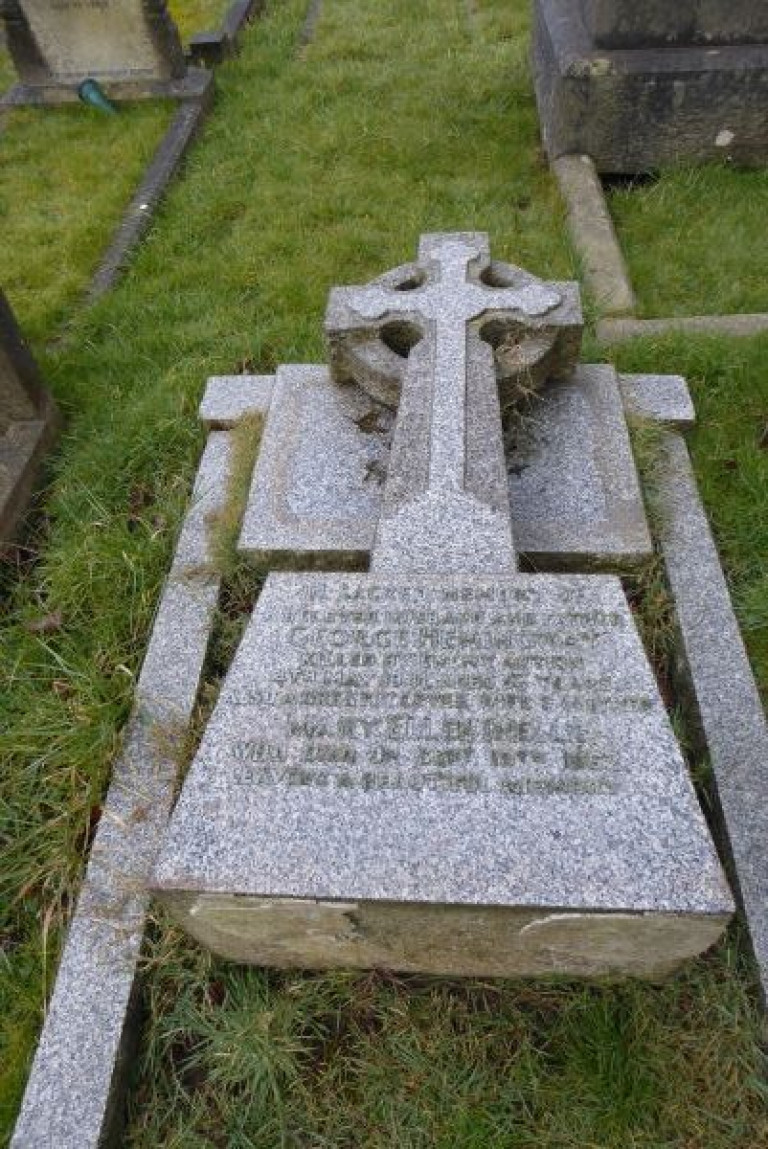
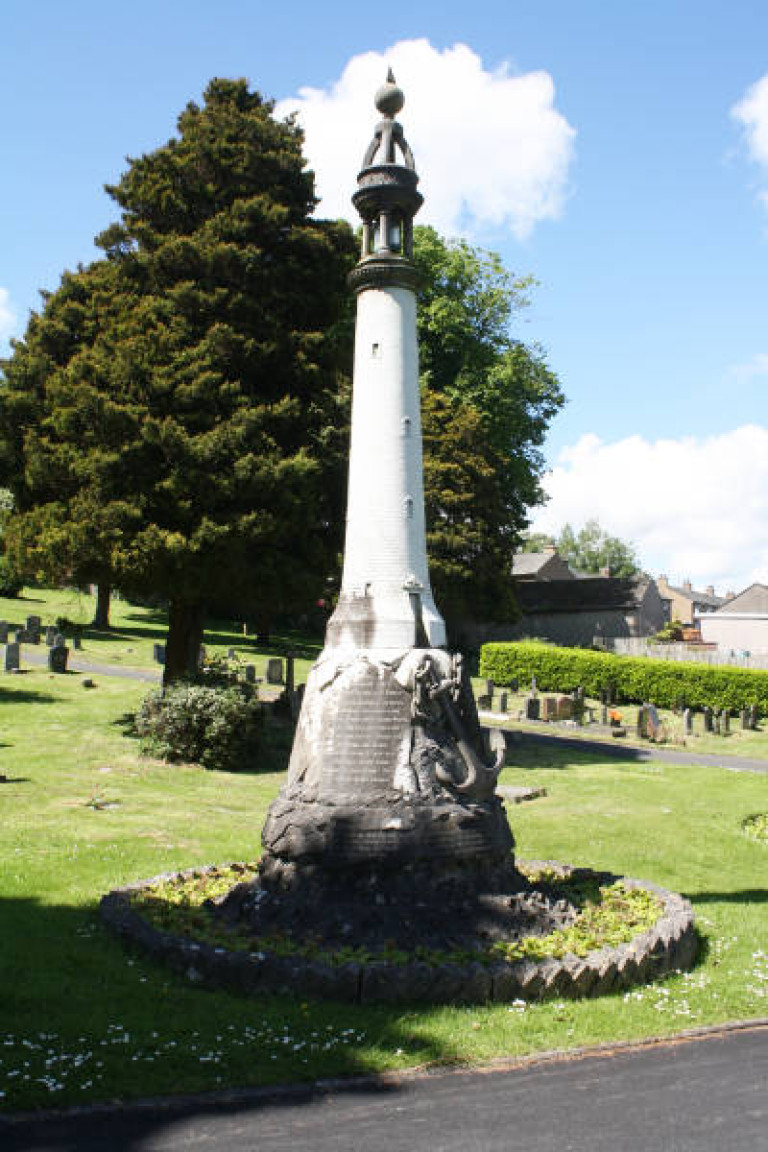
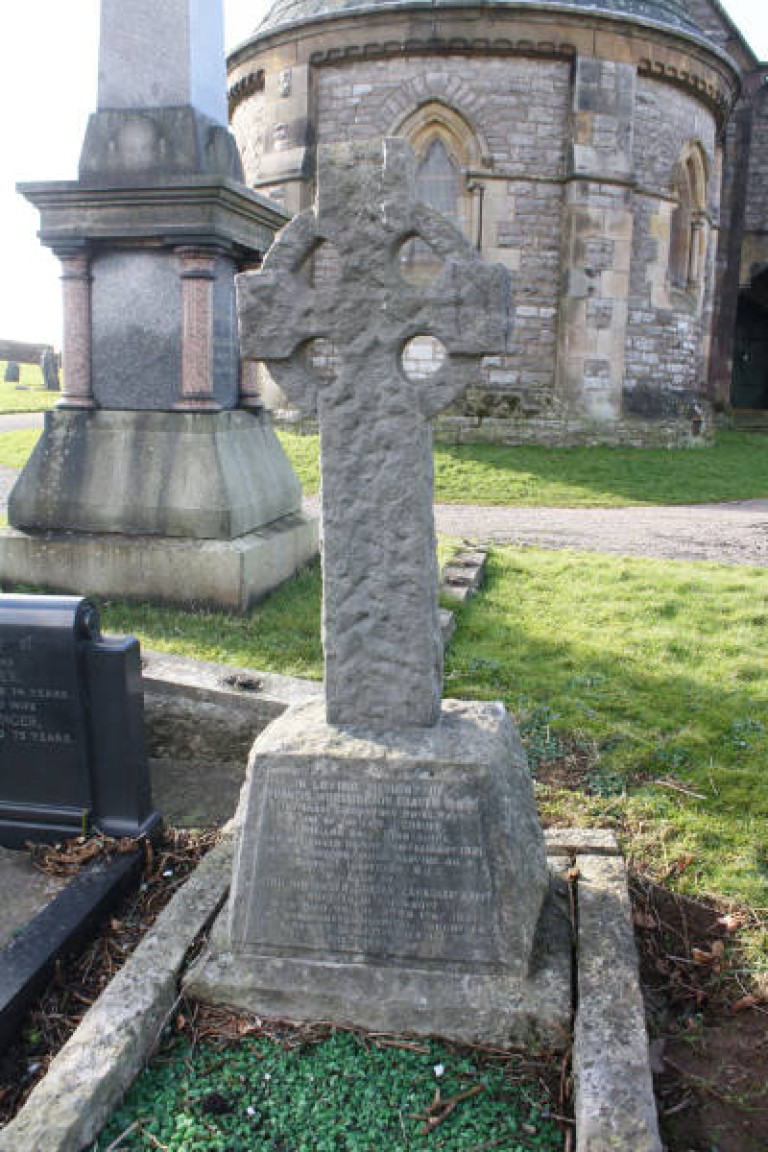
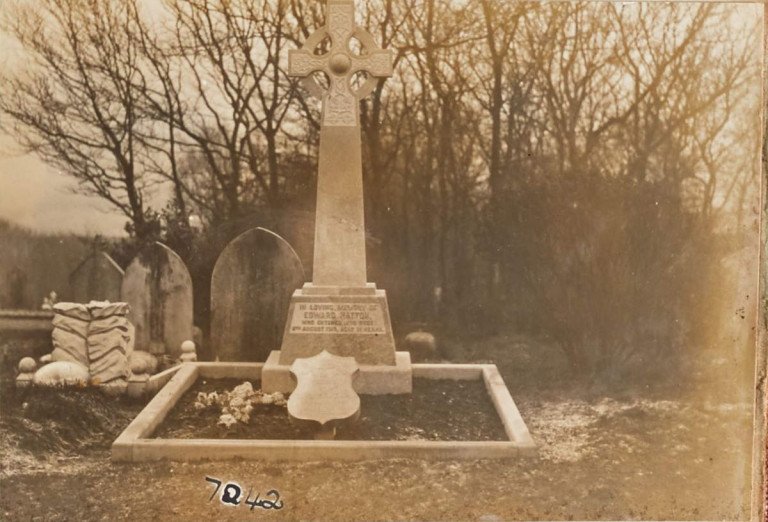
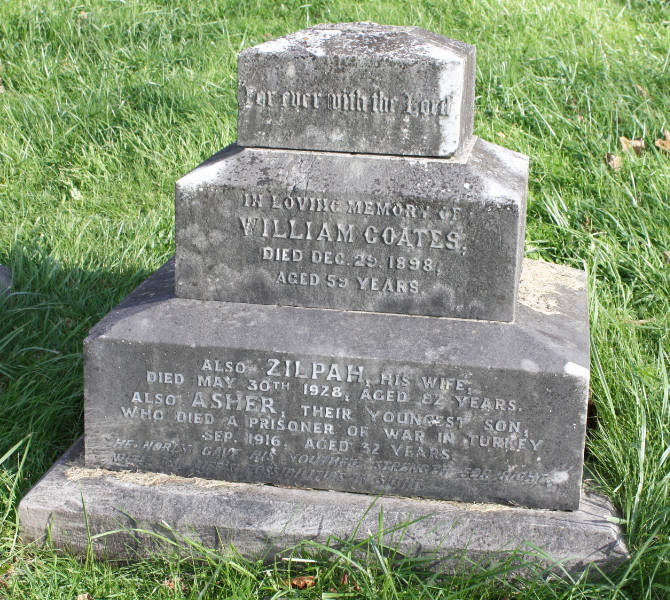
Asher Coates died while a prisoner of war ‘in Turkey’, according to the memorial stone. The CWGC website tells us that he is buried at the Baghdad (North Gate) Cemetery in Iraq. This may mean that he died while building the Turkey – Baghdad Railway. In the Book of Genesis, Zilpah is Asher’s mother.

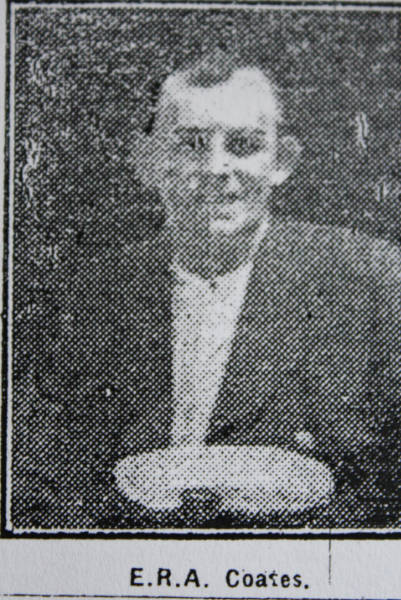
Barrow News 2 Dec 1916
Where is the grave?
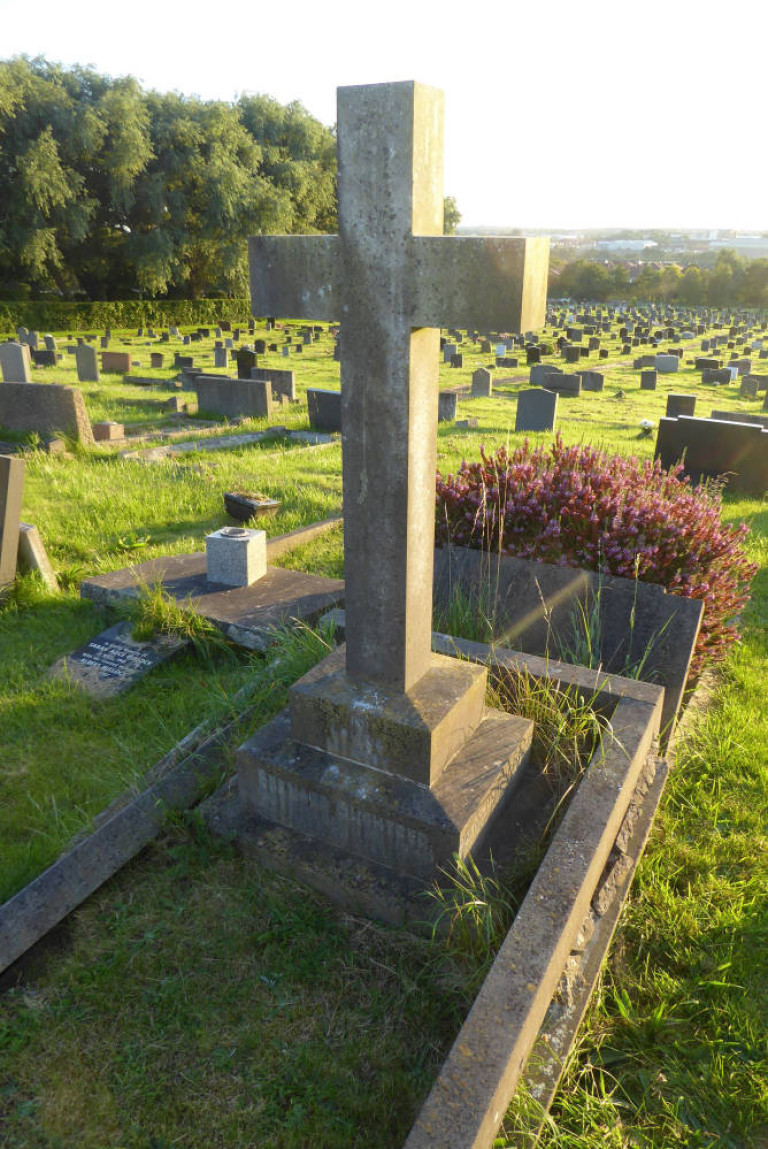
If entering by the main cemetery entrance, walk up the path past the North entrance, take the next left and then left again. Walk down the hill, following the bend to the right. Very near the point where it joins another path from the right, the Coates grave is set back on the left.
Barrow News, 2 December 1916ECHO OF A SUBMARINE DISASTER
Barrow man’s death in Turkey
The Admiralty have intimated to Mrs. Coates, of 92, West View-road, Barrow, that information has been received from the American Ambassador in Constantinople of the death of her husband, Mr. Asher Coates, engine-room artificer, R.N.R., who was taken prisoner by the Turks when H.M. submarine E7 was sunk on the 4th Sept., 1915. The deceased was well-known in Barrow, and the news of his death will be sincerely regretted. He was educated at the Barrow Municipal Secondary School, and was a member of St. James’ Church choir. When war broke out he was working as an electrical engineer, and afterwards joined the submarine service. As to how he met his death there is no definite news to hand. Any letters he sent home were severely censored, and
practically conveyed no news as to his welfare.
ERA Coates had been captured when the submarine E7 had been caught in anti-submarine nets on 4 September 1915, over a year before he died.
An account by an Australian POW from submarine HMAS AE2 makes reference to E7, and the outbreaks of malaria and typhoid that the POWs endured. This
Australian submarine was built in Barrow, and is commemorated in Ramsden Square. Wikipedia reports with regard to E7.
Then on 30 June 1915, E7 began a 24-day patrol in the Sea of Marmara. She succeeded in sinking 13 ships and damaging many more.
Kent History ForumAt the end of August she began her journey home, but on 4th September 1915, while attempting to pass under the Turkish anti-submarine nets at Nagara, one of her propellers became entangled. Her attempts to free herself did not pass unnoticed by the Turks and they soon started attacking the boat with bombs dropped from small boats. At the time, the German submarine UB-14 was undergoing repairs at Chanak. Her commander, none other than Oberleutnant zur Zee Heino von Heimburg, heard the explosions and decided to take a close look at what was going on. He and the U-Boat's cook went out in a small rowing boat to observe the action. On seeing that the Turks efforts were having no effect, von Heimburg decided to use a plumb-line in an attempt to find the British submarine. The line was repeatedly dropped until he felt it contact metal. von Heimburg then dropped a Turkish sinker mine with a shortened fuse right on top of E7. By the time this happened, E7 had been trapped in the net for 12 hours. The explosion was too close for comfort and with his crew running short of air, Lt-Cdr Cochrane realised the game was up. Once the confidential papers had been destroyed and the scuttling charges set, he ordered that E7 be surfaced to allow the crew to escape. After everyone was off the boat, the charges were set off and E7 went to the sea-bed for good. Between the explosions of HMS E7's scuttling charges and the Turkish shellfire coming from the shore, von Heimburg and his cook were lucky to escape themselves.
HMS E7's officers and crew were taken into captivity for the rest of the war. Lt-Cdr Cochrane however was determined not to be a prisoner for long. On his 2nd escape attempt, he stole a sailing boat and made it to Cyprus. [Source]
The following information was kindly supplied by Barrie Downer, Branch Historian, Barrow Submariners:
Barrie Downer, Branch Historian, Barrow SubmarinersEngine Room Artificer Asher Coates O/N RNR/Po/EA/1969 (Po)
Asher Coates was born in Barrow in Furness in Cumbria on in 1884 and he was the son of William and Zilpah Susannah Coates (nee Goodrum) of 66, Blake Street, Hindpool, Barrow in Furness, Lancashire. At the time of the 1891 Census he was listed as being at home at Blake Street with his parents and six older brothers and sisters. In the 1901 Census (conducted in March 1901) he was living at home and was recorded as an Apprentice Electrical Engineer. On 7th Dec 1907 Asher Coates is listed as an ‘alien’ passenger (electrical engineer) in the SS APPOTOMAX sailing from Colon in Panama with a destination of Natchez in Mississippi, USA. At the time of the 1911 Census which was conducted on Sunday 2nd April 1911 he was listed as an Electrician on board the 1st Class Battle Ship HMS COLOSSUS (Captain A Hayes-Sadler, Royal Navy) which was noted as being ‘on trials’ and secured to No. 7 Buoy at Portsmouth. HMS COLOSSUS was built by Messrs. Scott’s at their Ship Yard at Greenock on the Clyde. It is possible that he was employed by Messrs. Scott’s. It is not established when Asher Coates joined the Royal Navy - he possibly joined as a ‘Direct Entry’ Engine Room Artificer on the outbreak of WWI. He was drafted to Submarine and joined the Submarine Depot Ship HMS MAIDSTONE (8th Submarine Flotilla) at Harwich ‘for Submarine E7’. Submarine E7 was transferred to the Submarine Depot Ship HMS ADAMANT (Special Service Flotilla 1) in April 1915 and sent to the Mediterranean to be based at Mudros Harbour to support the Dardanelles Campaign. Submarine E7 made one successful patrol in the Sea of Marmora. On 4th Sep 1915 Submarine E7 was attempting a passage through the Dardanelles for a second patrol in the Sea of Marmora when the starboard propeller became entangled in the anti-submarine nets at Nagara. Despite all efforts Submarine E7 was unable to break free and, to avoid being depth charged to destruction, the Commanding Officer surfaced the Submarine to abandon ship and then scuttled the Submarine. All of the crew survived and were made Prisoners of War by the Turks. Asher Coates died whilst a Prisoner of War. Previously reported to have died on 22nd Nov 1916 the Commonwealth War Graves Commission records show a date of 30th Sept 1916. The Submarine Museum reports a date of death of 13th Oct 1916. Additionally the CWGC records incorrectly give a First Name of ‘Aster’ (The website has now been corrected) and an Official Number of 1569/EA. Asher Coates was thirty-two years old at the time of his death. He was the husband of Ellen Lindow Coates (nee Shepherd) of ‘The Post Office’, Princes Road, Liverpool. Asher and Ellen were married in Bootle in the 1st Quarter of 1911. His Will was granted probate in Lancaster on 9th Oct 1917 and he left £126 18s 7d to his wife Ellen who was then living at 92, West View Road, Barrow in Furness.
He is believed to have been buried in the Hadjikiri Cemetery, is commemorated on the Baghdad North Gate Memorial (Memorial 11) and he is also commemorated on the Cenotaph in Victoria Park in Barrow in Furness.
Barrow News, Saturday 18 September 1915ABOARD THE E7
BARROW ARTIFICER BELONGING TO LOST SUBMARINE
PRESUMABLY A PRISONER
LAST HEARD OF IN MALTABarrow is again compelled to take an especial interest in the fate of Submarine E7, which, according to an enemy claim, has been sunk off the Dardanelles, and officers and crew made prisoners. Mr. Asher Coates, of 92 West-View- road, has been on this particular craft as an engine-room artificer for some time, and presumably he is among the men who have fallen into the hands of the enemy. September 4th was the last date on which the Admiralty had heard from the submarine; but some few days earlier she was at Malta, as is proved by a letter which Mrs. Coates received from her husband on Saturday last. It was dated August 29th, from Malta, and stated that they were about to leave that place. Only so recent as Monday last Lieut.-Commander Cochrane was awarded the D.S.O. for services in the submarine in the Sea of Marmara, where he did great damage to enemy shipping, and after blocking the railway line at near Kava Burnu by bombarding it from the sea, shelled a troop train and blew up the ammunition cars attached to it.
In an earlier letter home, Mr. Coates was apparently aware that his ‘skipper’ had been singled out for some distinction of the kind, and he was of the opinion he fully deserved it.
Artificer Coates is a Barrovian entirely. His mother lives on the Promenade at Walney. He served his apprenticeship at Messrs. Vickers Limited, and when the firm built the Peruvian vessel Coronel Bolognel he offered himself for three years’ service in the Peruvian Navy. On returning to Barrow he resumed work at the Shipyard, and it was December last year before he could succeed in getting away from his work for submarine service. At first he was stationed at different naval depots, and was associated with submarines of the D class. After a period on H.M.S. Adamant he was finally transferred to E7 in April.
Keith Johnson has added:
Artificer Coates, youngest of seven sons to the late William and Zilpah Coates. The family was brought up in Blake Street and all seven boys attended the (Municipal) school, the older lads attending the Oxford Chambers premises. Asher left school in 1900 and started an electrical apprenticeship in Vickers. After working on the Peruvian vessel “Coronel Bolognel”, Asher joined the Peruvian Navy for three years to gain experience. He then worked in a variety of engineering posts in the United States for four years before returning to Barrow in 1910. He married his wife Ellen in 1911, and moved to the Clyde Shipyards for two years before returning to Vickers in 1913.