Died
3 December 1920
Sources
Place
Walks
Themes
Emma Gaskin
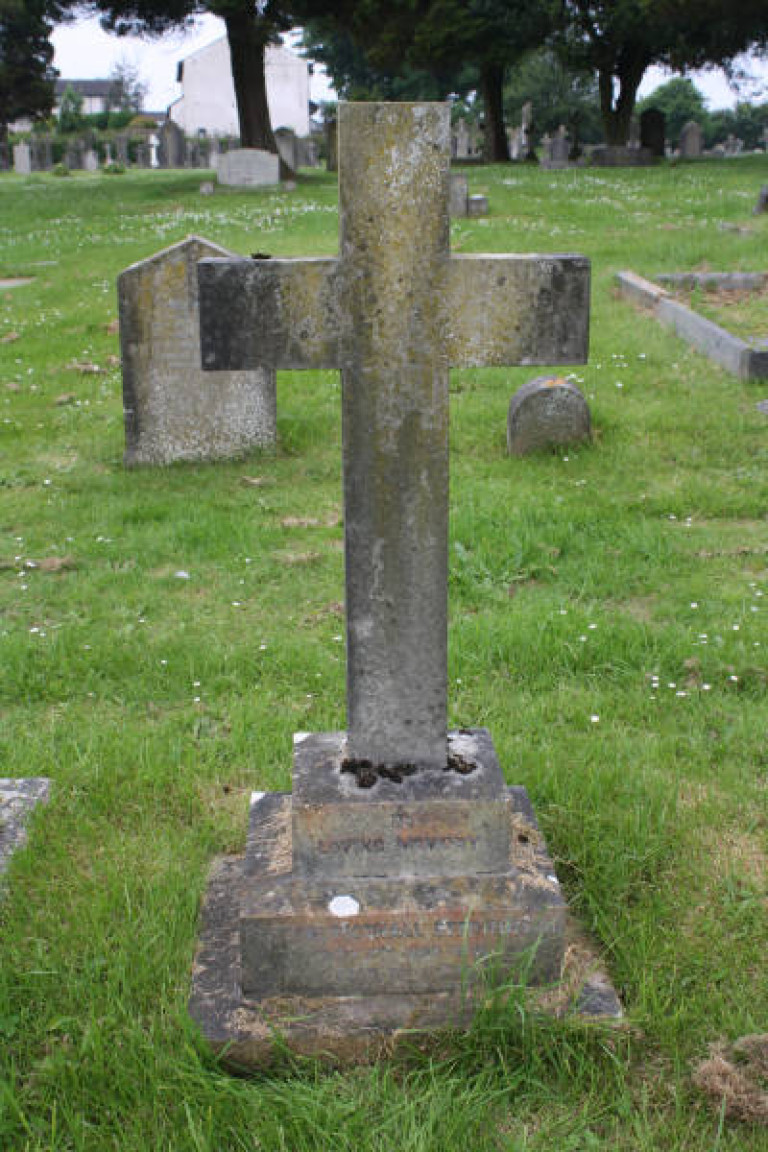
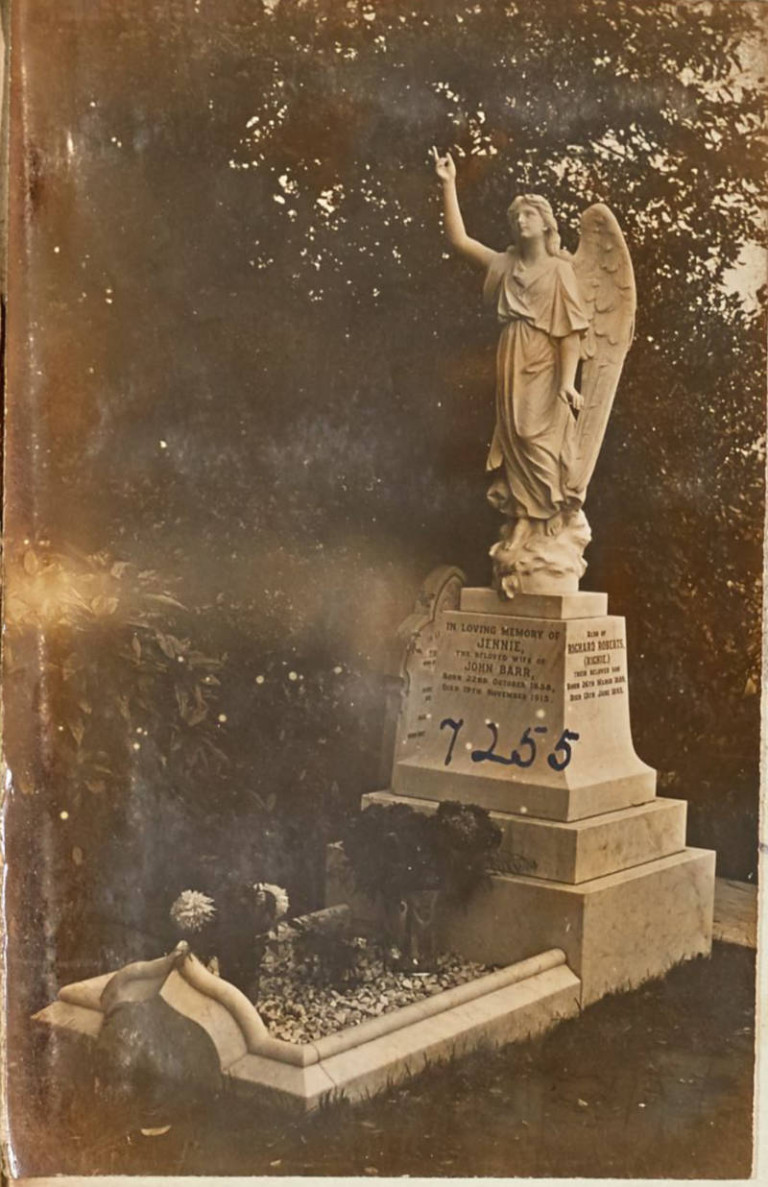
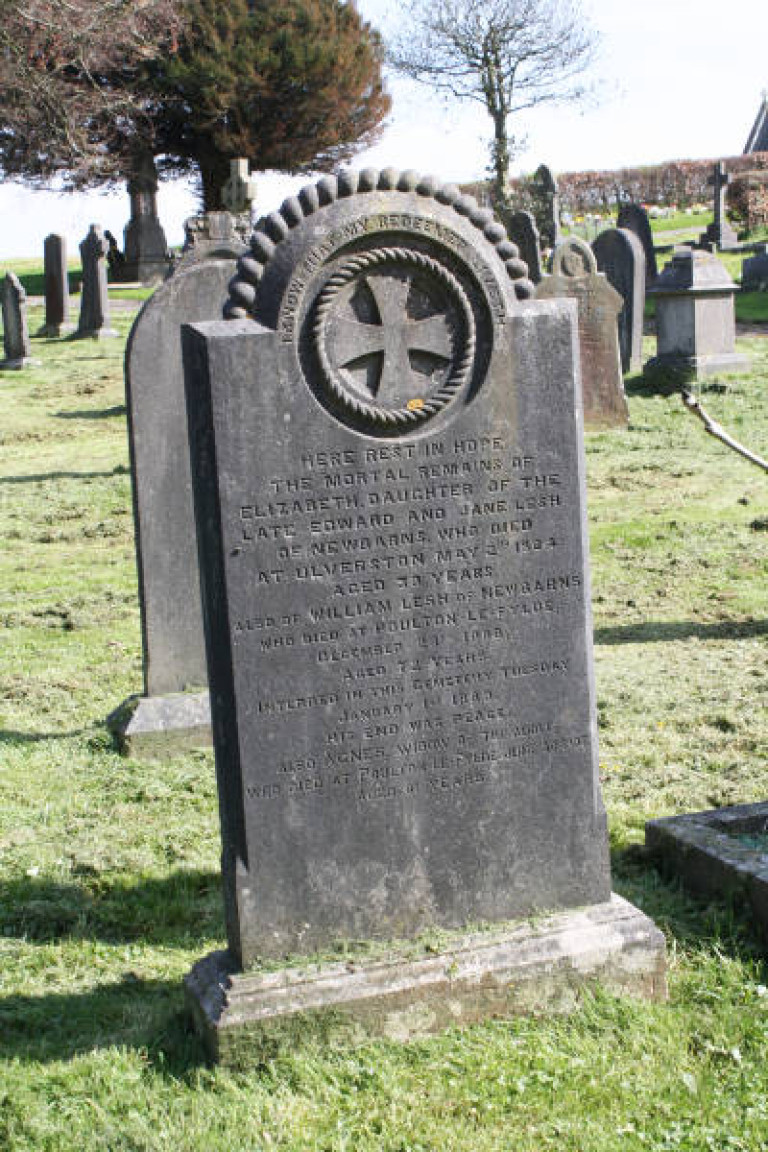
This impressive monument, near to the Crematorium, has lost its large cross since Sankey’s photograph. The plinth of the grave on the right has expanded.


IN SACRED MEMORY OF
EMMA MARY GASKIN
THE BELOVED WIFE OF
ALBERT EDWARD GASKIN,
WHO
ENTERED INTO REST DECEMBER 3RD 1920
AGED 44 YEARS
To which has been added:
ALSO OF THE ABOVE
ALBERT EDWARD GASKIN
DIED MARCH 24TH 1936
AGED 60 YEARS
I have not found any reference to Emma Gaskin in the local press at the time of her death.
1881 Census
If it is the right family, there is an Albert Gaskin (5) born Lichfield, was living in the Union Workhouse, Burton Road, Lichfield in the 1881 Census. Also living there is Emma Gaskin (31) Domestic Servant, born Shenstone, Staffs, who could be his mother. Both are Inmates.
1891 Census
In the 1891 Census Albert Gaskin is living at 85 Regent Street, Walsall, “Boot and Shoe Shop”. Joseph Isaac Price (37) Boot and Shoe Maker, born Wolverhampton is Head of the household, with Mary Ann Price (48), his wife, born (village unreadable), Salop. The others in the household are Emma Porter (16) Domestic Servant (General), born New Invention (sic – between Walsall and Wolverhampton), Staffs.; Herbert Sammons (17) Boot & Shoe Maker’s Apprentice, born Lichfield, Staffs.; Albert Gaskin (15) Boot & Shoe Maker’s Apprentice, born Lichfield; John Westwood (15) Boot & Shoe Maker’s Apprentice, born Hednesford, Staffs.; and William James (11) Visitor, Scholar, born Walsall, Staffs. Herbert Sammons (9) (sic) is also a Lichfield Workhouse Inmate in the 1881 Census, as are Sarah Sammons (26) Domestic Servant, and Harriett Sammons (25) Domestic Servant.
Emma Edwards married Albert Gaskin at the age of 18 on 11 February 1894 at St. Matthew’s, Wolverhampton. Identifying her earlier than this has proved problematic: there are a number of Emma Edwards’ who could fit the profile. Daisy Erica Gaskin was baptised in the same church 6 September 1896.
By 1896, Albert Gaskin has an entry in Kelly’s Directory of Staffordshire. He is a Boot and Shoemaker, of 23 Bilston Road, Wolverhampton.
1901 Census
The 1901 Census has the Gaskins at 4 Wolverhampton Street, Bilston, Staffs. Albert Gaskin (26) Boot Maker (Own Account), born Lichfield, Staffs.; is living with wife Emma M. Gaskin (25) born Bilston, Staffs.; and children Daisy E. Gaskin (4) born Wolverhampton, Staffs.; Albert E. Gaskin (3) born Wolverhampton, and an unnamed newborn Gaskin (6 days) born Bilston, Staffs.
1911 Census
In the 1911 Census Emma Mary Gaskin and Albert Edward Gaskin were living at 27 Crellin Street, Barrow. They had been married for 17 years, and had seven children, five of whom were still living. The household details were Albert Edward Gaskin (37) Boot Repairer (Own Account), born Lichfield, Staffs.; Emma Mary Gaskin (36) born Bilston, Staffs.; Daisy Irica? (sic - Erica) Gaskin (14) no occupation recorded, born Wolverhampton, Staffs.; Doris Gaskin (8) School, born Bilston, Staffs.; James Gaskin (10) School, born Bilston, Staffs.; William Gaskin (3) born Barrow, Lancs.; Norman Gaskin (1) born Barrow, Lancs.
Given what is written below, it is surprising that Mrs. Gaskin has such an ostentatious headstone.
After his wife’s death, things went badly for Albert. The Lancashire Evening Post 6 May 1922 had:
£2,233 DEFICIENCY
BARROW BOOT AND SHOE DEALER’S FAILURE
At the Barrow Bankruptcy Court, yesterday, Albert Edward Gaskin, 53, Cheltenham-street, Barrow, carrying on business at 77 and 79, Dalton-road, as a boot and shoe dealer, appeared for his examination. The statement of affairs showed gross liabilities £5,247 16s 2d, and deficiency £2,233 6s 2d. He attributed his failure to slump in trade, high prices paid for part of the property, and inability to pay cash.
In reply to the Official Receiver, he said he came to Barrow in 1901, and started as a boot and shoe repairer in Robinson-street. (sic) Then he went to various addresses, and in 1910 he bought premises in Dalton-road and commenced the retail business. He had as many as five repairing shops going at once, but during the war he concentrated on the Dalton-road shop, and his wife looked after the shop in Crellin-street. He purchased the next-door shop in Dalton-road, and he explained he sold two shops in Crellin-street, all the money going to his banking account. Except on one occasion all his takings were banked, except cash necessary for wages and working expenses. The slump in trade had caused his deficiency. When it started he had £2,000 stock. He had been in business 25 years. He kept on as long as he could, hoping to get clear.
The Official Receiver suggested that it would have been better to have got out of the retail business two years ago, and the debtor said it would have been, but when you got into business it was often the creditors who would not allow you to stop. He added that he had an overdraft at the bank on a house in Harrison-street, and when his wife died he got £200 insurance, which went to the bank. His wife left £100 for the benefit of his children.
Have you been attending to your business properly all the time? – I don’t think there is a business man in the North of England who has done better.
That is not my question: have you been attending to your business properly all the time? – Yes.
Have you been spending money on amusements, drinking or gambling? – No.
The Official Receiver said that the trustee, Mr. A. T. Eaves, of Manchester, had intimated that he would not be present.
Mr. Fisher, solicitor, for the debtor, applied for the examination to be closed.
The Registrar closed the examination.
Further trouble was reported in the Lancashire Daily Post of 11 August 1934:
TRADES BOARD WAGES OFFENCE
Barrow Boot Repairers Fined
SUMMONSES for failing to pay wages at any less than the minimum rate to an employee, and failing to keep a record of wages paid to an employee, against James Gaskin and Albert Edward Gaskin, boot and shoe repairers, leather merchants, etc., of Dalton-road, Barrow, were heard at Barrow Petty Sessions, yesterday, and the defendants were fined £2 each in their first case, and 10s. each in the second case, and five guineas costs.
There was also a claim for £60 11s for arrears of wages due, under the Trades Board rates in the boot and shoe repairing trades, to the employee, Leonard Woodend, and by compromise, and with the approval of the Bench, this was settled for £40.
Mr. C. A. Stredwick, solicitor, Ministry of Labour, prosecuted, and Mr. W. H. Winder, solicitor, Lancaster, represented the defendants, who pleaded not guilty.
Mr. Stredwick pointed out that the defendants had boot repairing premises at 86 and 88, Dalton-road, and other premises in Barrow. On February 7th, Mr. Thomas Barnett, an inspector of the Wages Board, visited defendants and pointed out that when he visited them on February 7th there was no mention of Woodend’s name in the wages book.
Evidence to this effect was given by Thomas Barnett, inspector, who said that James Gaskin said the book did not contain the names of three shop girls, a boy, and a man, who were employees. On March 20th he saw both defendants, asked for the wages book, and took a copy of it.
WORK NOT WITHIN SCOPE
He told them that there was no reference to a boy named Woodend. James Gaskin said, “I did not omit it wilfully.” He informed both defendants that he had taken a statement from Woodend, who said he was engaged in work on the finishing machine. Albert E. Gaskin said some of the work done by Woodend was not within the scope of the Wages Board.
Leonard Woodend, aged 19, of Hawke-street, Barrow, said it was not correct to describe him as a shop assistant; he would call himself an apprentice on the finishing machine. He had no agreement as an apprentice. He went on the machine in August, 1930.
In reply to Mr. Winder, witness said he had finished shoes. He would have finished 50 pairs between 1930 and 1934. He had been a shop assistant 6½ hours per week.
POINT OF THE CASE
Mr. Winder said that the whole point of the case, however, was how many hours Woodend had put in, in connection with the boot trade, working on a machine, before he came within the scope of the Act, and paid wages in accordance with the Act. On February 3rd Woodend was paid 15s and 1s 6d insurance contributions for working 50½ hours, and it was a question of hours worked within the scope.
James Gaskin said there was an experienced man at the finishing machine, and Woodend only assisted three or four hours a day. Woodend had never been employed as a finisher.
In reply to Mr. Stredwick he said the boy said he had made an application to the Labour Exchange, and witness then put his name in the wages book along with the others within the scope of the Wages Board.
The Chairman, after announcing the decision of the Bench, said he hoped there would be no victimisation of the boy.
Mr. Gaskin, snr., who is in ill-health and had to be accommodated with a seat in court, replied, “No, he will not be victimised. He worked with us until last Saturday.”
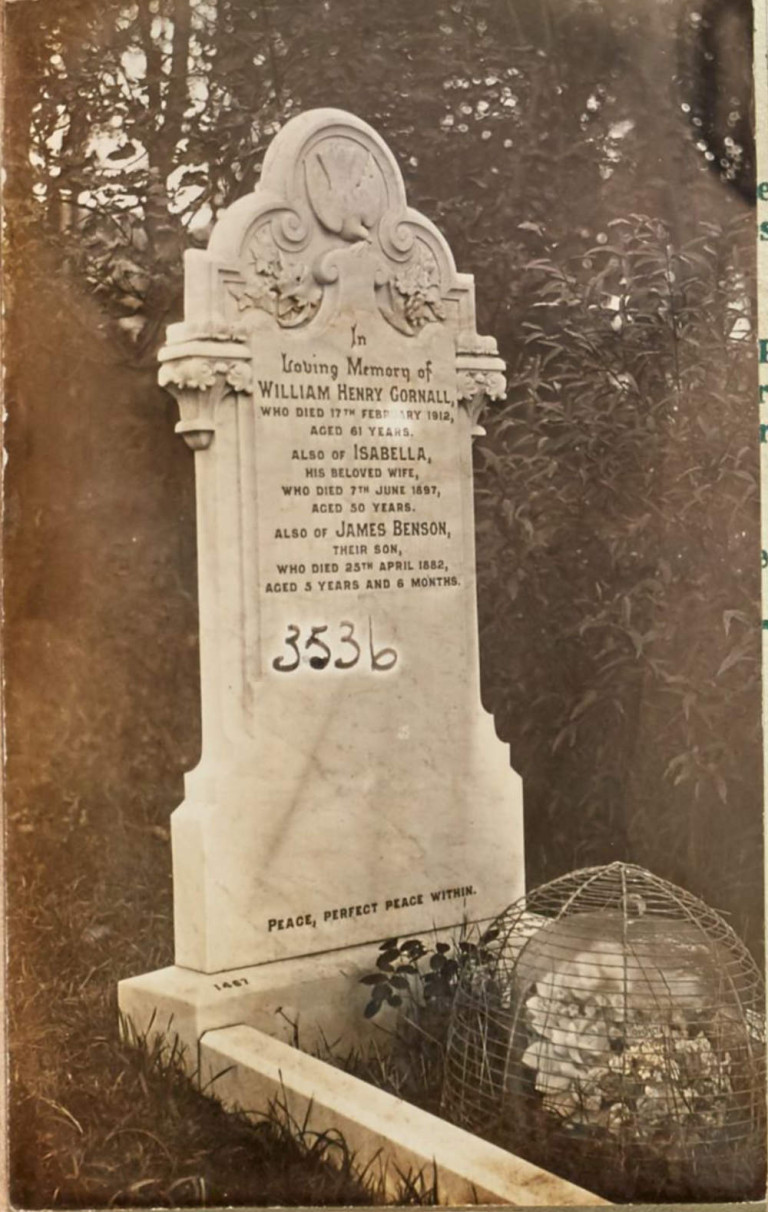
No-one is certain why Edward Sankey took photographs of graves in the period 1910-1920ff. Were they advertising the skills of his friend William Hull, or later Hull and Fairbairn? Were they to be made into postcards that the bereaved family could send to members who were not able to attend the funeral?
The historic photograph is from the Sankey Family Photographic Collection, courtesy of Cumbria Archives.