Joseph Werry

Joseph Werry
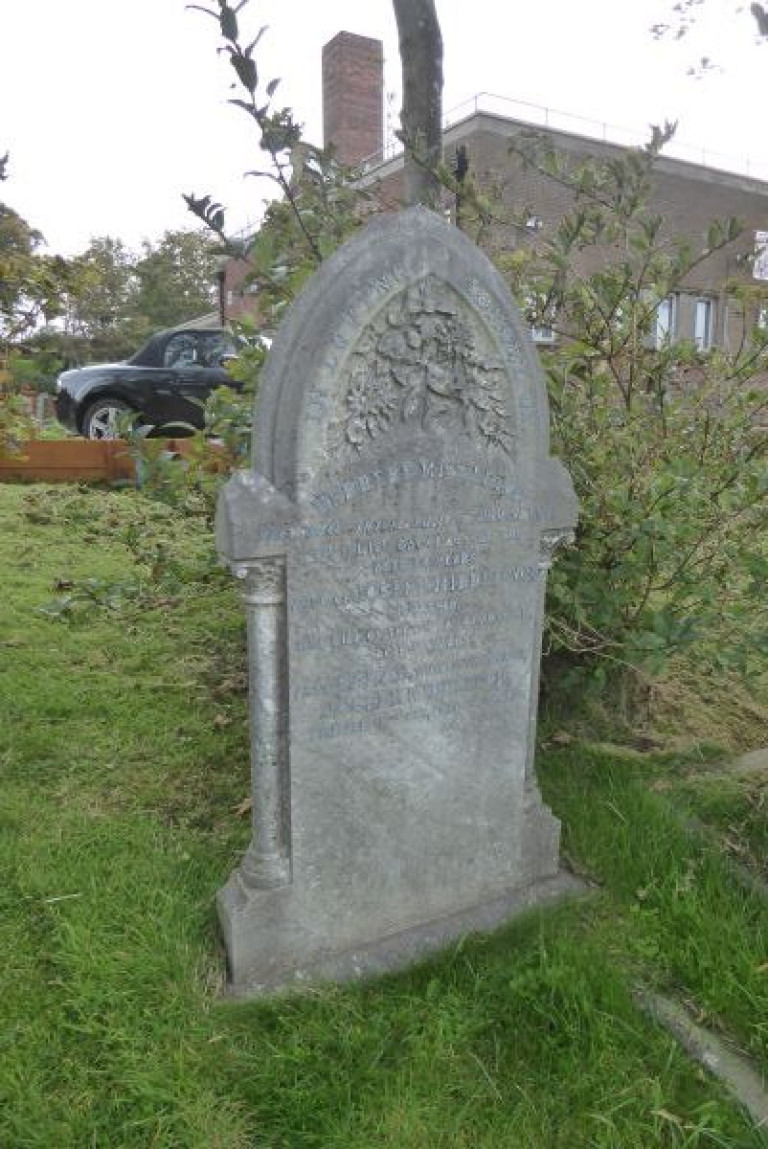
IN EVER LOVING MEMORY OF
JOSEPH WERRY
BORN 1852 DIED 1928, FOR 33 YEARS
SECRETARY OF THE DALTON-IN-FURNESS
CO-OPERATIVE SOCIETY
AND OF GEORGINA, HIS BELOVED WIFE,
DIED JULY 11TH 1941, IN HER 86TH YEAR.
ALSO OF
C.Q.M.S. HARVEY SIMPSON WERRY
CROIX-DE-GUERRE
ONLY SON OF THE ABOVE
WHO DIED IN DEFENCE OF HIS COUNTRY 1918
TREASURED MEMORIES
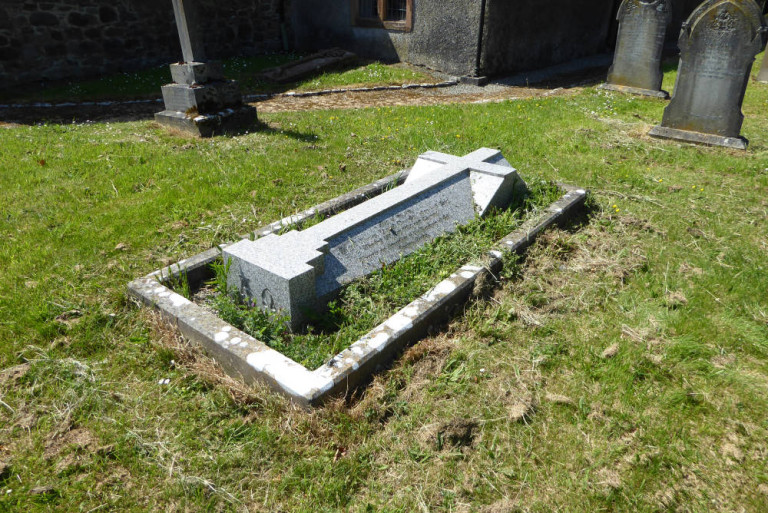
Where is the grave?
Just to the north of the North Chapel, one row back.
Barrow News, Saturday 7 April 1928DEATH OF MR. J. WERRY
FORTY YEARS WITH DALTON CO-OP
HIS HOBBIES AND PURSUITS
General regret was felt in Dalton and district on Tuesday, when it was learned that Mr. Joseph Werry had passed away at his home, Rock Lea, Myrtle-terrace, at the age of 75. For nearly 40 years in the service of the Dalton Co- operative Society, he resigned his position as secretary the society in August, 1923, owing to bad health. He had held the position since May 31st, 1890, and for some years previous he had been the senior auditor. Though not always in the best of health, Mr. Werry remained active in his retirement, walking, gardening, bowls and music – he was one of the most liked and respected men in the town. He was a supporter of the British Legion Club and was to have taken part in the official opening of the Dalton C. C. bowling green on Good Friday.
Mr. Werry was born at Coniston on June 20, 1852. His father came to that part about 1840 from St. Anstell (sic) to work in the Coniston copper mines for Messrs. Barrett. He first intended to start life like his father, but after a fortnight in the copper mines, his father sent him back to school under his old schoolmaster, Mr. Wm. Brocklebank, who thought he would do better as a teacher. Five years later, he went to Battersea College, and in 1871 he received a second class certificate. But still he had not found his calling, and at 19 years of age he took up engineering and book-keeping, successively in Mr. Ed. Salmon’s engineering works, Ulverston, the Pulsometer Engineering Co. Battersea, and Wm. Dryden’s works, Preston, before coming finally to Dalton in 1890 to be cashier to the late Mr. James Garden, builder and contractor. Three or four years later, he became senior auditor to the Dalton Co-op. Society, and on May 31, 1890, a special meeting of the members appointed him secretary.
Mr. Werry had many hobbies and pursuits. He was a proficient shorthand-writer; he rode one of the first “bone-shakers” brought into the district, subsequently being an early convert to the motor-cycle; a fine swimmer, three times saving persons from drowning; a clever amateur photographer; while wireless, music, bowls, and country tramps and hunts occupied the period of his retirement.
All his life he was a staunch churchman. He was one of the old “Twenty-four” up to the time of their dispersal (Elders of the Church: Revelation 4:4), and at the time of his death he was a member of the Parochial Church Council.
He lost his only boy, Harvey, during the war. There now remain a widow and six daughters.
THE FUNERAL
Many organisations were represented among the mourners who accompanied the remains of the late Mr. J. Werry on Thursday to their last resting-place in Dalton Cemetery. The Rev. Canon Postlethwaite, M.A., R.D., the Vicar, conducted the service in the Parish Church prior to the interment, assisted by Dr. E. B. Pooley, lay reader. The choir, in black cassocks, attended, and sang the 90th Psalm, and Dr. Pooley read the lesson from Corinthians i, 15.
The hymn, ‘Lead, Kindly Light,’ was sung, and then the Nunc Dimittis. As the cortege left the church, Mr. W. A. Harry, A.R.C.O., played a funeral march.
The family mourners were:- Mrs. Werry, the widow; Nellie, Blanche, May, Elsie, Gertrude and Kathleen, daughters; Jack and Bert, sons-in-law; Josephine, granddaughter; Mr. and Mrs. Ben Werry, Miss Lena Werry, Mr. Story Robinson, Mrs. Burnett Robinson, Mr. J. B. Robinson, Mr. J.R. Robinson and Mr. Frank Robinson, Mr. and Mrs. Atkinson, Mr. J.E. Werry (Roshead), Mr. Geo. Werry (Stone Briggs), nephews and nieces.
There follows a long list of mourners, and the organisations that they represented, including Dalton Co-op; Ulverston Co-op; British Legion; Dalton C.C. Bowling Section; Salvation Army; Furness and District Beagles; Dalton Conservative Club.
Harvey Simpson Werry
Barrow News, 4 May 1918DALTON N.C.O. KILLED
Mr. & Mrs. Werry, Rock Lea, Dalton, received the sad news on Saturday morning of the death of their only son, Coy.-Qtmr. Sergt. Harvey Simpson Werry, of the Durham Light Infantry. He was admitted to hospital dangerously wounded in the neck on April 19th, and died in the same evening. The matron of the hospital says that he was unconscious, and so left no message. He was buried in the military cemetery. He joined up as a private in Sept. 1914 when the call for men was so urgent. He was one of Lord Kitchener’s first one hundred thousand men, and has been out in France two and a half years. (cannot read last 3 lines)
Barrow News, 6 July 1918DEAD HERO HONOURED CQMS
Harvey Werry, son of Mr. J. Werry, Rock-lea, who was killed recently, was awarded the French Croix de Guerre for distinguished conduct in Belgium.
Barrow News, 6 July 1918APPRECIATION OF A DALTON SOLDIER
The following appears in the Midsummer Magazine of the Eryri Normal College, Bangor (N. Wales) concerning the late C.Q.M.S. Harvey Werry, 15th Durham Light Infantry, who died of wounds on April 19th, in France:-
“Those who were in college with Harvey Werry cannot but feel, even among the griefs which daily assail us, an especial pang of regret when they hear of his death. There was something so vital, so instinct (sic) of a robust, manly life in him that it did not seem as if he could be anything but young, and brave and cheerful. I do not think that the college ever had a better student. I know that we who were his companions never had a better friend, for there was nothing abnormal about him. He was the healthy, athletic youth, but with deeper perceptions, and above all, nobler motives.
In college, Harvey was admired as a fine athlete (he played in the cricket and football teams with distinction); but he was respected as a fine character in a far greater measure. Apart from sports, he was interested in music, literature and art.
Four times since we left college have we met. Once at a Whitsuntide re-union, where the old life was renewed for a space; once in a camp near Aldershot, where I was able to pay him a surprise visit shortly before his departure to France; once in Ploegsteert Wood, within range of German rifles, and under the arch of the singing shells; and lastly, in the streets of Armentierres, where we met by arrangement, and walked and talked of our memories of old times, and our hopes for the new. But always my thoughts of him are as a student, hurrying to games up the Etriddoed-road or roaming down by the Straits in the golden Bangor evenings. Was it prophetic, that in the Eyri Common Room he should have sung Housman’s song to the accompaniment of W. Williams on the piano, of the ‘Fortunate fellows that now you can never discern,’ who ‘carry back bright to the coiner the mintage of man, the lads that will die in their glory and never be old.’ He was certainly one of the stalwart and brave, ‘the handsome of face, and the handsome of heart,’ and he carried his looks and truth to the grass. – Oscar Lloyd”
The quotes are from A.E. Housman “A Shropshire Lad” XXIII
Joseph Werry’s sons-in-law, William Billington, and William Henry Taylor, are also commemorated on the grave kerbs. Ref. to William T. Taylor, hit by German sniper, in Barrow News 19 May 1915.