Died
circa 6 April 1874
Born
John: baptised 5 October 1828
James: baptised 14 May 1854
Sources
Ancestry
Barrow Daily Times
"The Ashburner Schooners", by Tim Latham (Ready Rhino, 1991) ISBN 0-95-16792-0-1
Place
Walks
John and James Latham
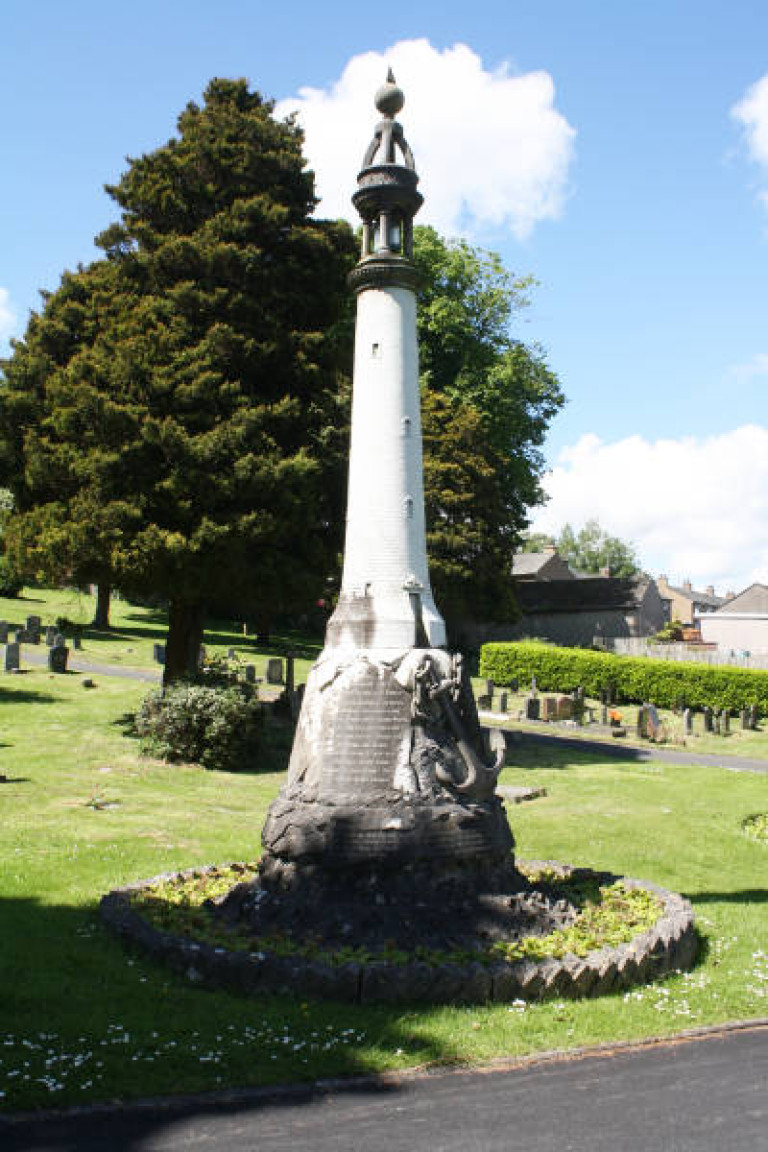
Father & son, lost on the "Mary Bell"
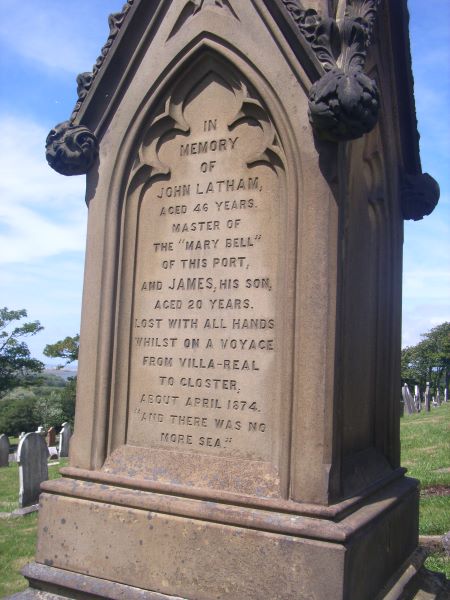
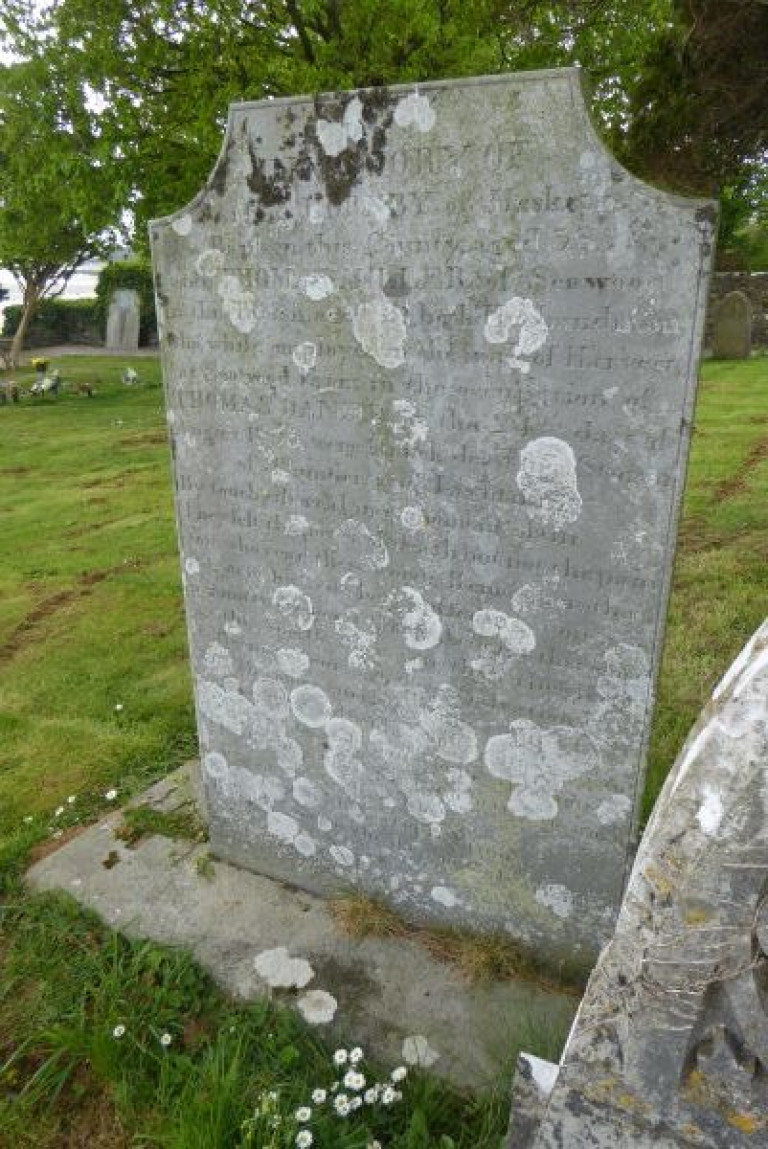
IN
MEMORY
OF
JOHN LATHAM
AGED 46 YEARS
MASTER OF
THE “MARY BELL”
OF THIS PORT
AND JAMES, HIS SON
AGED 20 YEARS
LOST WITH ALL HANDS
WHILST ON A VOYAGE
FROM VILLA-REAL
TO GLOSTER
ABOUT APRIL 1874
“AND THERE WAS NO
MORE SEA”
John Latham was Master of the ‘Mary Bell’ sailing from Villareal to Gloucester (note the spelling differs on the memorial) when it sank in the Bay of Biscay. The ship was only one year old.
‘And there was no more sea’ is a biblical quote from Revelation 21.1
The Barrow Daily Times, Monday, 28th April 1873, page 3; http://www.mightyseas.co.uk/marhist/furness/ashburners/marybell.htm (Link not working Feb 2021)
"LAUNCH AT BARROW - On Saturday morning another successful launch took place at Messrs. Ashburner's Shipbuilding Yard, Hindpool, Barrow. This new addition to the shipping of the port is a three-masted schooner, of 175 tons register, classed A 1 at Lloyd's for 12 years. Her length, over all, is 103 ft. 5 in., breadth 23 ft. 5 in., and depth 12 ft. 3 in. The vessel left the stocks at twenty minutes past ten o'clock, and as she commenced to move, Miss Ellen Latham gracefully christened her the Mary Bell (after the wife of Mr. Robert Bell, of Islay, Scotland). The vessel glided along the ways and into the water without the slightest hitch, and without inconveniencing those on board by shipping a single drop of water. Capt. John Latham, late of the James and Agnes, will command the Mary Bell, which will be engaged in the coasting trade, and her owners (Messrs. Ashburner) inform us that she will go into the Devonshire Dock early this week. A dinner was subsequently provided at the Bowling Green Hotel, Greengate, a substantial repast being most creditably served up by the host and hostess, Mr. and Mrs. Moreton. Mr. Thomas Ashburner filled the chair, and Mr. William Ashburner, jun., the vice-chair. "The Queen and Royal Family ", given from the chair, having been duly honoured, Mr. Oliver (of the Furness Shipbuilding Yard) briefly proposed the "Health of Mr. William Ashburner, sen." - The Vice-Chairman (in the absence of his father) responded. The Mary Bell, he remarked, was the 32nd vessel which had been launched from their shipyard, and he believed 31 of those vessels were still afloat. (Applause). The mind of the British public had been considerably agitated lately by that appalling disaster, the loss of the Atlantic on the American coast, and that circumstance had tended very considerably to enhance the interest so keenly felt in the motion which Mr. Plimsoll had brought before the House of Commons, asking for an enquiry into the capacity of vessels and the way in which they are found. Indeed, so greatly had the mind of the public been agitated by the loss of the Atlantic, that Mr. Plimsoll found himself supported on all sides. He (the speaker) believed the Commission which had been appointed was quite necessary, and would probably result in a great amount of good, not only in protecting the seafaring population, but in also securing the safety of passengers. He believed that, so far as the vessels belonging to the Port of Barrow were concerned, on the whole, they were very efficiently found, and commanded by very efficient captains. He did not think there was a captain sailing out of Barrow in whom any owner could have greater confidence in than the commander of the Mary Bell, Captain Latham. (Applause). While he had no desire to say anything against iron vessels, he could not help saying that if the Atlantic had been built of wood instead of iron, he did not think there would have been so many lives lost as had been the case. In seeking to increase the maritime commerce of England, he believed the object was, more and more, to build vessels of such a capacity that, to a certain extent, life was sacrificed thereby. It was the opinion of many persons that, had the Atlantic been a much smaller vessel, she would not have been broken up so soon as she was; and he hoped the result of Mr. Plimsoll's exertions would be to restore people to that amount of confidence that when they were desirous of taking a trip across the Atlantic, they would feel that they could do so with the same degree of safety that they did when taking a trip on the railway. Indeed, so successful had been some of the steamship lines, that the public had almost begun to look upon the great ocean steamers as capable of accomplishing their voyages with as great accuracy, and with far less danger to life, than the locomotives on our railways. The Vice-Chairman concluded by thanking the company for the cordial manner in which they had drunk his father's health. - The Chairman next gave the "Health of Mr. Myles", to which that gentleman humorously responded, and concluded by proposing "Success to the Mary Bell " - Mr. Richard Ashburner, in giving the "Health of Captain Latham", remarking that the Mary Bell would be the fourth vessel built by the Messrs. Ashburner which Mr. Latham had commanded. (Applause). - The Vice-Chairman next proposed "Success to the Town and Trade of Barrow". He could remember very distinctly the time when he had stood on the ground upon which the house in which they were then assembled was built, and when it was considered that that spot was pretty well out in the country. The magnificent docks at Barrow had assisted very materially in enhancing the prosperity of the town, and in bringing the port prominently before the country; and when those who were now building were opened they might expect to be brought into still closer attention without all parts of the world. (Applause). He was quite sure that the gentlemen at the head of affairs in Barrow were not disposed to go backwards, and, not withstanding the assertion of her enemies that "Barrow is sure to go down", he was quite of opinion that in a very few years under the fostering care of such gentlemen as the Dukes of Devonshire and Buccleuch, Lord Frederick Cavendish, Sir James Ramsden, and Mr. J.T. Smith, the town would assume very gigantic proportions, and although it might not rival Liverpool - as some persons zealously imagined - it would become a very considerable port amongst the many for which this country was famous. (Applause). The toast was coupled with the name of Mr. Sutcliffe (of the Furness Shipbuilding Company), who suitably responded, and concluded by giving " The Health of the Chairman ". - Mr. Ashburner, in responding, alluded to the good feeling which existed between those connected with the various shipbuilding works in Barrow, and, in conclusion, proposed the "Health of Mr. Oliver", who briefly replied. - Mr. Richard Ashburner then gave the "Health of Mr. Hurford", who provided the Mary Bell with her sails. - Mr. Hurford, in response, remarked that he had fitted out seven vessels for the Messrs. Ashburner, and the Mary Bell had the best suit of sails of any of their vessels. (Applause). - The Chairman proposed "The Press", which was responded to by Mr. Berkeley, of the Times. - Mr. Myles, in giving the "Health of the Vice-chairman", said it was his opinion that Barrow was destined to become a place of very great importance, and that too at no very distant day. (Applause). - Mr. Oliver proposed the "Health of Mr. Richard Ashburner" and that gentleman having responded, the proceedings terminated. Mr. Cochrane, of the Iron Ship Works, was present, but was obliged to leave during the early part of the afternoon.
From other sources:
The Mary Bell was built by William Ashburner and Son at Barrow-in-Furness and was managed by Thomas Ashburner & Co. She was a large three-masted schooner that was undoubtedly built to travel in similar trades to the William Ashburner, for she was finished with copper bolts, indicating that after her first year she would have been felted and yellow metalled. She was well-built, being accorded Lloyd's highest classification for a wooden ship, 12A1. Her surveyor stated that "a large quantity of high class materials has been judiciously used in the construction of this vessel, with extra fastenings and superior workmanship". Despite her good construction, the ship was lost within a year of her launch, and the furthest she ever travelled into the Atlantic was Madeira.
After being launched in some style on the 26th April 1873, the Mary Bell was put under the command of Capt. John Latham, who had previously commanded the James & Agnes. He took her to Madeira and to the Guadiana River ports for copper ore. Early in 1874 he returned to Madeira carrying a coal cargo from Newport, then picked up a cargo of copper pyrites at Pomaron. Returning to Gloucester, the Mary Bell disappeared in the Bay of Biscay after being last sighted on the 6th April. Capt. Latham, his 19-year old son James, and five other crewmen were lost with her.
Ancestry:
John Latham, son of Robert Latham (Boatman) and Ellen Latham, was baptised 5 October 1828 at Tarleton, Lancashire.
James Latham, son of John & Catherine Latham, was baptised 14 May 1854 at St John, Preston.
1861 Census:
At Ulverston Canal, John Latham (32) Master of the Lady of Lune, a 40 ton schooner in the coastal trade, from Preston. Also aboard were Mate William Banister (36), also of Tarleton, and Sarah Banister (9), Mate’s daughter.
At the same time (1861 Census) his wife Catherine Lathom (sic), Captain’s wife (husband at sea), born Preston, was living at 3 Paxton Terrace, Barrow (then in the parish of Dalton). Other members of the household were sons Robert (9) and James (7), both born Preston, and daughter Ellen (2), born Ulverston. They had lodgers: Mary Hutchinson (22), Mariner’s wife (husband at sea), born Ulverston, and her children John Hutchinson (3), born Ulverston, and Mary Ann Hutchinson (12 days), born Barrow.
The women at nos. 1 & 2 were also Captain’s wives (husband at sea), while at no. 4 was a ship’s carpenter and two sailors, and at no. 5 another two sailors.
1871 Scottish Census
Ten years later, the 1871 Scottish Census has an unnamed ship on the Clyde on board which were John Latham (42), Catherine Latham (42) and Able Seaman James Latham (17).
The list of those who died in the loss of the Mary Bell, registered on 22 July 1874 but judged to be 6 April 1874, as recorded in the UK Register of Births, Marriages and Deaths at Sea, 1844-1890, were Mate George Farmer (32); Able Seaman Frank Gillet (29); James Hunter (16) occupation illegible; Bosun James Latham (21); Ordinary Seaman John Kinch (18); and Able Seaman Henry Barrow (25).
For some reason John Latham is not on this list.