Died
1 February 1894
Sources
Barrow News
Cumbria BMD
Ancestry
Place
Walks
Themes
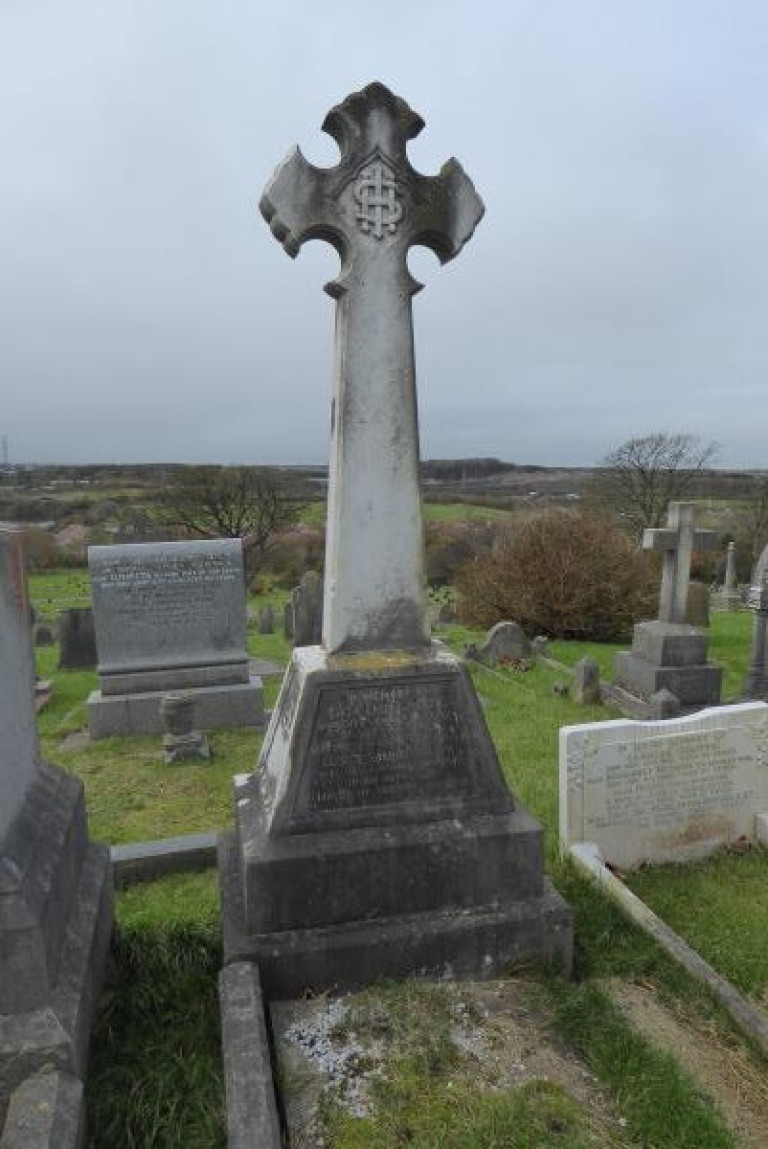
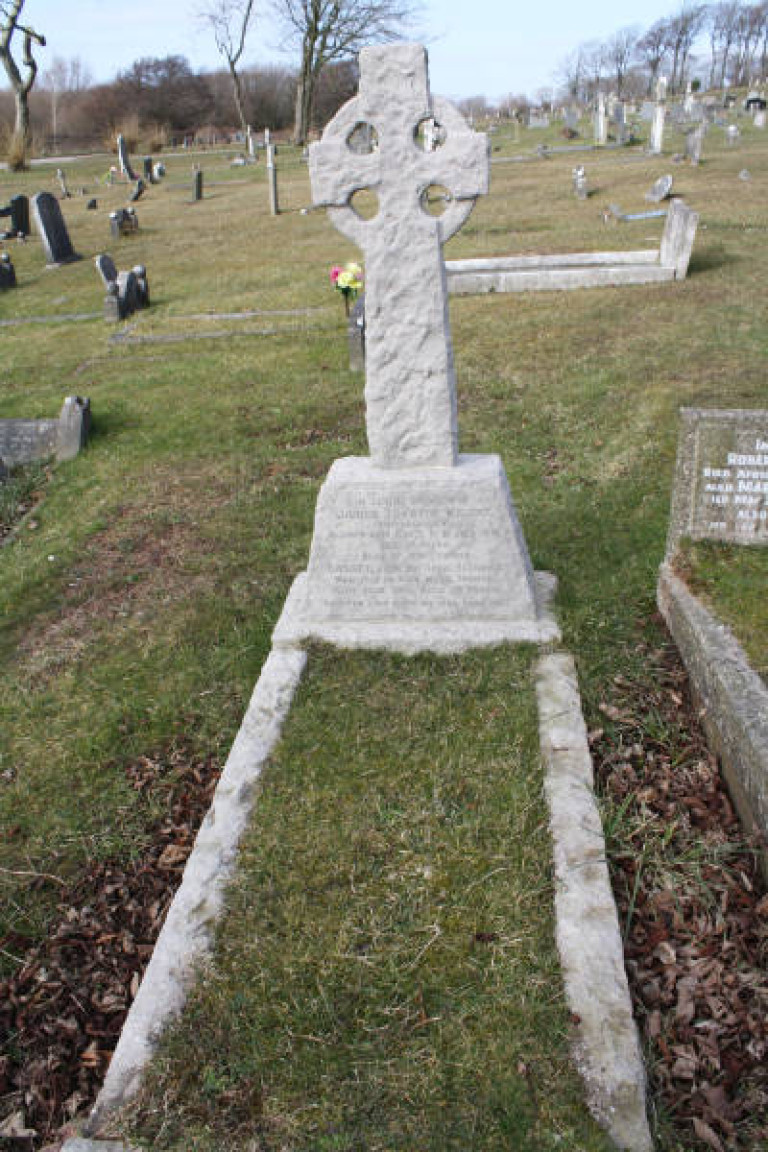
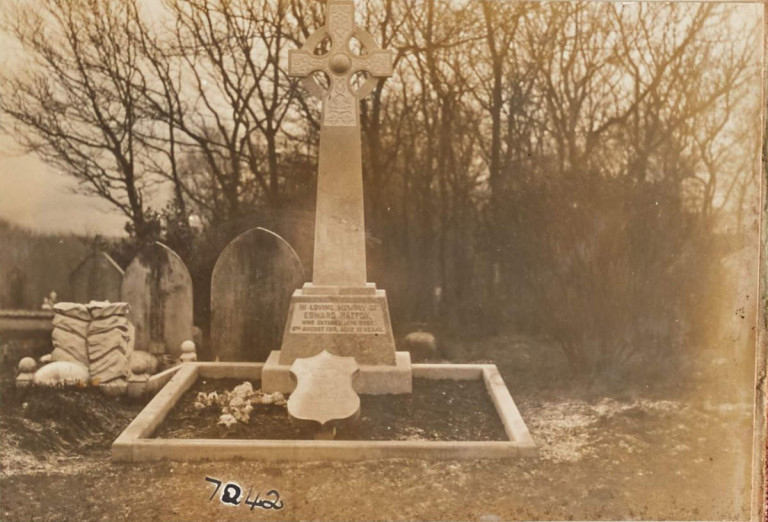
Robert Bradshaw Hankey
Killed 1st Feb 1894 @ Askam Ironworks

IN LOVING MEMORY OF
ROBERT BRADSHAW
SON OF JOHN AND BARBARA HANKEY
WHO WAS KILLED AT THE ASKAM IRONWORKS
FEB 1ST 1894, AGED 19 YEARS
ALSO THE ABOVE JOHN HANKEY
WHO DIED DEC 11TH 1874
AGED 40 YEARS
AND WILLIAM BRADSHAW, THEIR SON
WHO DIED NOV 23RD 1871
AGED 10 MONTHS
ALSO PATTISON SON OF
WILLIAM AND BARBARA PENNINGTON
WHO DIED JAN 8TH 1883
AGED 3 YEARS
ALSO THOMAS TEBAY
WHO DIED AT JOHANNESBURG
SOUTH AFRICA
JUNE 4TH 1894, AGED 31 YEARS
ALSO THE ABOVE WILLIAM PENNINGTON
WHO DIED AT KIMBERLEY, SOUTH AFRICA
JUNE 6TH 1903, AGED 61 YEARS
ALSO THE ABOVE BARBARA PENNINGTON
WHO DIED NOV 4TH 1916, AGED 80 YEARS
AT LAST, “REST”
William Pennington married Barbara Hankey in 1879. There is no record of her earlier marriage to John Hankey, which must have taken place elsewhere. Registered births:
- 1869 Isabella
- 1871 William Bradshaw
- 1872 Fanny
- 1874 Robert Bradshaw
- 1877 Mabel Pennington (Hankey)
- 1879 Pattinson Joseph (Hankey). These last two must be William’s children, born before they married.
From Barrow News 3 Feb 1894:
SINGULAR FATALITY AT THE ASKAM IRONWORKS
On Thursday night a strange accident occurred at the Askam Ironworks, whereby Robert Bradshaw Hankey, aged 20 years, living at Ireleth, met an untimely end. Between seven and eight o’clock he was talking to some of the men at the works, and left them in order to attend to his duties in one of the boxed bays of iron ore, which are emptied into the barrows by means of shoots. (i.e. shutes) Nothing more was seen or heard of him till half-past ten o’clock, when a man found that Hankey’s arm was protruding through one of the shoots. On examination it was found that the poor young fellow was quite dead, the body being cold. The body was conveyed to his home. No particulars can be got as to how the accident occurred. Deceased was a member and player in the Askam Football Club, and had occasionally been included in the first team. He was one of the picked fifteen to play against Carnforth to-day (Saturday). Much sympathy is felt in the district for the bereaved relatives.
Another account says:- Hankey was working on the night shift, and was seen at 4.45 by Frederick Sirrett, foreman. The deceased was then at his usual employment on the gangtries, (sic) and it is conjectured that in running down the shoot the metal had stuck, and, with the intention of loosening it he had got a crow bar. Whilst using this he must have overbalanced himself and fallen into the box and dropped a distance of nearly 50 feet, landing at the bottom head first. He was quite dead when found.
An inquest will be held this morning.
On 6 Feb the News recorded:
A SAD FATALITY AT THE ASKAM IRON WORKS
THE INQUEST
A QUESTION OF DANGEROUS EMPLOYMENTAn inquest on the body of Robert Bradshaw Hankey was held at the Bay Horse Inn, Ireleth, on Saturday morning, before Mr. Coroner Poole, and a jury of whom Mr. John Noble was foreman. A plan of the workings was produced and explained to the Coroner and jury. – William Buxton said he lived at 47, Sharp-street, Askam, and was a mine filler at the Iron Works. He knew the deceased quite well, who was employed as a lime stone breaker, and also to see that the ore was running properly down the shoot. He lived at Ireleth Brow, and was 19 years of age last birthday. He last saw him alive on Thursday morning. Deceased would go to work again at five o’clock, being on twelve hour shifts. The deceased had worked there about two years. The ore goes to the top of a landing in wagons, and were (sic) tipped during the day into the shoot or boxes. The box at the top was 24 feet wide, there being four outlets, from which the barrows below were filled, and the ore was carried from there to the furnace hoist. The depth of the box was from 24 to 25 feet, and it was part of the duty of the deceased to see that the ore went down during the night and did not stick. If it stuck he had a pick. There was a ladder from the top to the bottom of the short. By a Juror: - The deceased would stand on the ore when using the pick. There was no room for a plank. By the Coroner: - He had a pick to loosen the ore with. The barrows were filled from the bottom of the shoot, and an ordinary barrow load would be about 10 cwt. The barrow was filled by means of a lever. The boxes were put up about four years ago. – By a Juror: - The ore often stuck when damp. They worked all the holes in both boxes regularly. – The Coroner: - It appears to me that it is a very dangerous thing for a man to stand on the ore when shuffling it down. – A Juror: - That is my opinion. – Witness admitted that it was dangerous to stand on the ore when the top was not full. He could go there and nothing like that would happen to him. – The Foreman: - It appears to have been a death trap in this case. – Witness said he had often gone into the box to get the stuff down. – By a Juror: - Sometimes they probed the hole from the bottom with a bar. The ore perhaps might have a slip, and the man might get fast with it. He did not know whether those were the circumstances in this case or not. – Witness (continuing) said he found the deceased about half-past 10 o’clock on Thursday night when he went to the shoot for ore. There was only a small quantity of ore in the bottom of the shoot, and he probed the hole with a bar and touched something. William Whiteside struck a match, and they looked up the hole and saw the deceased’s hand. He was head foremost. He was got out, and was quite dead. He should have gone to work at 5 o’clock. – By a Juror: - The men on the previous shift had missed Hankey. – By the Coroner: He had not known of anyone being fast in this box. He had heard of Wm. Smith being fast in another box, and he was pulled out with ropes. Smith was an old man and could not get out, but a young fellow would have crawled out like a cat. That did not occur in witness’ shift. – Thomas Proctor said he lived at Steel-street, and was a charger at the Askam Iron Works. He went to work at half past nine, and shortly afterwards heard a remark passed that the men on the afternoon shift had not seen the deceased since half-past seven. They had shouted and got no answer. Thomas Hutchinson told him that they heard some knocking close to the box, and thought it was deceased, but they afterwards found out it was the weighman. – Frederick Sirett (sic) stated that he lived at 55, Sharp-street, and had been furnace foreman for about two and a half years. During that time these shoots had been used for about two years for ore, and previous to that for limestone. The deceased was the limestone breaker, and if the shoots did not work properly he attended to them. When the ore got low and the weight was off the ore did not run so very well, and deceased would have to go inside to start it off again, generally using a pick. If the ore was not too low the deceased would get on to the beams, and if it was low he had a ladder to go to it. If the hole was full the deceased would stand on top of the ore. He did not considered (sic) that a very dangerous thing to do. – The Foreman: It seems a very dangerous proceeding. – The Coroner: If the man got hold of the beams with one hand he could not take a pick very well with the other. It would take both hands. Is it an ordinary method of doing work at iron works? There is no other way of doing it. I don’t know whether these shoots are used at other works. They are used at Millom, but the depôts are not so high as ours. There have been no accidents here to my knowledge. I have never heard of Smith being fast. Hankey never complained to me of any danger. – By a Juror: - It was a common occurrence when the ore was damp for it to stick fast. – By the Coroner: - Witness went to work at five o’clock, and he saw nothing of the deceased before he went to his supper at 9.30. – By the Foreman: No search was made. If any men are short at the works it would be the deceased’s duty to look after extra men, and they thought he was attending to that. – By a juror: - There was no man on the top with him, but if he required assistance he could get it. – By the Coroner: - Deceased had no special direction for the work. – Mrs. Margaret Pennington said she lived at Sea View, Ireleth. The deceased was her son. He has complained about the place he worked in, and had said many a time that it was not fit to work in and that someone would be killed. She could not say whether he had complained to anyone over him or not. – By the Foreman: - A fortnight or three weeks ago he complained of an accident by which he was stunned. By a Juror: - He came home with the skin off his shins. She told him to be careful, and he replied that she would not say that if she knew the place he had to work in. He said that he had complained to a man named Sirett. Deceased went to work about five o’clock on Thursday, and she never saw him alive again. The deceased’s face is scratched. – Sirett (recalled), in answer to the Coroner, said the deceased had never complained to him about the place being dangerous. He may have complained to Mr. Bumby. – He told his mother that he had complained to you? Not on any occasion had he complained to me. – Mrs. Pennington: I think he will have. – The Coroner said he had formed an opinion in this case, but perhaps the jury would like further evidence before they gave a verdict. He thought Smith should be called. [It was stated that Smith was ill.] Several of the jury said they had been very little enlightened as to the nature of the work, and the inquiry was adjourned to Wednesday next at 3.15, when the coroner and jury will inspect the place where the accident occurred*.
* No paragraphs in original; Sirett spelt with one r and two; coroner and jury capitalised and not in original.
On Saturday 10th February 1894, the News repeated all of the above, and went on:
ADJOURNED INQUEST
A JURY ON PROPER PROTECTION FOR WORKMEN
The adjourned inquest into the circumstances attending the extraordinary death of Robert Bradshaw Hankey was held at the Vulcan Hotel, Askam, on Wednesday afternoon, the inquiry lasting two hours. Prior to the inquest, the Coroner (Mr. John Poole) and the jury visited the scene of the accident. Mr. S. Hart Jackson, solicitor, Ulverston, appeared on behalf of the Askam and Mouzell Iron Company, and Mr. R. F. Thompson, solicitor, of Kendal, represented the relatives of the deceased. Mr. J. Law, factory inspector, Preston, was also present. – Wm. Buxton was the first witness called into the room, and in answer to the Coroner he said that he was told that the deceased’s pick was found after the accident. – By Mr. Thompson: - He had known the deceased five or six years. He was a very steady young fellow and pretty well respected. Smith was pulled out of the box by means of a rope. Witness could have got out without the aid of a rope. He was in the box on one occasion when a man got his foot fast. That was before Mr. Bumby came. Witness did not know that Hankey had got fast previous to the occasion when he met his death. Witness knew a man called Benjamin, and had heard that Benjamin got fast last Sunday morning. Could not say whether he was got out with the aid of ropes. The sides of the shoot for some distance were perpendicular. The ore, when wet, sometimes stuck. There was no clay in the ore. He had worked at the ironworks 10 or 11 years, and was there before these particular shoots were used. He knew they had been used for limestone. He did not know that when the shoots were made that there were ropes connected with them. He had, however, seen ropes in the boxes, but he did not think there was a rope when Hankey met with his death. There was a rope alongside the ladder, so that the men could get hold of it when going down the ladder. – By Mr. Jackson: The rope hung by the side of the ladder so that the men could steady themselves when going up or down. He did not know whether it had been used for any other purpose. Witness went on to the top after Hankey had been discovered, and the ore was pretty near to the top of the box. There was a hole in the centre. There was a good light. – Frederick Sirett (cross-examined by Mr. Thompson) said he had been in the employ of the company nearly 12 years. He admitted that the shoots were used for limestone at first. There had been no difficulty on his shift, except one. He knew a man named Smith, but he was not on his shift. He had never heard before this job occurred that Smith was nearly smothered in the box. He never heard that Hankey was almost smothered in this box in the summer of 1893. It was not true. He had heard of Benjamin being fast last Sunday morning, but no ropes were used to get him out. He asked Benjamin how it occurred, and he replied that he had only got one foot fast. Witness saw him in the box with another man. Some of the ore was sticky when wet, and was bad to get away if the sides were fast. When it was fast a pick or a bar were needed. There was a bar at the top as well as at the bottom. He would swear that the unfortunate young fellow never complained to him under any circumstances about the dangerous condition of the place. He never asked witness to stop with him at night. At Xmas time when they were short of coke he had extra men at the depôt, but the deceased had never said that he was afraid, and that he wished witness would be about when he was at this dangerous work. Such a remark was never made by the deceased to witness. Witness knew that ropes were used in the boxes when they were first worked, but the men said the ropes were no good. The deceased did not say so to anyone to his knowledge. He was not working there then. He would swear that the deceased never asked for ropes. There was no rope there when deceased met with his lamentable death. There were no iron bars (illegible) the boxes. They were perfectly open except where the ore was. He had not seen boxes of this description at other works. He had had no experience in regard to these boxes. There was formerly wood beams in the boxes at the Askam works, but the weight of the ore broke them down. He had never heard that iron barriers were placed across similar boxes as a protection. – Some disagreement took place as in a previous answer to a question, which led Mr. Thompson to say: Now be cautious what you are about. Will you swear on your solemn oath that this poor young fellow never asked you for ropes as a protection? I could not swear to it right down like that. – I must have an answer. Let’s have no play about it. It’s a serious matter, and I warn you. Will you swear that he never asked you for ropes as a protection for himself? He never asked me that I am aware of. – Who did he ask? I don’t know. – Do you swear he did not ask you? Yes. – Then didn’t you know that he was very frightened after he met with that first difficulty? The first difficulty was on the bottom. – Will you swear that he did not say that he was frightened? Yes. – Didn’t you know he told his mother that he wanted protection there? No. – Didn’t he tell you that his mother had asked him to be very particular, and to ask you for protection? No. By Mr. Jackson: Deceased had never told witness that he was frightened of his work. Witness went to the top of the bay after the accident happened. The ore was within 18 inches of the top of the bay with a hole down the centre of the shoot. The lid of the trap door was on. A man could not use the ladder when the ore was within 18 inches of the top at the sides, nor would a rope be of any use then. When Benjamin shouted that he was fast the boxes were half empty. He had never heard of anyone complain of danger when in these boxes, and he had not made any complaint to his employers that the work was dangerous. – The Foreman: You say Benjamin had one foot fast? Yes. – If another barrowful of ore was taken away, was there anything to prevent Benjamin going in? No. By a Juror: He could not say for what reason the wood beam was put in. – By Mr. Law: It was a common occurrence for the men to draw the ore at the time when other men were in the hopper. – By Mr. Thompson: Supposing the ore was being regularly taken away a rope would be of use as the ore got lower. No important questions were put to Thomas Proctor – Henry Bumby, examined by Mr. Jackson, said he was the manager at the Askam works. He would have been at the inquest on Saturday had he not been called away to London. He had been manager of the works since the end of July, 1892. He then found Hankey employed as a miscellaneous labourer at the “back”. His work was to break limestone, and to loosen the ore in the boxes when necessary, and do any other work required of him. He did his work satisfactorily. The men wheeled the ore from the bottom of the bay, and when the ore stuck Hankey had to go on to the top to loosen it when the men could not probe it from below. He was on the works on Thursday evening up to 8.15, and he returned when he heard of the accident. He found when he got there at ten minutes to eleven that the body of Hankey had been taken out. As soon as he ascertained that Hankey was dead he went on to the top to see how the accident had occurred. He found Hankey’s torchlamp hanging from a crowbar which had been placed across the rails. The stage itself was lit by electric light. The electric light was outside of the bay, the torchlight being for lighting up the bay. At the two sides of the bay the ore was within two feet of the top. There was not the slightest necessity for a man to get into the box with the ore as it stood. The ladder goes to the beam. With the ore as it was in the box the ladder would not have been of any use. When the ore was low the men went down the ladder. They had to get on top of the ore when it was very low, but only when it was low. A man was then liable to catch his feet if he was not careful. He had never heard of a fatal or a serious accident in these places before. He had been eighteen or twenty years connected with the work. There were similar bays used at the Millom works, at Cleveland on the East Coast, and South Wales, with slight differences according to the works. There were similar bays at the largest mines in this district, and he had never heard of a serious accident in any of these bays. He heard about a man being fast in the bay last Sunday. There had been no complaint to him that the work was at all dangerous. – The Coroner stated that the bays at the mines were nothing like those at the Ironworks. – In answer to the Coroner, Mr. Bumby said that on Thursday the last ore would be put in at five o’clock, and the men would be drawing continuously. – Mr. Thompson: You say this poor young fellow had no right in the box? - There was no necessity at that time. – And yet with the same breath you say it was necessary when the ore was low? Yes. At some time or other it would be necessary. – How many difficulties have you had with these unfortunate holes or boxes? None whatever. Have you not heard of any man getting fast? I heard today that a man named Smith got his foot fast. - Did you hear that the deceased only just escaped being smothered last summer? I never heard of such a thing. – Can’t you rub your memory up a bit. Do you recollect the deceased being fast? – I have no recollection of any serious difficulty. – I am not asking about any serious difficulty, but about any difficulty. Have you any knowledge of the deceased having any difficulty in this box? No. – Have you ever been asked for ropes? – Never. – Have you ever been asked for anything to give protection in this place? None whatever. If anything had been asked for it would have been given immediately. – Were there any ropes in this box when you first came to the works? No. I have never heard of them except in this room today. – Have you seen any of the boxes at the other mines? I have not paid special attention to them. – Round such dangerous place as these, have you ever noticed iron breakers being put across? I don’t remember ever seeing such a thing in the boxes. I have known it done in open bays. – Don’t you think it would be a good thing? I am afraid not for our ores. – Would it not afford a twofold condition, firstly to break the ore, and secondly to give a little protection to any man who had to get the ore down such a dangerous place? I don’t think it would give any protection. It would break the ore to a certain extent. – Do you think it a proper thing to have iron girders for protection? It would stop the ore running. – Life is of more value than the ore running. Would iron girders afford any protection in this dangerous employment? I don’t know that the work is dangerous. I don’t see how any girder could be put up and be of use here. – When the ore went down the middle was there a Y shaped chasm? Yes. And had the men to work in this chasm? There was no necessity for it. Have you heard about Benjamin having to be pulled out with ropes? No. I heard to the contrary. – Don’t you think, as a practical man, that it would have been better if two men had worked together at this dangerous place? There was no work for two men, even if the place was dangerous. – I know trade is not so good as it was, and you want to be careful, but would it not have been better if you had two men instead of one man while such dangerous occupation was going on? It’s a simple question, but perhaps a poser. There was not work for more than one man. – I am not asking you that. Would it not be better to have two men here? Two men together would have been safer, possibly, if we had any reason to suspect danger. – You had notice of Smith being in danger? He was not in danger. – I believe the deceased was steady, industrious and intelligent? Moderately intelligent. – You considered him intelligent enough to be put on a job like this? Yes. – Didn’t you conclude long before this accident happened that some provisions should be made for protection? The only thing I thought necessary was to have a steady man there. – And if the deceased had not been a steady man would it have been necessary to have more protection? I should not have allowed an unsteady man to go there. – Then you consider the place dangerous? Not the place where he worked, but the place he had to go up. – I want to localise you to the hole where the ore went down. Would you have allowed an unsteady man to work there? No. Do you wish us to understand that you apprehended danger to an unsteady man? I refer to the place where the man had to pass in order to go to his work. – You considered the risk was too great? No, not until now, when I find there has been an accident. – What do you propose to do now? – The Coroner: This is not a question for the witness. He will have to consult his employers. – Mr. Thompson: You consider it a matter that wants looking into? – Witness: I think there wants some rules for the guidance of the men. – And that you can do? I shall have to try. – By the Foreman: I don’t remember any men called Huck or Nibbs being fast. – By a Juror: There should be a considerable space between the shoot and the ore at 11 o’clock on Thursday night. - William Smith said he lived at 23, Furnace-place, Askam, and had worked at the Iron Works about 26 years. For the last two or three years he had broken limestone, and had gone into the ore box the same as the deceased. He got fast in one about twelve months ago, and he was pulled out with ropes. About two months ago he had another fall. He was going to get the ore down when he slipped, and, fortunately, threw himself forward on to the ore, instead of going head foremost into the box. When the ore was damp it got fast on to the plates and it had to be got down with a pick. There were ropes there up to five or six months ago. There was one in each bay, but the metal had cut it through. The deceased complained about it being dangerous when he got fast last summer. He never heard him complain to anyone in authority. – Mr. Thompson: The deceased told you he was fast last summer? Yes. – Did he complain it was a dangerous place? Yes, and he cautioned me. – You had two escapes? Yes. – And ropes were used on one occasion to get you out? Yes. – How did you get out the other time? I got out myself. – There were no ropes when Hankey met with his death? No. – No protection of any sort? No. – Nothing to lay hold of in case of an emergency? No. – Don’t you think it would be better to have two men working there instead of one to protect each other? Yes, it would be a great deal better. – So as to give an alarm if anything happened? Yes. – Have you heard of William Huck being fixed up in this place? Yes. – And of Nibbs? No. – About Benjamin? Yes. – Sirrett (recalled): The Coroner: The last witness has said there were ropes in this place up to 5 or 6 months ago? I know nothing about them. – You had charge of this place, and it is curious you did not know there (sic) were there. Did you ever see any ropes there? Yes, in the bottom of the bay. – How long ago? Six months or more perhaps. – The Coroner: You did not tell me that before? Mr. Ward had ladders put in instead of ropes. – The Coroner summed up lengthily, and said there must be considerable danger if a man was on top of the ore when men were using their bars at the bottom of the shoots. It seemed an exceedingly risky thing for a man to do. For instance, at a quarry when the men had to bar down the stone they had a rope attached to their body, and were lowered from the top. When he first gave his evidence Sirrett said that he never knew of any ropes being in this box, but it appeared that formerly there were ropes, but a ladder had been substituted. When the men go into the box they had to go across the ore, and then the ladder was no protection whatever, and he doubted whether a rope fastened to the ladder would be any protection. If there was a rope it should be used from the top. Sirrett and Mr. Bumby had denied that any complaint had been made to them, and he believed what Mr. Bumby had said, but whether Sirrett’s statement was true or not was a matter for the jury. So far as this accident was concerned, there was no criminal liability on the company at all, but as to whether there was any civil liability on the question of damages it was a matter between the two solicitors present. The jury would be fully justified, he thought, in recommending that some better protection should be adopted by the company to prevent any like accidents in the future, leaving the company to adopt any such means as they think proper. It was not for them to advise the company as to what measures they should take if they concurred that any measures were necessary for better protection of the men. – The jury, after private consultation, brought in a verdict of ‘Accidentally smothered’, and added the following rider: “That we are of the opinion that proper precautions had not been taken by the company for the protection of the men working at this place, and we recommend that this rider be brought to the notice of the company, who should take such steps as they may find necessary to prevent any like accident in the future.”
Today, the idea that the company had not taken ‘proper precautions’ would seem to make them liable. Thank goodness for modern Health & Safety laws.