Ernest Alfred Hawtin
Died at the Askam Prophyry Quarries
Ernest Alfred Hawlin died 15 January 1901 aged 25 (of 15 Dalton Road, Askam) after an accident at the Askam Prophyry Quarries. The term "porphyry" is used today to describe a particular texture in igneous rocks. The reference here must refer to an older usage which as much looser and seems to have been applied to just about any igneous rock. [Source]
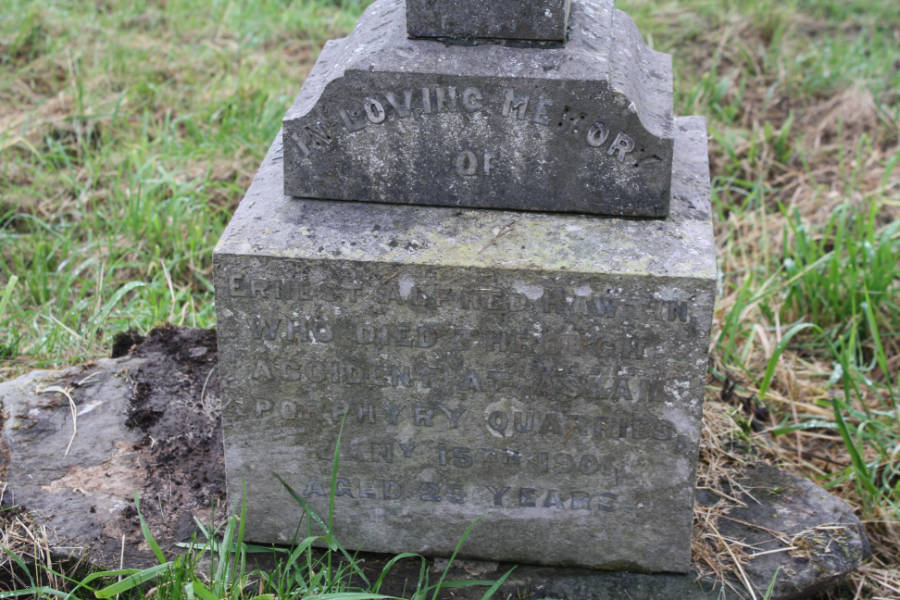
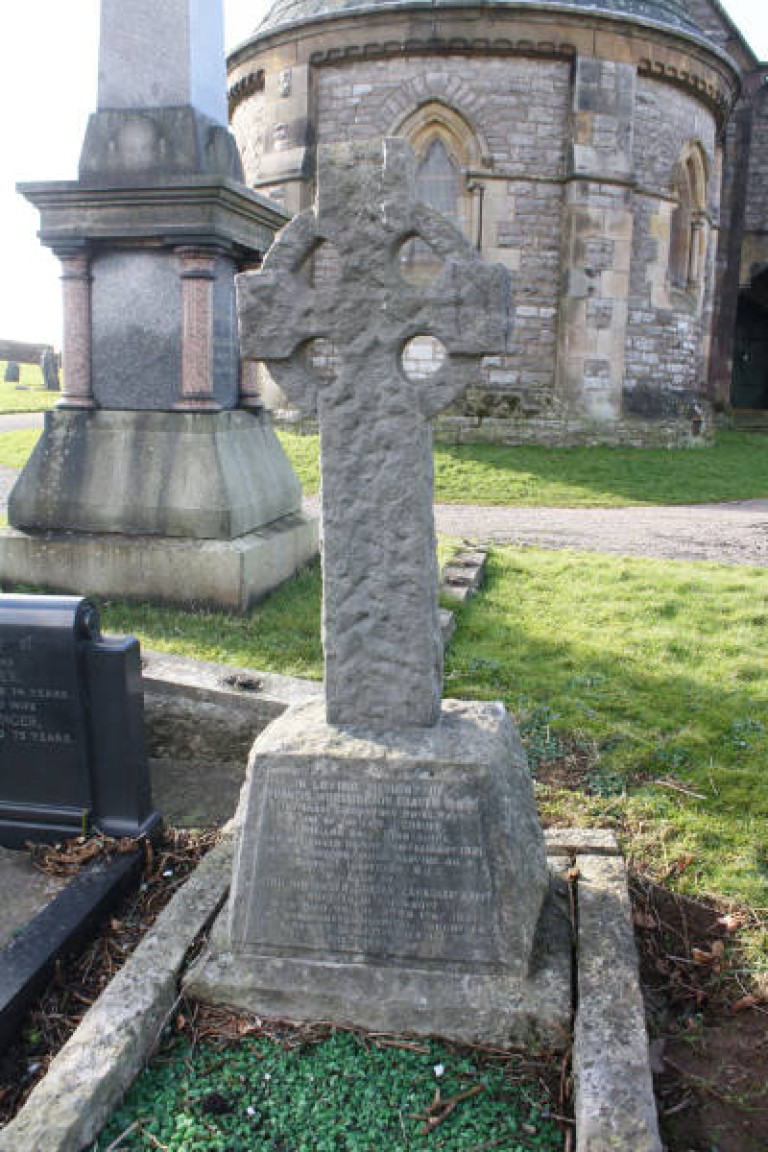
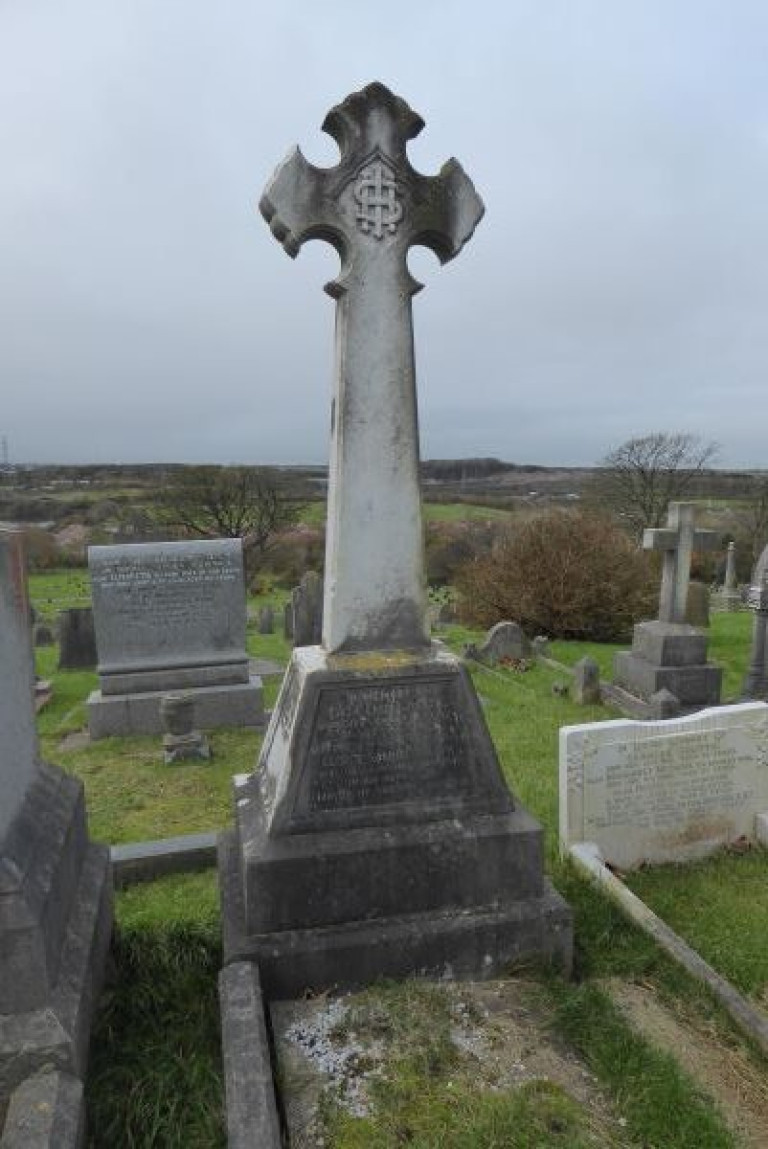
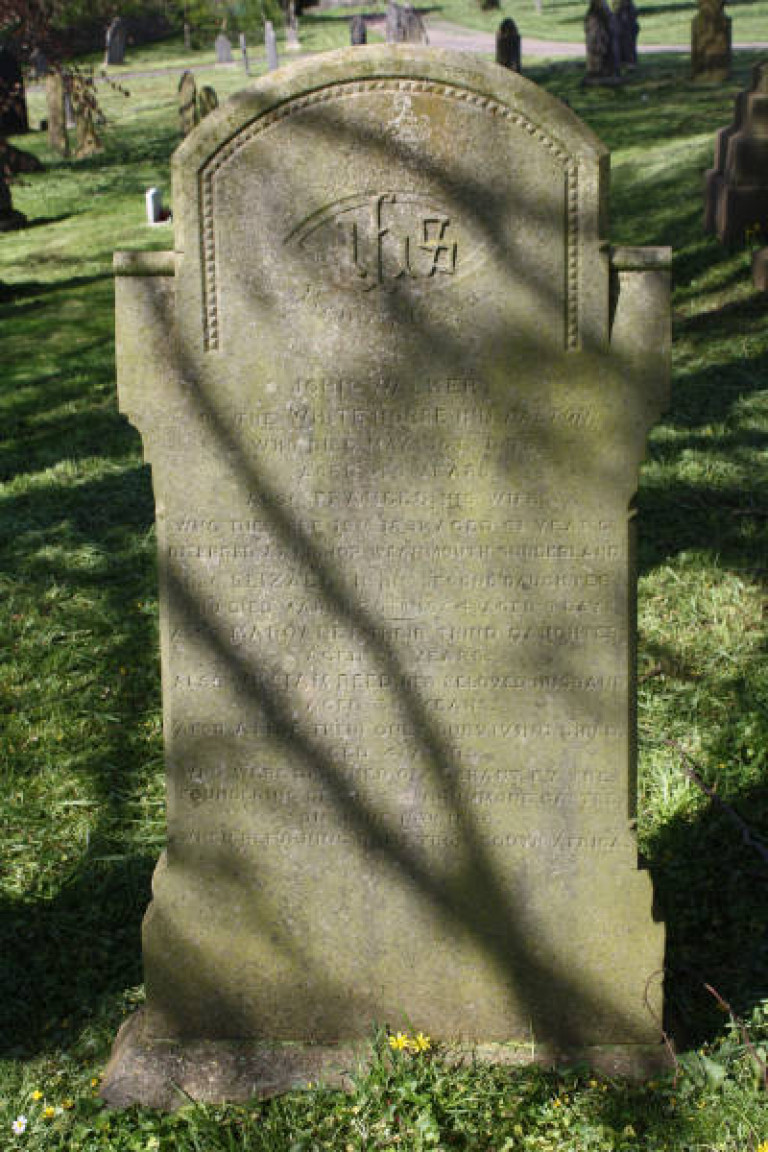
IN LOVING MEMORY OF
ERNEST ALFRED HAWTIN
WHO DIED THROUGH ACCIDENT AT ASKAM PROPHYRY QUARRIES
JANY 15TH 1901
AGED 25 YEARS
Family background: In 1891 he was living with his parents Thomas and Ellen Hawtin. His father was Superintendent of Police in Oxford and Ernest was a solicitor’s clerk at 15 years old. [Source]
Alfred Ernest (sic) Hawtin married Sarah Ormand in 1899 @ St Peter's, Ireleth, and in 1900 they had a son, Leslie. A Leslie P. Hawtin married Dorothy E. Blunsdon at St John's, Barrow in 1937. This may not be the same Leslie. [Source]
The Barrow News 19 January 1901 reported:
Barrow News, 19 January 1901SHOCKING FATALITY AT THE GREENSCOE QUARRIES
BROTHER OF MANAGER KILLED
A shocking fatality occurred at the Greenscoe Quarries, which are worked by the Askam Porphyry Quarry Company, on Tuesday, the timekeeper, Ernest Alfred Hawtin, aged 25 years, of Dalton-road, Askam, losing his life. Deceased, who was the brother of the manager of the quarries, Mr. Hawtin, of Ireleth-road, Askam, had worked at the place for some years. On Tuesday, he was in the act of putting some labels on to the wagons when the train was started. Hawtin was knocked down, and, it is supposed, was injured internally. He was immediately attended to, and the Dalton Ambulance was telephoned for, with a view of removing him to the Barrow Hospital. When the ambulance got as far as Dalton, however, the injured man succumbed. He leaves a widow and one child. Very deep sympathy has been shown to the young widow.
--------------------
THE INQUESTAn inquest was held at the Railway Hotel, Askam, on Wednesday, before Mr. Coroner Poole, and a jury, of whom (sic) Mr. Thomas Ware, was the foreman. Mr. N.E. Barnes, solicitor, represented the Askam Porphyry Quarry Co, Ltd., and Mr. Chapman, solicitor, was present as the managing director of the company. Mr. Jas. Ashworth, of Dalton, represented the Askam and Mouzell Iron Company. Mr. W. Leck, one of H.M. Inspectors of Mines, was also present.
The first witness called was Mr. Arthur William Hawtin, who said the deceased was his brother, and was 25 years of age, and resided at 15, Dalton-road, Askam, and was employed as a timekeeper at the quarry owned by the Askam Porphyry Quarry Company, Ltd. Witness knew nothing as to how the accident happened, but he accompanied deceased as far as Dalton in the ambulance. He was present when his brother died.
William Young said he attended the engines for the company. He saw the deceased the previous day between three and four o’clock. He was in the act of putting a label on a wagon. There were five full wagons on the line at the time. They were on the centre line. There were five empty wagons on the “back” road, and one containing sand. The engine came down from the Mouzell Mines to take the full wagons out of the quarry. When the empty wagons were being pushed back, he heard deceased shout, and on looking round witness saw he was fast between the buffers of two wagons. The engine driver could not take out the full wagons without pushing the empty ones back. Witness did not see the engine on the “back” road, as he was trimming a wagon at the time. Deceased was caught between an empty wagon and a wagon containing sand. The wagon with the sand was the last one on the road. Witness went to the deceased who fell on the ground after the impact. Witness gave the engine driver a signal that the deceased was caught. Deceased could not speak. A doctor was sent for, and subsequently deceased was put into the ambulance.
By Mr. Leck: He had not noticed that the wagons were foul of the crossing. He did not hear the engine whistle just before the accident. Only two or three seconds would elapse between the time witness saw deceased ticket the wagon and when he saw him between the buffers. The wagons before the accident were about nine feet apart. The space was opposite to the place where witness saw the deceased nailing a ticket on to a wagon. Witness knew no reason for the deceased going on to the back line. The buffers caught the deceased about the abdomen. He was conscious after the accident.
By Mr. Barnes: I think the deceased was accustomed to go between wagons to examine them, and ticket them before they went out.
By the Foreman: The engine was pushing the empties against one full wagon.
By the Coroner: I could not say whether they were pushed up sharp or not.
Mr. Leck explained the plan produced.
William Twiname, an engine driver employed by the Millom and Askam Hematite Company, said that company worked traffic from this quarry. On Tuesday, about 3.20, he was sent for, to take the loaded wagons out of the quarry and replace them with empties. They came down from Mouzell and hooked off the three wagons they had brought down, and then had to go and push the five empties on the back road, so that they could set the five full ones on to the straight line. His fireman, David Twiname, signalled to him to shunt back, and he did so in the ordinary way. Then he heard the last witness call out that a man was hurt. Two wagons were not pushed back very hard, for they had to push them only five yards. Against a full wagon the impact would be a hard one. He saw the deceased as he came down from Mouzell. He brought the empties down in the morning, and by the orders of the deceased, the five wagons were put into the back road. Deceased knew the wagons would have to be moved in order that the full wagons could be taken out.
By Mr. Leck: He put the empties in at 10 o’clock in the morning. The wagons had been set (??) down subsequently. That was the usual way when the crossing was foul. He had done the same thing before.
By the Coroner: It is not a thing that often happens.
By Mr. Leck: My mate was standing three wagons from the engine. I did not whistle before moving, because I was up to the wagons before I received the signal.
Mr. Barnes: Did you give any instructions to the men connected with the quarry as to what you intended doing? – No, sir. They stopped me with the red flag.
Mr. Leck: What does that mean? – It meant that I had to stop to take out those wagons.
Mr. Barnes: You were pushing them clear of the crossing in order to take the others out? – Yes.
You did not whistle to warn anyone who might be standing in the back road? – No, sir, because a person had no right to be on the back road. I whistled as I was coming over the back road points.
By the Foreman: The fireman gave me the signal. I take no notice of the workmen’s signals.
David Twiname said the last witness was his father. On the previous day he signalled to his father to shove the empty wagons up. He did not see the deceased at that time; but he saw him previously come out of the smithy with a wagon label and a hammer. Deceased would know that when wagons were foul of the crossing they would have to be shoved up.
Mr. Barnes: Did you look round before you gave your father the signal? – Yes; I saw the six-foot way was clear. Did you see whether the back road was clear, or take any steps to ascertain if it was clear? – Nobody should be on the back road.
But surely it was your duty to see that the back road was clear before you gave your father the signal to start his engine. You are responsible for your father moving the engine. Did you take any steps to see the road was clear? – I saw that everything was clear.
What do you mean by saying that everything was clear? – I was against the first wagon, and I looked up the line to see that all was clear, and then I waved to my father to come on.
Did you hear the engine whistle as it was going over the crossing? – I don’t remember hearing it; but my father always does whistle when going over a crossing.
By a juror: I was five wagon lengths away from the deceased when he was caught by the buffers. He had labelled the wagons.
The Coroner: The deceased had labelled the wagons, and had evidently gone there out of the way, as he thought.
Thomas Corris said he worked at the Greenscoe Quarry. He saw the deceased just after the accident. Witness asked him the accident had happened, and if he was caught between the wagon and the wall. He said, “No; I was coming out.” That was all he said. Witness understood him to mean that he was coming out from between the wagons.
The Coroner: Is it usual for empty wagons to be foul of the points? – It depends how many wagons are in.But supposing they were foul of the points? – If he wants his full ones out, he would have to shove the empties up.
How often does that occur? – Very seldom. Once a week at the most.
Did the deceased know those empties were foul of the points? – I think the deceased must have known that the empties would have to be shoved up before the full wagons could be got out.
Did the deceased generally label the wagons? – No, it was generally done by his brother, the works’ manager, but the latter was away, and the duty fell on the deceased.
Did you see those empty wagons pushed up? – Yes.
Was it in the ordinary way and with the ordinary speed? – Yes.
Did the wagons go up very fast? – No, but I could not state the rate of speed. The wagons had not far to go. By Mr. Barnes: I do not remember hearing the engine whistle as it came across the points.
Mr. Hawtin said his brother might not have known the wagons were foul of the points at this time. He took the work at very short notice.
The Coroner, in summing up, said the jury had had all the evidence necessary placed before them, and some of them knew more about shunting wagons than he did. It seemed, on this occasion, the deceased had, unfortunately, taken his brother’s place at practically a moment’s notice. What he (the coroner) wanted to get to know particularly was whether the deceased knew that those wagons were foul of the points, and that it would be necessary to shunt them back. He thought the evidence clearly proved that the deceased was well-acquainted with the working, and he must have known those empties had to be pushed back before the full ones could be taken out. It appeared the work was left practically and entirely to the Mouzell Company, and that this shunting was done in the ordinary way, the stoker seeing that there was no obstruction on the six foot. Corris told them it was done in the usual way, and with the usual speed. It appeared the deceased was in a hurry to get the last wagon labelled, and inadvertently stepped between the last empty wagon and the wagon that was loaded with sand. He was caught between the buffers, and received injuries from which he died. So far as he (the coroner) could see, there was no blame attached to anyone in the matter, and consequently, the jury would find a verdict in accordance with the evidence.
The jury returned a verdict of “Accidental death.”
Mr. Barnes said, on behalf of the Askam Porphyry Quarry Company, Limited, he had to express their deep sympathy with the young widow in her most terrible bereavement.
A note about the Porphyry Company:
From the London Gazette:
NOTICE is hereby given, that the Partnership heretofore subsisting between us the undersigned, William Alexander Mackinnon and Joseph Rawlinson, carrying on business as Quarry Proprietors, at the Greenscoe Porphyry Quarry, near Askam-in-Furness, and at 14, Union-street, Ulverston, in the county of Lancaster, formerly under the style or firm of Joseph Rawlinson and Co., and lately under the style or firm of the Askam Porphyry Quarry Co., has been dis-solved as and from the 13th day of June, 1894. All debts due to and owing by the said late firm will be received and paid by the said William Alexander Mackinnon.—Dated this 18th day of June, 1894.
W. A. MACKINNON.
JOSEPH RAWLINSON. [Source: London Gazette July 3rd 1894]