Died
30th October 1918
Sources
Place
Themes
John James Nicholls
Second-Lieut.
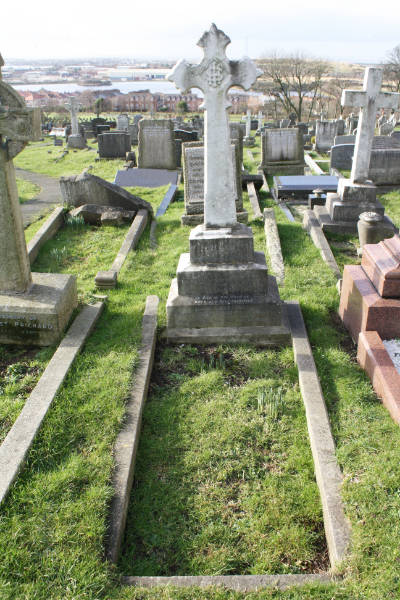
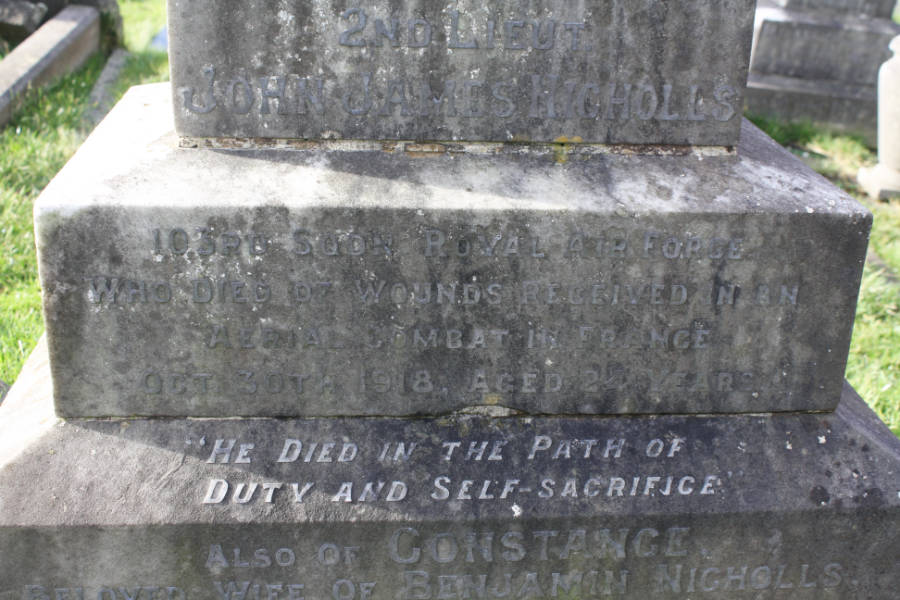
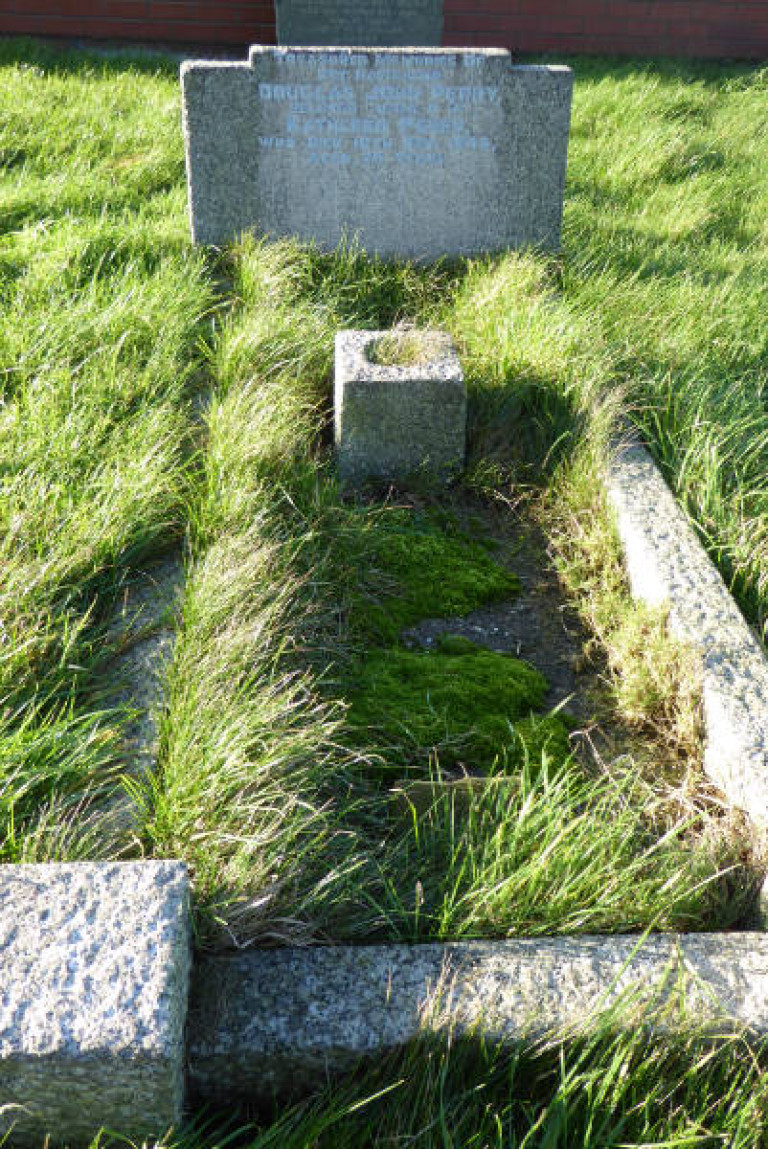
2ND LIEUT
JOHN JAMES NICHOLLS
103RD SQUADRON ROYAL AIR FORCE WHO DIED OF WOUNDS RECEIVED IN AN AERIAL COMBAT IN FRANCE
OCT 30TH 1918. AGED 24 YEARS
“HE DIED IN THE PATH OF DUTY AND SELF-SACRIFICE.”
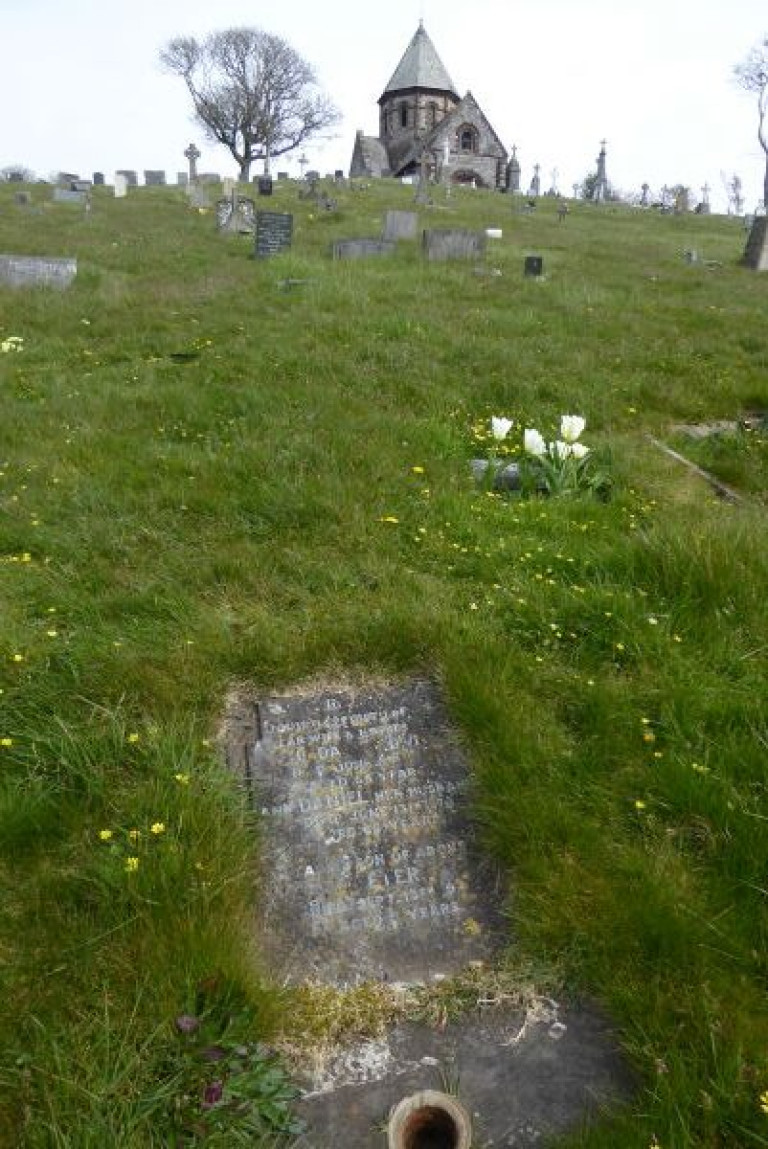
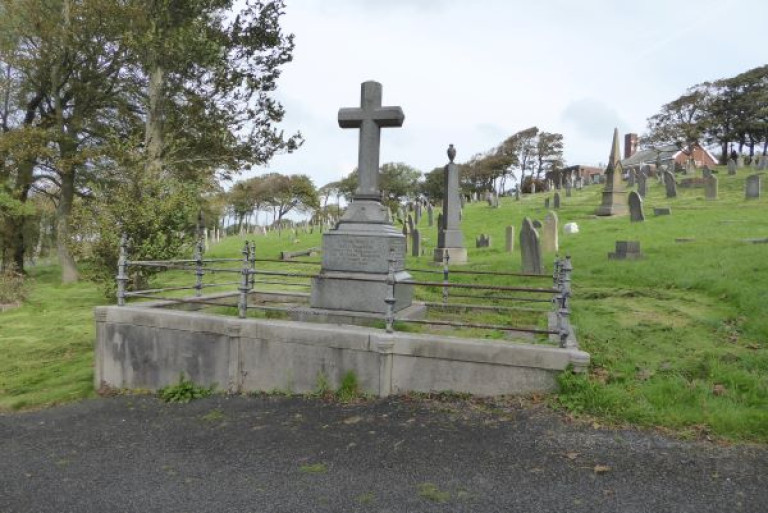
Where is the grave?
The grave is very close to the North entrance: if entering by that entrance turn left and it is on the right, about 6 graves down.
Barrow News, 2 Nov 1918DEATH NOTICE: J.J.Nicholls, Second-Lieut., Royal Air Force, dearly beloved son of Mr. & Mrs. B. Nicholls, 8 Yarlside-road, Barrow, who died of wounds October 30th at a stationary hospital in France, aged 24 years.
Son of Benjamin and Constance Nicholls, of 8, Yarlside Rd., Barrow-in-Furness CWGC.
Barrow News, 16th November 1918BROUGHT TWO MACHINES DOWN THOUGH WOUNDED
John James Nicholls, 2nd-Lieut., Royal Air Force, died of wounds in No 39 Stationary Hospital, France, on October 31st. He was 24 years of age, and educated at the Municipal Secondary School. He entered Messrs. Vickers service in October 1909, as a shipwright, and later transferred to the Ship Drawing Office. For a time he was engaged on special work at the London office of Messrs. Vickers. He joined the O.T.C. in April, 1918, and had been in France nearly two months. He has many friends in Barrow and district who will feel his loss very keenly. In a letter from the Major, the parents learnt that the deceased was attacked by three enemy machines. Although actually wounded in the early stages of this engagement, he continued with the utmost gallantry to shoot down two of his adversaries, both of which were wrecked. On his return to the aerodrome, young Nicholls was lifted from the machine, his right thigh being broken by bullet wounds.
From Keith Johnson’s research into former Grammar School Boys
John left school at 15 to become an apprentice shipwright, and transferred to the drawing office from where he was transferred again, this time to London on special war work. He joined the RAF after April 1918, eventually joining 103 Bomber Squadron in September 1918. John was an observer/rear gunner. He flew 16 successful missions, …
2/Lt. John James Nicholls, 103 Sqdn: age 24, native of Barrow-in-Furness, Observer, KIA in DH9 D7249 on the Western Front. Was flying with Lt G B Hett who was unhurt. They were returning from a low level raid on Roubaix aerodrome when engaged in combat which saw them credited with shooting down two Fokker D.VIIs. 2Lt Nicholls was fatally wounded in this action and died the next day. [Source]
No. 103 Squadron was formed as No. 103 Squadron, RFC at RAF Beaulieu, Hampshire on 1 September 1917, equipped with Airco DH.9 aircraft. In May 1918 the Squadron was transferred to France and flew reconnaissance and day bombing operations on the Western Front during the Great War. The Squadron was disbanded on 1 October 1919 at RAF Shotwick, Flintshire.
 The DH.9 was designed by de Havilland for the Aircraft Manufacturing Company in 1916 as a successor to the DH.4. It used the wings and tail unit of the DH.4 but had a new fuselage. This enabled the pilot to sit closer to the gunner/observer and away from the engine and fuel tank. The other major change from the DH.4 was the choice of the promising new BHP/Galloway Adriatic engine, which was predicted to produce 300 hp (224 kW) and so give the new aircraft an adequate performance to match enemy fighters.
By this time, as a result of attacks by German bombers on London, the decision was made to almost double the size of the Royal Flying Corps, with most of the new squadrons planned to be equipped with bombers. Based on the performance estimates for the DH.9 (which were expected to surpass those of the DH.4), and the similarity to the DH.4, which meant that it would be easy to convert production over to the new aircraft, massive orders (4,630 aircraft) were placed.
The prototype (a converted DH.4) first flew at Hendon in July 1917. Unfortunately, the BHP engine proved unable to reliably deliver its expected power, with the engine being de-rated to 230 hp (186 kW) in order to improve reliability. This had a drastic effect on the aircraft's performance, especially at high altitude, with it being inferior to that of the DH.4 it was supposed to replace. This meant that the DH.9 would have to fight its way through enemy fighters, which could easily catch the DH.9 where the DH.4 could avoid many of these attacks. [Source]
There is a DH9 in the Imperial War Museum, Duxford, having been found in the Maharajah of Bikaner’s elephant stable in 2000. [Source]